IQ Healthcare, Radboud Institute for Health Sciences, Radboud University Medical Center, Nijmegen, The Netherlands.
Musculoskeletal Rehabilitation Research Group, HAN University of Applied Sciences, Nijmegen, The Netherlands.
PLoS One. 2023 Apr 6;18(4):e0283646. doi: 10.1371/journal.pone.0283646. eCollection 2023.
Manual therapy in infants is embedded in Dutch healthcare despite inconsistent evidence and ongoing debate about its safety and merits. This study examines decision-making in manual therapy in infants and explores parents' and healthcare professionals' perspectives on this treatment approach.
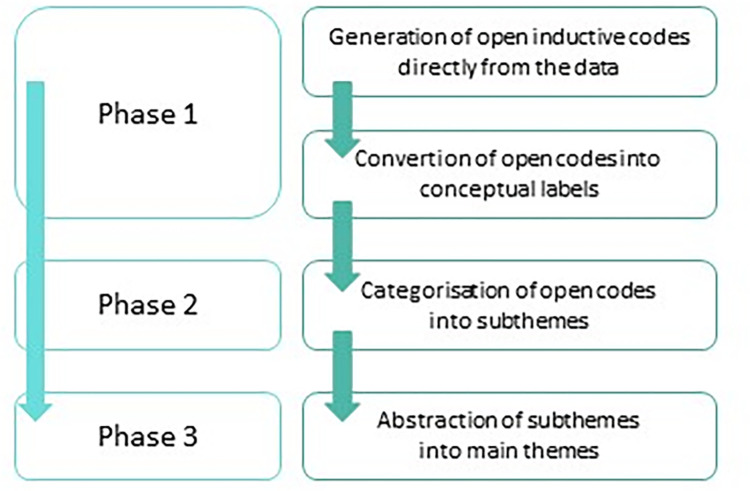
This mixed-methods study consisted of an online survey among manual physiotherapists and paediatric physiotherapists exploring decision-making on manual therapy in infants and interprofessional collaboration. These data prompted further exploration and were combined with data collected with semi-structured interviews exploring parents' and healthcare professionals' perspectives. Interviews were analysed using an inductive content analysis approach.
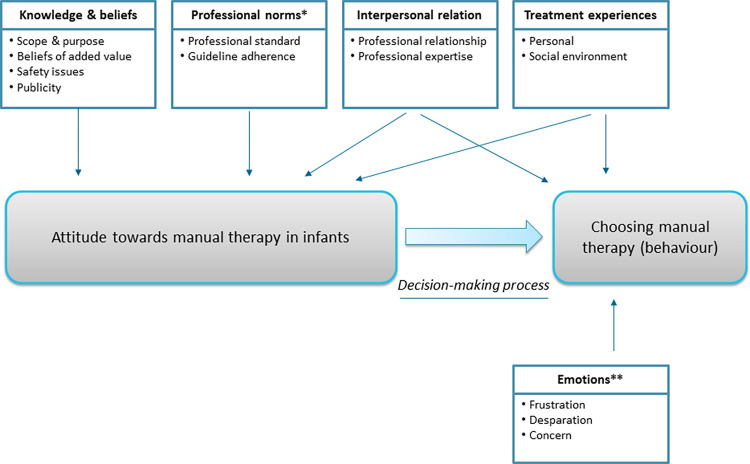
607 manual physiotherapists and 388 paediatric physiotherapists completed the online survey; 45% and 95% indicated they treat infants, respectively. Collaboration was reported by 46% of manual physiotherapists and 64% of paediatric physiotherapists for postural asymmetry, positional preference, upper cervical dysfunction, excessive crying, anxiety or restlessness. Reasons to not treat or collaborate were: limited professional competence, practice policy, not perceiving added value, lack of evidence and fear of complications. Analysis of interviews with 7 parents, 9 manual physiotherapists, 7 paediatric physiotherapists, 5 paediatricians and 2 maternity nurses revealed that knowledge and beliefs, professional norms, interpersonal relation, treatment experiences and emotions of parents influenced attitudes and decision-making towards choosing for manual therapy in infants.
Parents' and healthcare professionals' attitudes towards manual therapy in infants can be divided as 'in favour' or 'against'. Those who experienced a good interpersonal relation with a manual physiotherapist and positive treatment outcomes reported positive attitudes. Lack of evidence, treatment experience and related knowledge, safety issues due to publications on adverse events and professional norms led to negative attitudes. Despite lacking evidence, positive treatment experiences, good interpersonal relation and parents feeling frustrated and despaired can overrule negative attitudes and directly influence the decision-making process and choosing for manual therapy treatment.
尽管婴儿的手法治疗的安全性和益处存在不一致的证据和持续的争议,但在荷兰医疗保健中仍嵌入了婴儿手法治疗。本研究考察了婴儿手法治疗中的决策,并探讨了父母和医疗保健专业人员对这种治疗方法的看法。
本混合方法研究包括一项针对手法治疗师和儿科治疗师的在线调查,旨在探索婴儿手法治疗中的决策制定以及专业间合作。这些数据促使进一步探索,并与通过半结构化访谈收集的探索父母和医疗保健专业人员观点的数据相结合。访谈采用归纳内容分析方法进行分析。
607 名手法治疗师和 388 名儿科治疗师完成了在线调查;分别有 45%和 95%的人表示他们治疗婴儿。46%的手法治疗师和 64%的儿科治疗师报告合作治疗姿势不对称、姿势偏好、上颈椎功能障碍、过度哭泣、焦虑或不安。不治疗或不合作的原因是:专业能力有限、实践政策、未感知到附加值、缺乏证据和担心并发症。对 7 名父母、9 名手法治疗师、7 名儿科治疗师、5 名儿科医生和 2 名产科护士的访谈分析表明,知识和信念、专业规范、人际关系、治疗经验和父母的情绪影响了对婴儿选择手法治疗的态度和决策。
父母和医疗保健专业人员对婴儿手法治疗的态度可以分为“赞成”或“反对”。那些与手法治疗师建立良好人际关系并获得积极治疗结果的人报告了积极的态度。缺乏证据、治疗经验和相关知识、因不良事件报道而产生的安全问题以及专业规范导致了消极的态度。尽管缺乏证据,但积极的治疗经验、良好的人际关系以及父母感到沮丧和绝望可能会推翻消极的态度,并直接影响决策过程和选择手法治疗。