
学习需求以及临终关怀的感知障碍和促进因素:对急性内科病房一线护士的调查。
Learning needs and perceived barriers and facilitators to end-of-life care: a survey of front-line nurses on acute medical wards.
机构信息
Department of Health Research Methods, Evidence, and Impact, McMaster University Medical Centre, Hamilton, Ontario, Canada
Department of Critical Care, St. Joseph's Healthcare Hamilton, Hamilton, Ontario, Canada.
出版信息
BMJ Open Qual. 2023 Apr;12(2). doi: 10.1136/bmjoq-2022-002219.
OBJECTIVES
Caring for dying hospitalised patients is a healthcare priority. Our objective was to understand the learning needs of front-line nurses on the general internal medicine (GIM) hospital wards, and perceived barriers to, and facilitators of, optimal end-of-life care.
METHODS
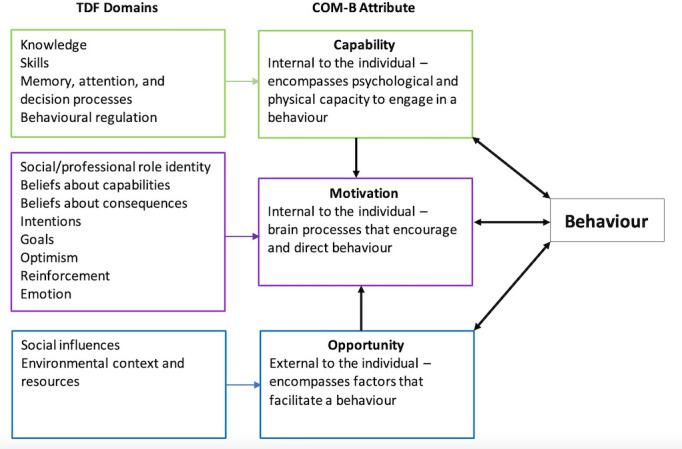
We developed an 85-item survey informed by the Theoretical Domains Framework and Capability-Opportunity-Motivation-Behaviour system. We included demographics and two main domains (knowledge and practice; delivering end-of-life care) with seven subsections. Nurses from four GIM wards and the nursing resource team completed this survey. We analysed and compared results overall, by Capability, Opportunity, and Motivation, and by survey domain. We considered items with median scores <4/7 barriers. We conducted an a priori subgroup analysis based on duration of practice (≤5 and >5 years).
RESULTS
Our response rate was 60.5% (144/238). 51% had been practising for >5 years; most respondents were female (93.1%). Nurses had similar scores on the knowledge (mean 76.0%; SD 11.6%) and delivering care (mean 74.5% (8.6%)) domains. Scores for items associated with Capability were higher than those associated with Opportunity (median (first, third quartiles) 78.6% (67.9%, 87.5%) vs 73.9% (66.0%, 81.8%); p=0.04). Nurses practising >5 years had significantly higher scores on all analyses. Barriers included engaging with families having strong emotional reactions, managing goals of care conflicts between patients and families, and staffing challenges on the ward. Additional requested resources included formal training, information binders and more staff. Opportunities for consideration include formalised on-the-job training, access to comprehensive information, including symptom management at the end of life, and debriefing sessions.
CONCLUSIONS
Front-line nurses reported an interest in learning more about end-of-life care and identified important barriers that are feasible to address. These results will inform specific knowledge translation strategies to build capacity among bedside nurses to enhance end-of-life care practices for dying patients on GIM wards.
目的
照顾临终住院患者是医疗保健的重点。我们的目标是了解普通内科(GIM)病房一线护士的学习需求,以及对最佳临终关怀的障碍和促进因素。
方法
我们根据理论领域框架和能力-机会-动机-行为系统开发了一个包含 85 个项目的调查。我们包括人口统计学和两个主要领域(知识和实践;提供临终关怀),共七个小节。来自四个 GIM 病房和护理资源团队的护士完成了这项调查。我们对整体、能力、机会和动机以及调查领域进行了分析和比较。我们考虑了中位数评分<4/7 的障碍项目。我们根据实践时间(≤5 年和>5 年)进行了预先设定的亚组分析。
结果
我们的回复率为 60.5%(144/238)。51%的人已经工作了>5 年;大多数受访者为女性(93.1%)。护士在知识(平均 76.0%;标准差 11.6%)和提供护理(平均 74.5%(8.6%))领域的得分相似。与能力相关的项目得分高于与机会相关的项目(中位数(第一、第三四分位数)78.6%(67.9%,87.5%)比 73.9%(66.0%,81.8%);p=0.04)。实践时间超过 5 年的护士在所有分析中得分显著更高。障碍包括与情绪反应强烈的家庭接触、管理患者和家庭之间的护理目标冲突,以及病房工作人员不足。额外要求的资源包括正式培训、信息活页夹和更多的工作人员。可以考虑的机会包括在职培训的正式化、获取全面的信息,包括生命末期的症状管理,以及汇报会议。
结论
一线护士报告说有兴趣更多地了解临终关怀,并确定了一些可行的重要障碍。这些结果将为构建床边护士能力的具体知识转化策略提供信息,以提高 GIM 病房临终患者的临终关怀实践。

 Zotero 插件