State Key Laboratory of Proteomics, National Center for Protein Sciences (Beijing), Beijing Institute of Lifeomics, Beijing, 100850, China.
Lab of Orthopedics of Department of Orthopedics, Beijing Key Lab of Regenerative Medicine in Orthopedics, Chinese PLA General Hospital, Beijing, 100853, China.
Signal Transduct Target Ther. 2023 Apr 7;8(1):142. doi: 10.1038/s41392-023-01354-2.
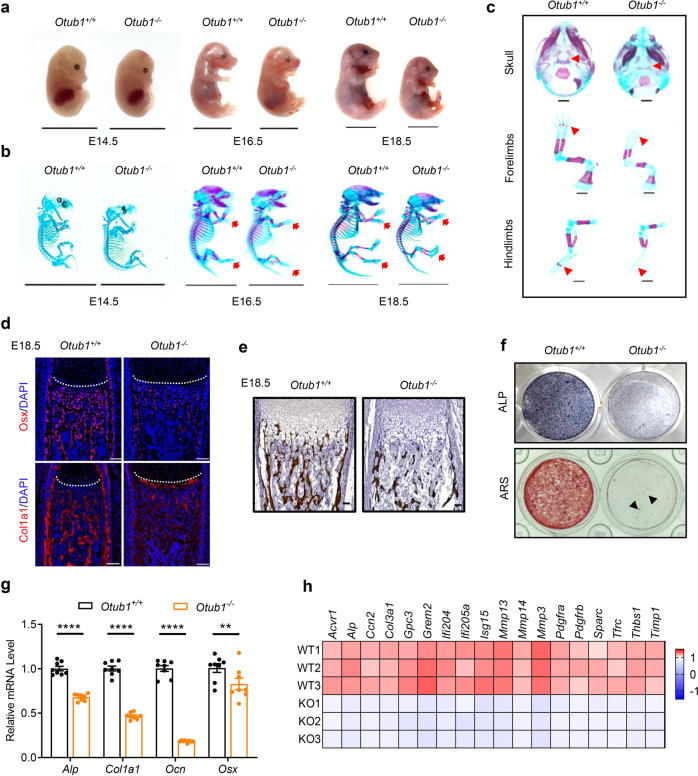
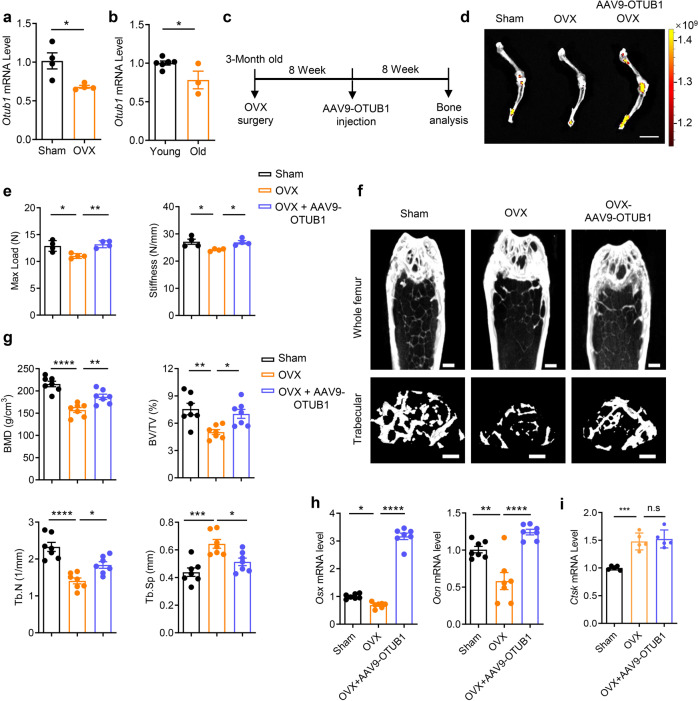
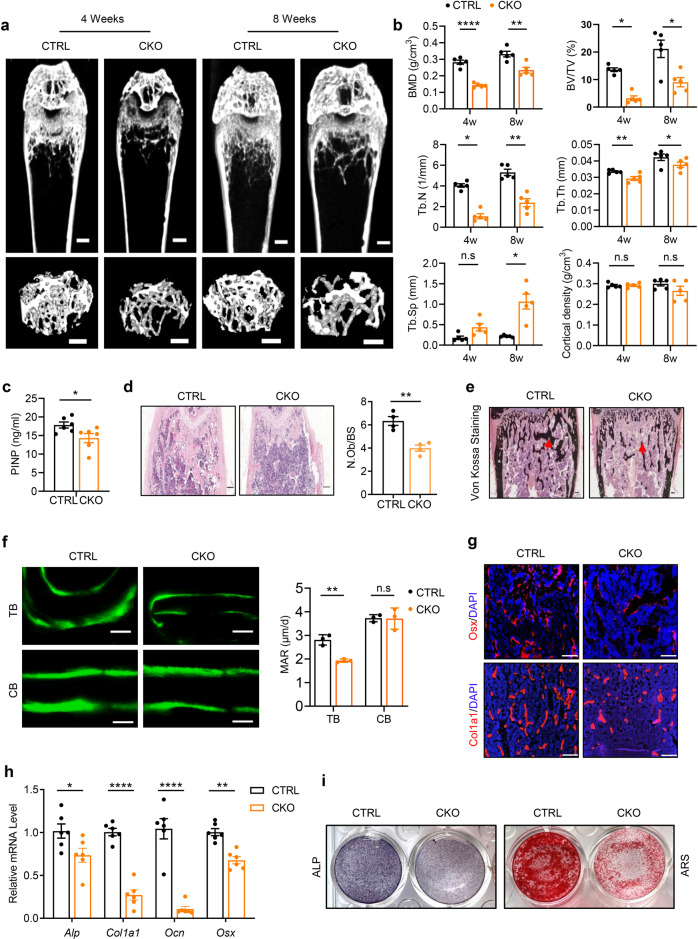
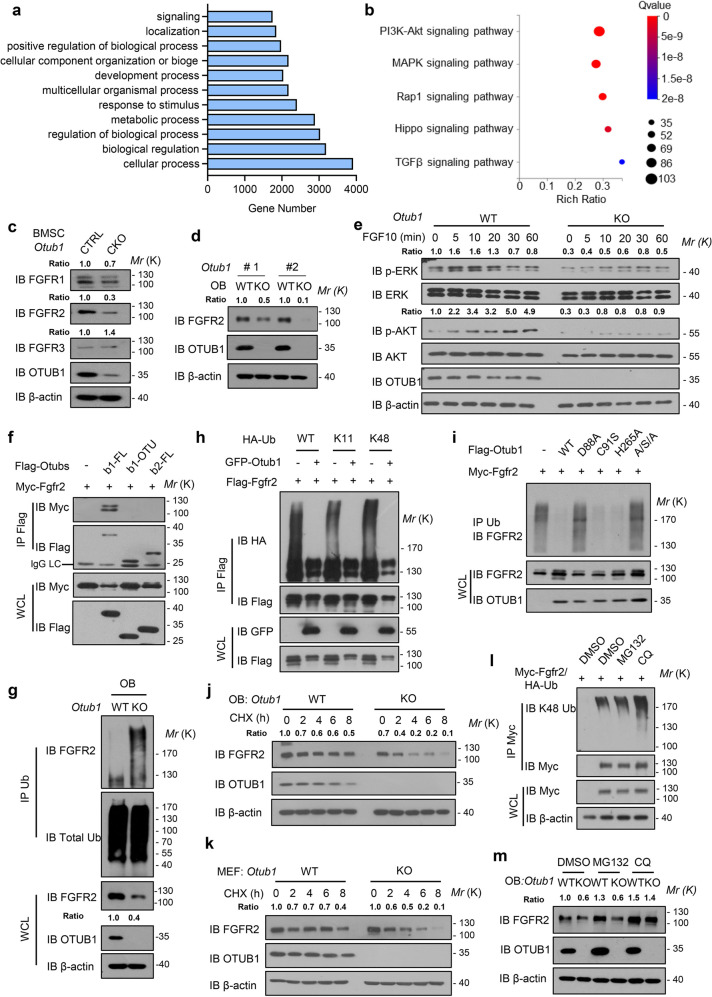
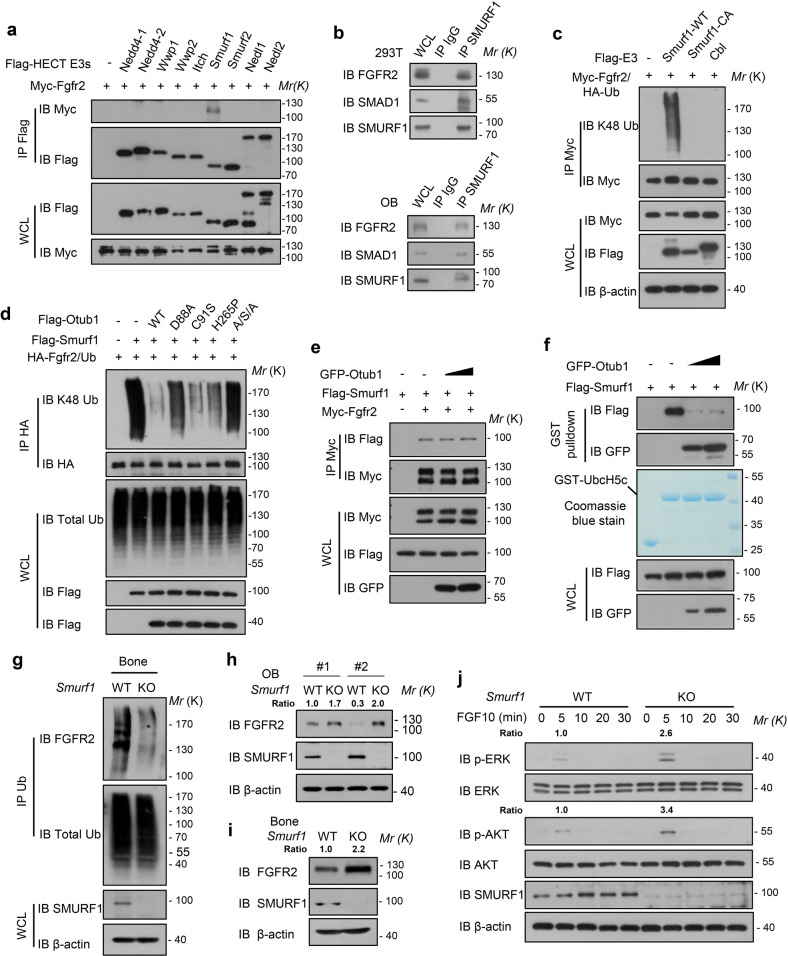
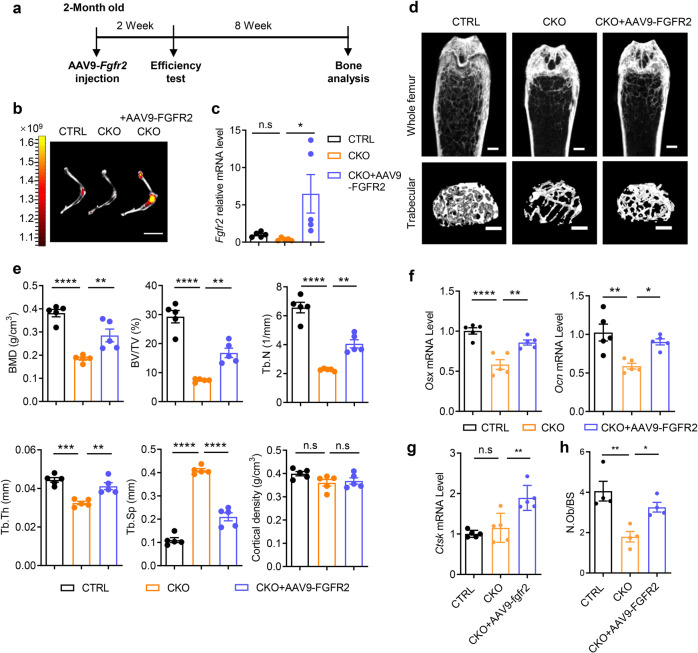
Bone homeostasis is maintained by the balance between osteoblastic bone formation and osteoclastic bone resorption. Dysregulation of this process leads to multiple diseases, including osteoporosis. However, the underlying molecular mechanisms are not fully understood. Here, we show that the global and conditional osteoblast knockout of a deubiquitinase Otub1 result in low bone mass and poor bone strength due to defects in osteogenic differentiation and mineralization. Mechanistically, the stability of FGFR2, a crucial regulator of osteogenesis, is maintained by OTUB1. OTUB1 attenuates the E3 ligase SMURF1-mediated FGFR2 ubiquitination by inhibiting SMURF1's E2 binding. In the absence of OTUB1, FGFR2 is ubiquitinated excessively by SMURF1, followed by lysosomal degradation. Consistently, adeno-associated virus serotype 9 (AAV9)-delivered FGFR2 in knee joints rescued the bone mass loss in osteoblast-specific Otub1-deleted mice. Moreover, Otub1 mRNA level was significantly downregulated in bones from osteoporotic mice, and restoring OTUB1 levels through an AAV9-delivered system in ovariectomy-induced osteoporotic mice attenuated osteopenia. Taken together, our results suggest that OTUB1 positively regulates osteogenic differentiation and mineralization in bone homeostasis by controlling FGFR2 stability, which provides an optical therapeutic strategy to alleviate osteoporosis.
骨稳态是通过成骨细胞骨形成和破骨细胞骨吸收之间的平衡来维持的。这个过程的失调会导致多种疾病,包括骨质疏松症。然而,其潜在的分子机制尚不完全清楚。在这里,我们显示全局和条件性成骨细胞敲除去泛素酶 Otub1 会导致低骨量和骨强度差,这是由于成骨分化和矿化缺陷所致。在机制上,FGFR2 的稳定性由 OTUB1 维持,FGFR2 是成骨的关键调节剂。OTUB1 通过抑制 SMURF1 的 E2 结合来抑制 SMURF1 介导的 FGFR2 泛素化。在没有 OTUB1 的情况下,SMURF1 会过度泛素化 FGFR2,随后进行溶酶体降解。一致地,关节内递送的腺相关病毒血清型 9 (AAV9)-FGFR2 挽救了成骨细胞特异性 Otub1 缺失小鼠的骨量丢失。此外,骨质疏松症小鼠骨组织中的 Otub1 mRNA 水平显著下调,通过 AAV9 递送系统在卵巢切除诱导的骨质疏松症小鼠中恢复 OTUB1 水平可减轻骨质疏松症。总之,我们的研究结果表明,OTUB1 通过控制 FGFR2 的稳定性,积极调节骨稳态中的成骨分化和矿化,为缓解骨质疏松症提供了一种光学治疗策略。