Department of Mammalogy, National Museum, Bloemfontein, 9300, South Africa.
Department of Zoology, School of Natural and Mathematical Sciences, University of Venda, Thohoyandou, South Africa.
Sci Rep. 2023 Apr 6;13(1):5617. doi: 10.1038/s41598-023-32498-4.
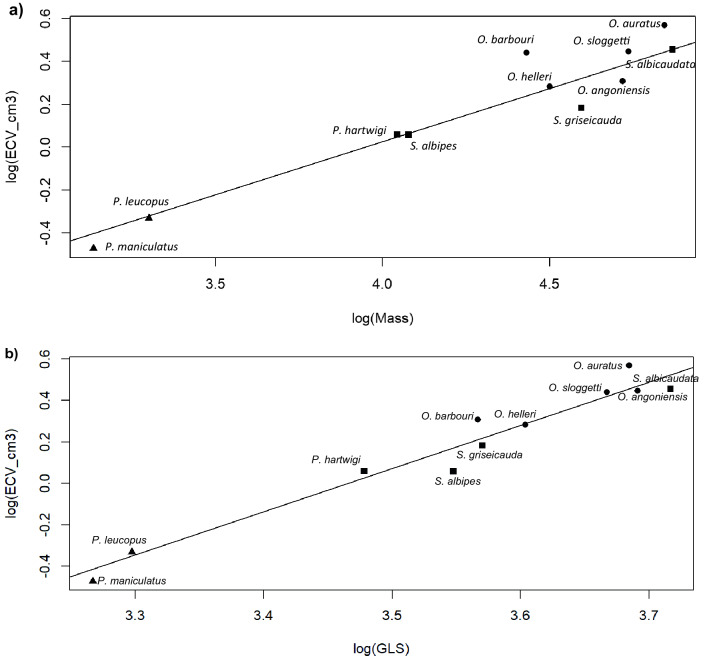
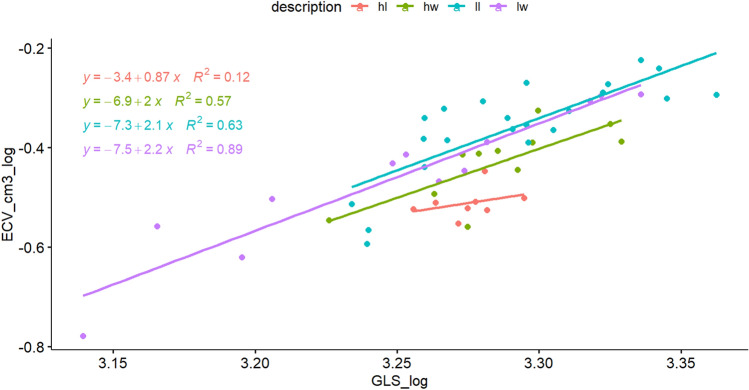
To better understand functional morphological adaptations to high elevation (> 3000 m above sea level) life in both North American and African mountain-associated rodents, we used microCT scanning to acquire 3D images and a 3D morphometric approach to calculate endocranial volumes and skull lengths. This was done on 113 crania of low-elevation and high-elevation populations in species of North American cricetid mice (two Peromyscus species, n = 53), and African murid rodents of two tribes, Otomyini (five species, n = 49) and Praomyini (four species, n = 11). We tested two distinct hypotheses for how endocranial volume might vary in high-elevation populations: the expensive tissue hypothesis, which predicts that brain and endocranial volumes will be reduced to lessen the costs of growing and maintaining a large brain; and the brain-swelling hypothesis, which predicts that endocranial volumes will be increased either as a direct phenotypic effect or as an adaptation to accommodate brain swelling and thus minimize pathological symptoms of altitude sickness. After correcting for general allometric variation in cranial size, we found that in both North American Peromyscus mice and African laminate-toothed (Otomys) rats, highland rodents had smaller endocranial volumes than lower-elevation rodents, consistent with the expensive tissue hypothesis. In the former group, Peromyscus mice, crania were obtained not just from wild-caught mice from high and low elevations but also from those bred in common-garden laboratory conditions from parents caught from either high or low elevations. Our results in these mice showed that brain size responses to elevation might have a strong genetic basis, which counters an opposite but weaker environmental effect on brain volume. These results potentially suggest that selection may act to reduce brain volume across small mammals at high elevations but further experiments are needed to assess the generality of this conclusion and the nature of underlying mechanisms.
为了更好地理解北美和非洲高山相关啮齿动物对高海拔(海拔超过 3000 米)生活的功能形态适应,我们使用 microCT 扫描获取 3D 图像,并采用 3D 形态测量方法计算颅腔容积和颅骨长度。这是在北美仓鼠科的两种物种(两种 Peromyscus 物种,n=53)以及两个部落的非洲鼠科的 113 个头骨上进行的,这两个部落是 Otomyini(五种物种,n=49)和 Praomyini(四种物种,n=11)。我们测试了两个关于高海拔种群中颅腔容积可能变化的不同假设:昂贵组织假说,该假说预测大脑和颅腔容积会减少,以减轻大脑生长和维持的成本;以及脑肿胀假说,该假说预测颅腔容积会增加,要么是直接表型效应,要么是适应脑肿胀的结果,从而最小化高原病的病理症状。在纠正了颅大小的一般异速生长后,我们发现,在北美 Peromyscus 小鼠和非洲层状齿(Otomys)大鼠中,高地啮齿动物的颅腔容积比低海拔啮齿动物小,这与昂贵组织假说一致。在前一组中,Peromyscus 小鼠不仅从高海拔和低海拔的野生捕获的老鼠中获得了颅骨,还从从高海拔或低海拔捕获的父母繁殖的实验室共同花园条件下繁殖的老鼠中获得了颅骨。我们在这些老鼠中的结果表明,大脑对海拔的响应可能有一个强烈的遗传基础,这与大脑体积对环境的相反但较弱的影响相抗衡。这些结果表明,选择可能会降低小型哺乳动物在高海拔地区的大脑体积,但需要进一步的实验来评估这一结论的普遍性和潜在机制的性质。