Cancer Research Center, Beijing Tuberculosis and Thoracic Tumor Research Institute/Beijing Chest Hospital, Capital Medical University, Beijing, China.
Department of Medical Oncology, Beijing Tuberculosis and Thoracic Tumor Research Institute/Beijing Chest Hospital, Capital Medical University, Beijing, China.
Front Immunol. 2023 Mar 21;14:1142428. doi: 10.3389/fimmu.2023.1142428. eCollection 2023.
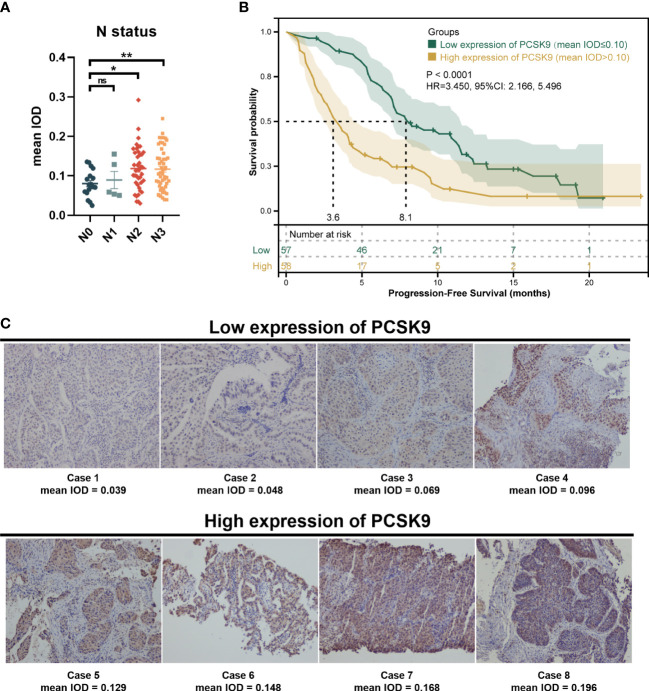
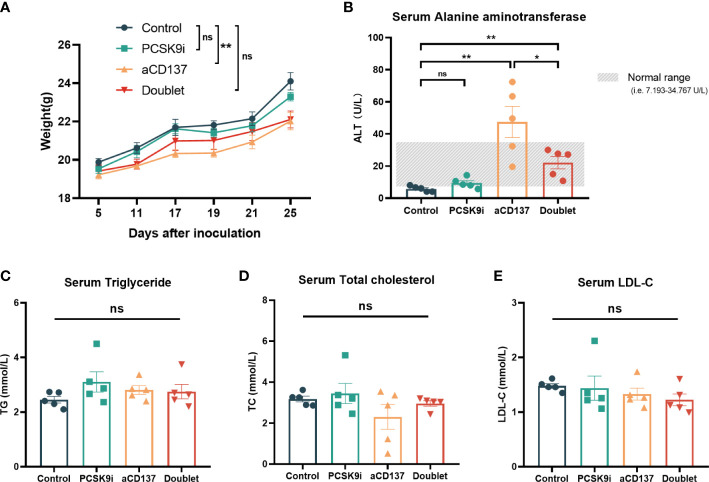
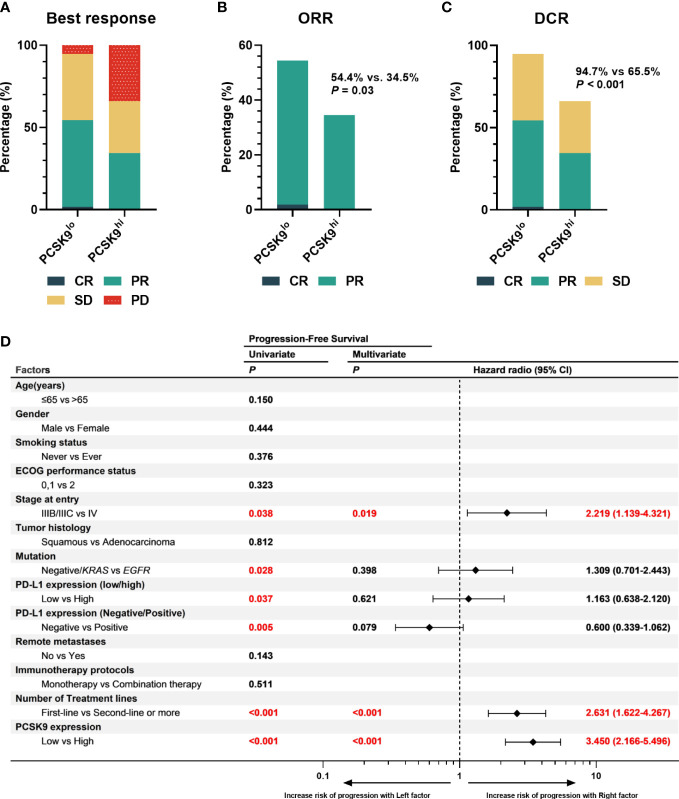
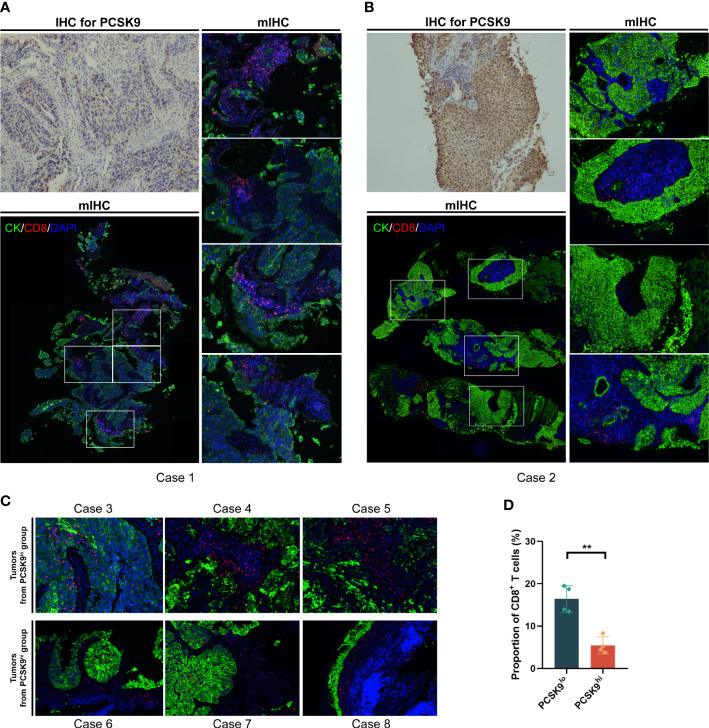
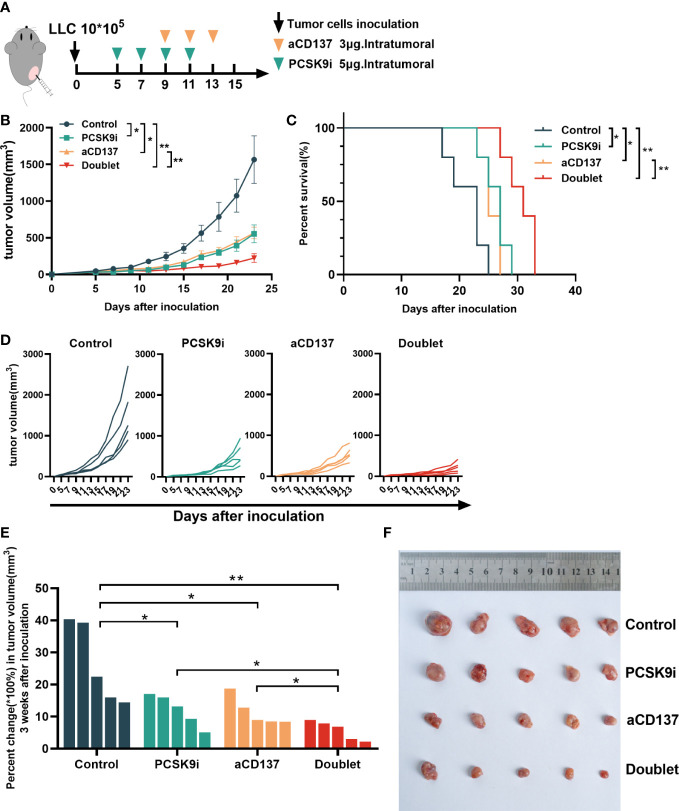
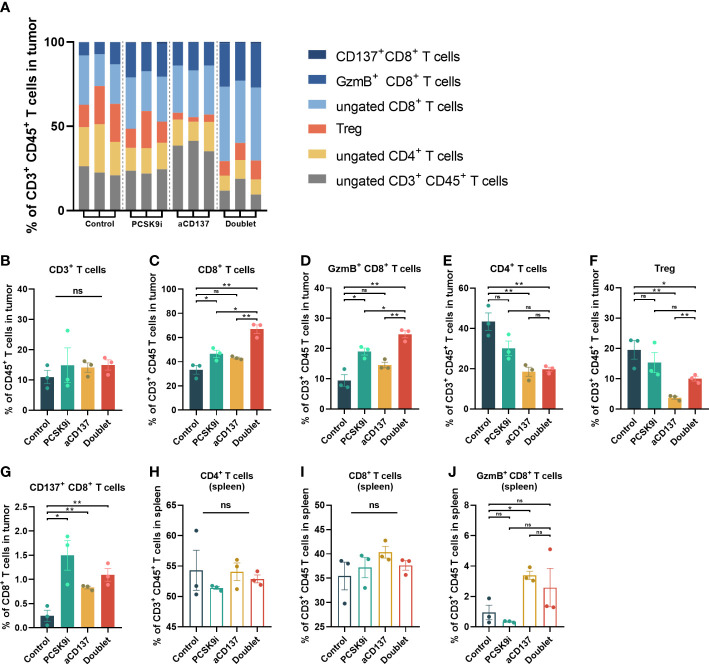
Proprotein convertase subtilisin/kexin type 9 (PCSK9) secreted by tumors was reported as a deleterious factor that led to the reduction of lymphocyte infiltration and the poorer efficacy of ICIs . This study aimed to explore whether PCSK9 expression in tumor tissue could predict the response of advanced non-small cell lung cancer (NSCLC) to anti-PD-1 immunotherapy and the synergistic antitumor effect of the combination of the PCSK9 inhibitor with the anti-CD137 agonist. One hundred fifteen advanced NSCLC patients who received anti-PD-1 immunotherapy were retrospectively studied with PCSK9 expression in baseline NSCLC tissues detected by immunohistochemistry (IHC). The mPFS of the PCSK9 group was significantly longer than that of the PCSK9 group [8.1 . 3.6 months, hazard ratio (HR): 3.450; 95% confidence interval (CI), 2.166-5.496]. A higher objective response rate (ORR) and a higher disease control rate (DCR) were observed in the PCSK9 group than in the PCSK9 group (54.4% . 34.5%, 94.7% . 65.5%). Reduction and marginal distribution of CD8 T cells were observed in PCSK9 NSCLC tissues. Tumor growth was retarded by the PCSK9 inhibitor and the anti-CD137 agonist alone in the Lewis lung carcinoma (LLC) mice model and further retarded by the PCSK9 inhibitor in combination with the CD137 agonist with long-term survival of the host mice with noticeable increases of CD8 and GzmB CD8 T cells and reduction of Tregs. Together, these results suggested that high PCSK9 expression in baseline tumor tissue was a deleterious factor for the efficacy of anti-PD-1 immunotherapy in advanced NSCLC patients. The PCSK9 inhibitor in combination with the anti-CD137 agonist could not only enhance the recruitment of CD8 and GzmB CD8 T cells but also deplete Tregs, which may be a novel therapeutic strategy for future research and clinical practice.
肿瘤分泌的脯氨酸内切酶枯草溶菌素/克那霉 9(PCSK9)被报道为一种有害因子,导致淋巴细胞浸润减少和免疫检查点抑制剂(ICI)疗效较差。本研究旨在探讨肿瘤组织中 PCSK9 的表达是否可以预测晚期非小细胞肺癌(NSCLC)患者对抗 PD-1 免疫治疗的反应,以及 PCSK9 抑制剂与抗 CD137 激动剂联合的协同抗肿瘤作用。对 115 例接受抗 PD-1 免疫治疗的晚期 NSCLC 患者进行回顾性研究,采用免疫组织化学(IHC)检测基线 NSCLC 组织中 PCSK9 的表达。PCSK9 组的 mPFS 明显长于 PCSK9 组[8.1. 3.6 个月,风险比(HR):3.450;95%置信区间(CI):2.166-5.496]。PCSK9 组的客观缓解率(ORR)和疾病控制率(DCR)均高于 PCSK9 组(54.4%. 34.5%,94.7%. 65.5%)。PCSK9 NSCLC 组织中观察到 CD8 T 细胞减少和边缘分布。PCSK9 抑制剂和抗 CD137 激动剂单独在 Lewis 肺癌(LLC)小鼠模型中抑制肿瘤生长,PCSK9 抑制剂与 CD137 激动剂联合使用可进一步抑制肿瘤生长,宿主小鼠长期存活,CD8 和 GzmB CD8 T 细胞显著增加,Tregs 减少。总之,这些结果表明,基线肿瘤组织中 PCSK9 高表达是晚期 NSCLC 患者抗 PD-1 免疫治疗疗效的有害因素。PCSK9 抑制剂联合抗 CD137 激动剂不仅可以增强 CD8 和 GzmB CD8 T 细胞的募集,还可以消耗 Tregs,这可能是未来研究和临床实践的一种新的治疗策略。