City of Hope National Medical Center, Duarte, CA, USA.
Computational Biology Program, Department of Biomedical Engineering, Oregon Health & Science University, Portland, OR, USA.
Leukemia. 2023 Jun;37(6):1324-1335. doi: 10.1038/s41375-023-01889-x. Epub 2023 Apr 8.
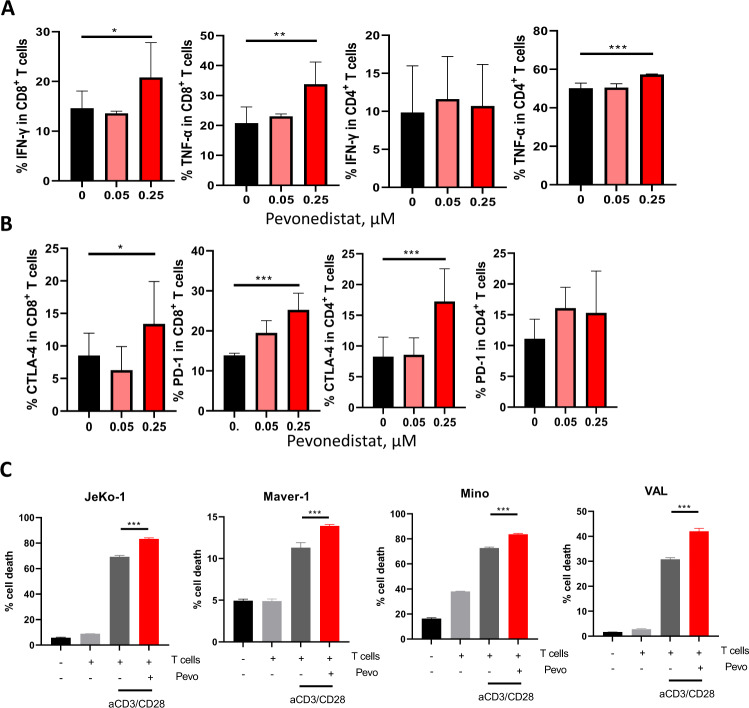
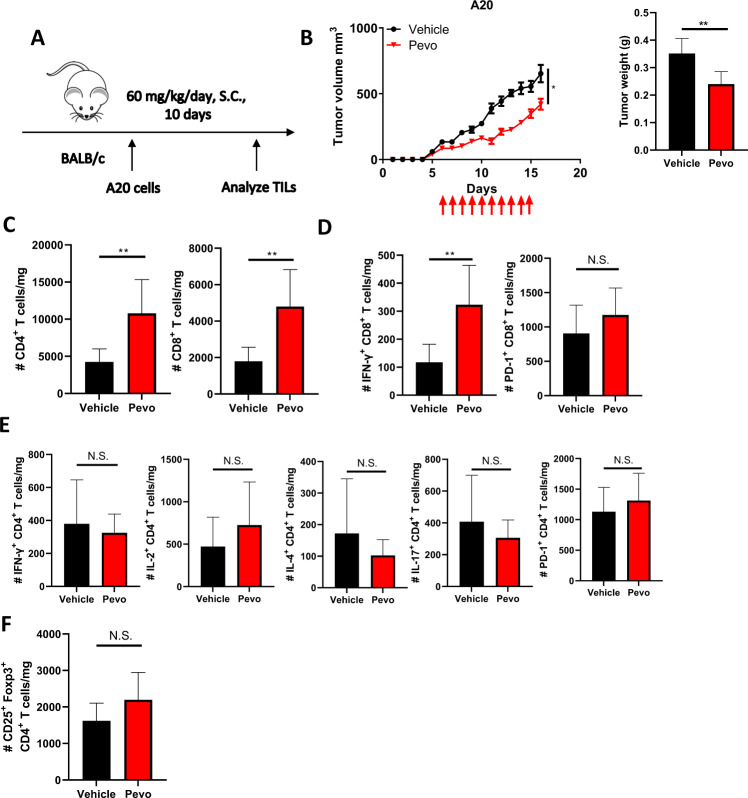
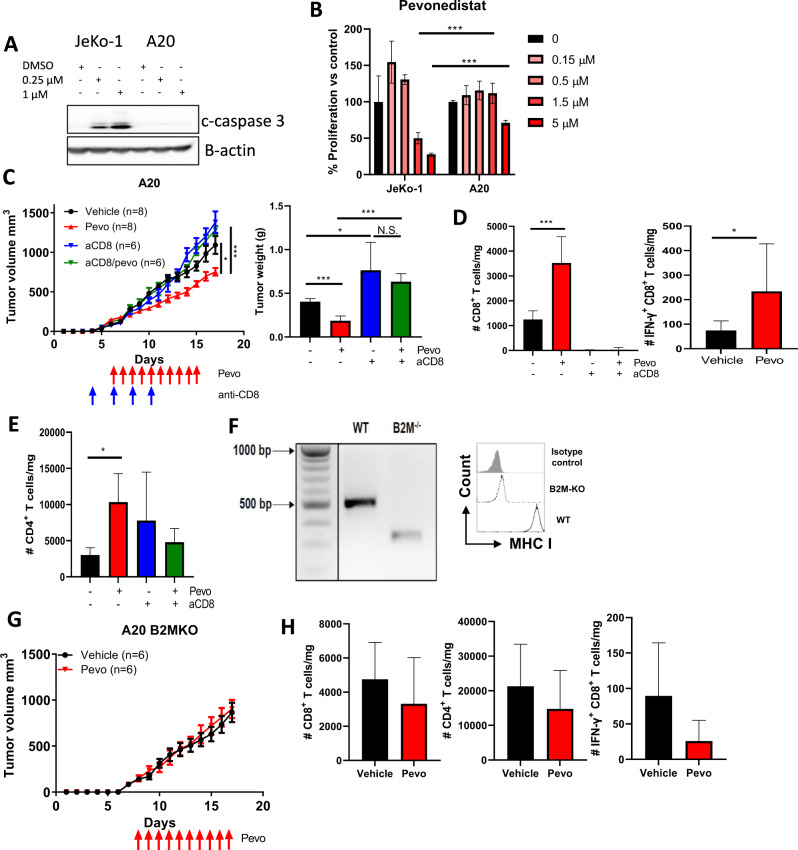
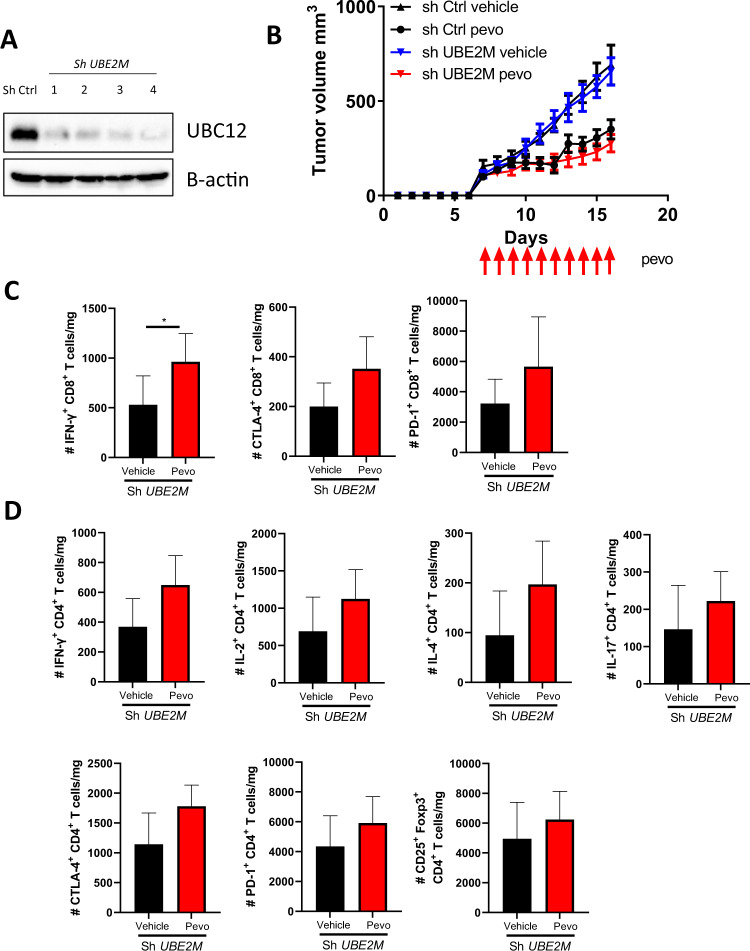
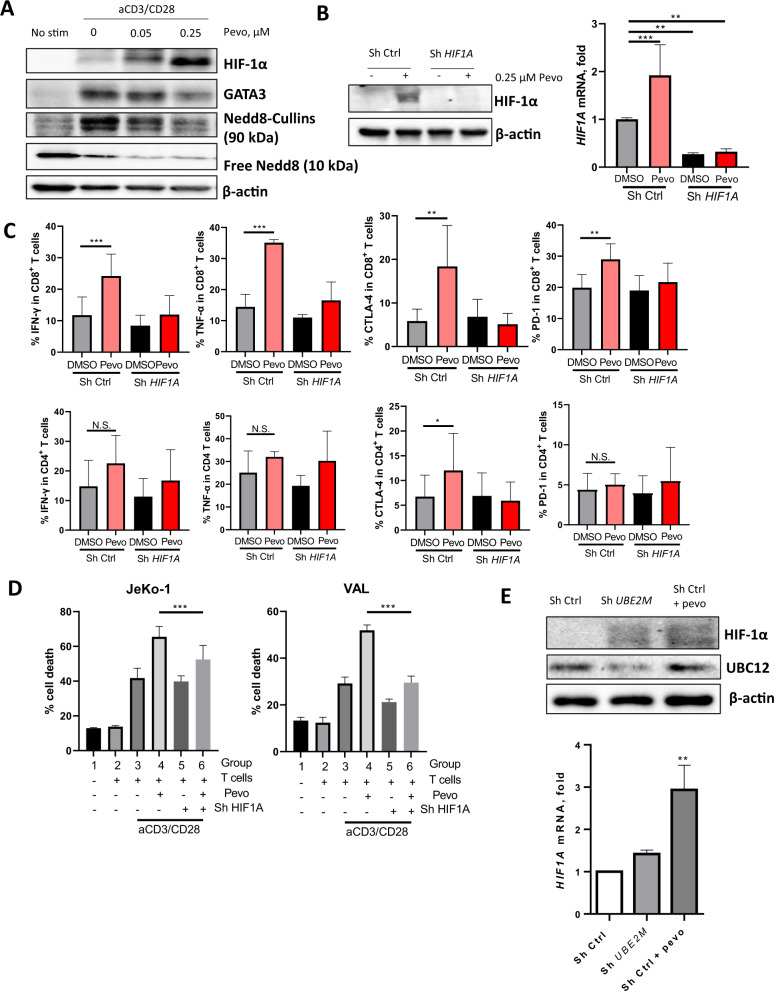
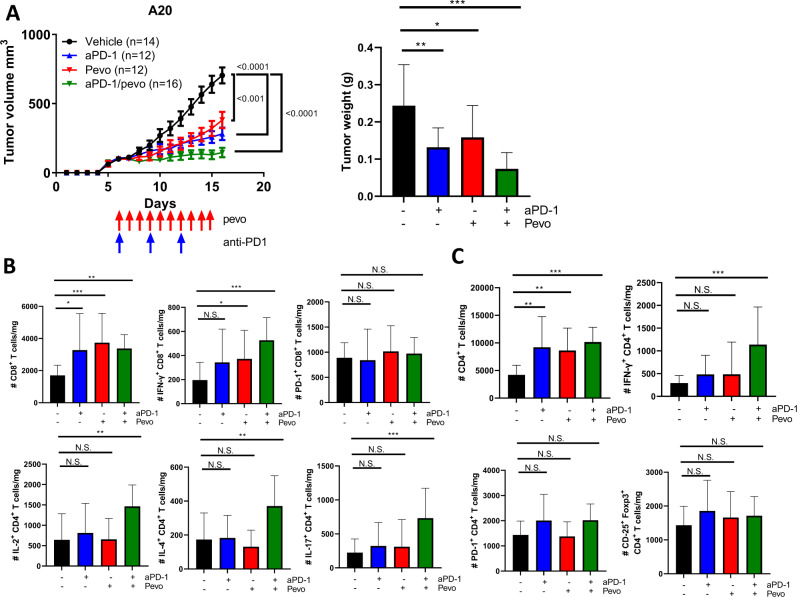
Neddylation is a sequential enzyme-based process which regulates the function of E3 Cullin-RING ligase (CRL) and thus degradation of substrate proteins. Here we show that CD8 T cells are a direct target for therapeutically relevant anti-lymphoma activity of pevonedistat, a Nedd8-activating enzyme (NAE) inhibitor. Pevonedistat-treated patient-derived CD8 T cells upregulated TNFα and IFNγ and exhibited enhanced cytotoxicity. Pevonedistat induced CD8 T-cell inflamed microenvironment and delayed tumor progression in A20 syngeneic lymphoma model. This anti-tumor effect lessened when CD8 T cells lost the ability to engage tumors through MHC class I interactions, achieved either through CD8 T-cell depletion or genetic knockout of B2M. Meanwhile, loss of UBE2M in tumor did not alter efficacy of pevonedistat. Concurrent blockade of NAE and PD-1 led to enhanced tumor immune infiltration, T-cell activation and chemokine expression and synergistically restricted tumor growth. shRNA-mediated knockdown of HIF-1α, a CRL substrate, abrogated the in vitro effects of pevonedistat, suggesting that NAE inhibition modulates T-cell function in HIF-1α-dependent manner. scRNA-Seq-based clinical analyses in lymphoma patients receiving pevonedistat therapy demonstrated upregulation of interferon response signatures in immune cells. Thus, targeting NAE enhances the inflammatory T-cell state, providing rationale for checkpoint blockade-based combination therapy.
泛素化是一个基于酶的连续过程,它调节 E3 Cullin-RING 连接酶 (CRL) 的功能,从而导致底物蛋白的降解。在这里,我们表明 CD8 T 细胞是 pevonedistat(一种 Nedd8 激活酶 (NAE) 抑制剂)具有治疗相关性抗淋巴瘤活性的直接靶标。pevonedistat 处理的患者来源的 CD8 T 细胞上调 TNFα 和 IFNγ,并表现出增强的细胞毒性。pevonedistat 诱导 CD8 T 细胞炎症微环境,并延迟 A20 同源性淋巴瘤模型中的肿瘤进展。当 CD8 T 细胞通过 MHC 类 I 相互作用丧失与肿瘤结合的能力时,这种抗肿瘤作用减弱,这可以通过 CD8 T 细胞耗竭或 B2M 基因敲除来实现。同时,肿瘤中 UBE2M 的缺失不会改变 pevonedistat 的疗效。同时阻断 NAE 和 PD-1 导致肿瘤免疫浸润增加、T 细胞激活和趋化因子表达增强,并协同限制肿瘤生长。CRL 底物 HIF-1α 的 shRNA 介导的敲低消除了 pevonedistat 的体外效应,表明 NAE 抑制以 HIF-1α 依赖的方式调节 T 细胞功能。接受 pevonedistat 治疗的淋巴瘤患者的 scRNA-Seq 临床分析表明,免疫细胞中干扰素反应特征上调。因此,靶向 NAE 增强了炎症性 T 细胞状态,为基于检查点阻断的联合治疗提供了依据。