Xiong Yuanguo, Wu Bing, Guo Xianxi, Shi Dong, Xia Hao, Xu Hanlin, Liu Xiaoxiong
Department of Pharmacy, Renmin Hospital of Wuhan University Wuhan 430060 China.
School of Pharmaceuticals, Hubei University of Chinese Medicine, No. 1 HuangJiahu Road West Wuhan 430065 China
RSC Adv. 2023 Apr 6;13(16):10987-11001. doi: 10.1039/d2ra07561j. eCollection 2023 Apr 3.
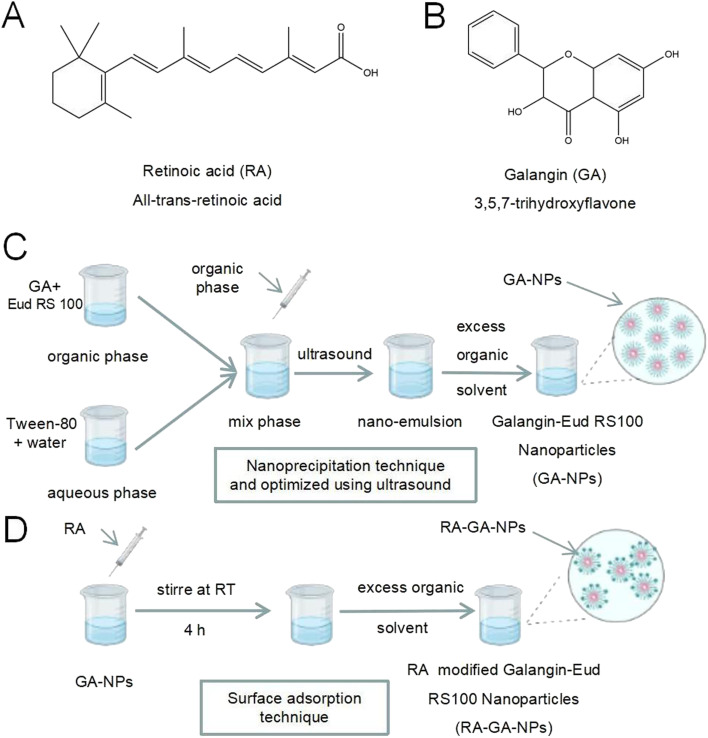
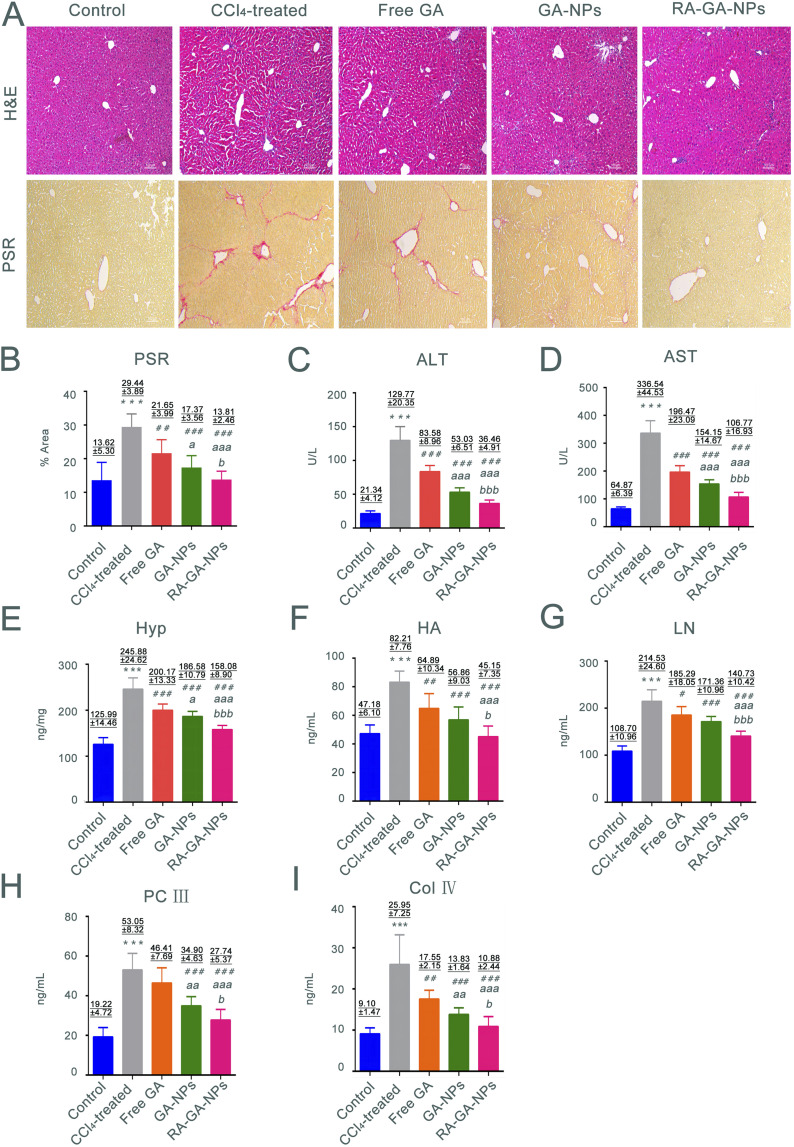
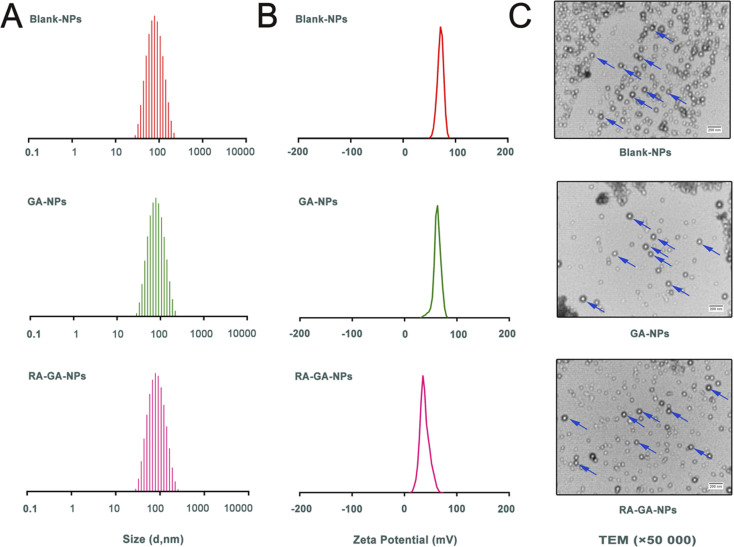
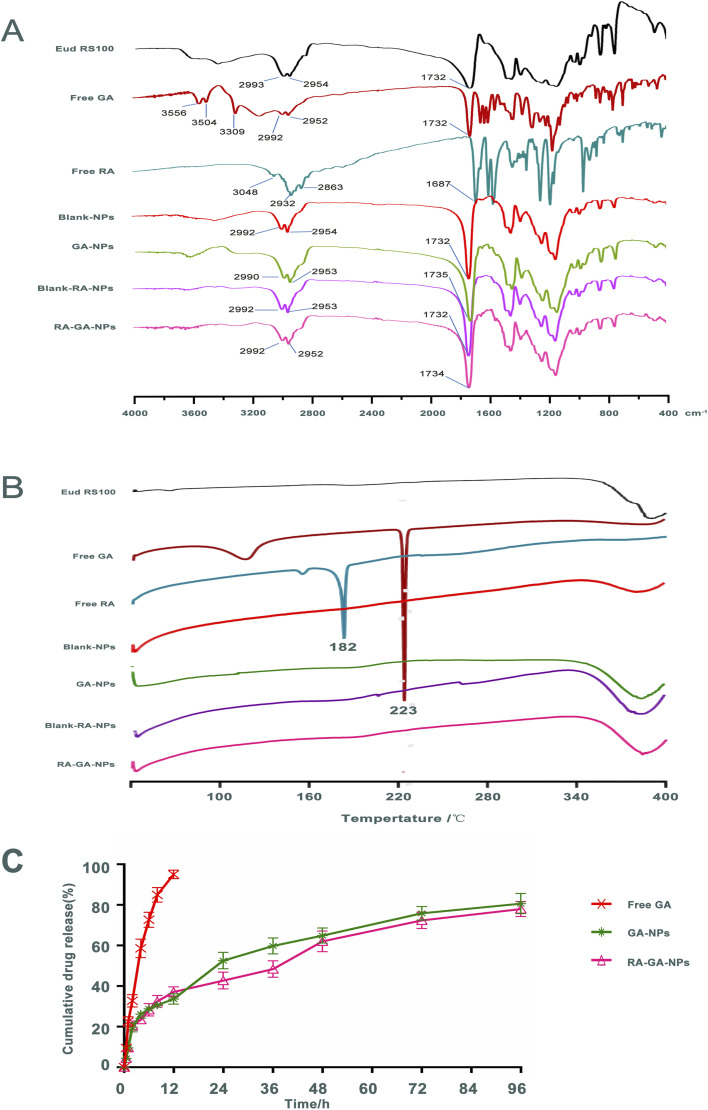
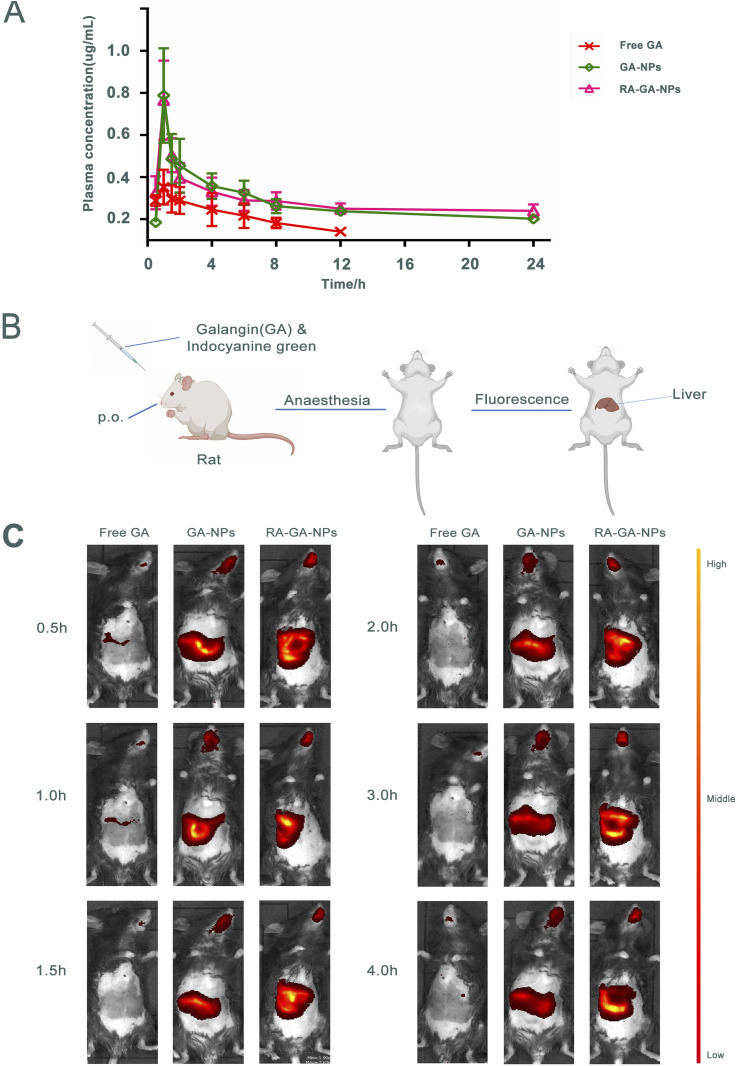
Hepatic fibrosis (HF) is a chronic hepatic pathological process induced by various liver injuries, with few available therapies. Previous research studies revealed that HF is characterized by the accumulation of excess extracellular matrix in the liver, mainly overexpressed by activated hepatic stellate cells (HSC). Therefore, HSC have been targeted in clinical trials for the management of HF. The aim of the present study was to develop an anti-HF drug delivery system with acrylic resin (Eudragit® RS100, Eud RS100) nanoparticles (NPs) through modification by retinoic acid (RA), modified for binding the retinol-binding protein reporter (RBPR) in HSC. Galangin (GA), is a multiple effects flavonoid which has demonstrated an anti-HF effect in our previous studies. In this study, GA was utilized for the treatment of HF. The results revealed that the NPs were well formed (diameter: 70 nm), spherical in shape, and exhibited uniform distribution and a high encapsulation efficiency. Moreover, a prominent controlled release effect and a significant increase in bioavailability was observed following the encapsulation of GA in NPs. These findings indicated that the limitation of low bioavailability due to the hydrophobic feature of GA was overcome. Furthermore, the pharmacodynamics studies demonstrated that NPs could drastically influence the anti-HF effects of GA after modification with retinoic acid. The results of the present study suggested that retinoic acid-modified GA NPs represent a promising candidate in the development of an anti-HF drug delivery system for the treatment of HF.
肝纤维化(HF)是一种由各种肝损伤引起的慢性肝脏病理过程,可用治疗方法很少。先前的研究表明,HF的特征是肝脏中细胞外基质过度积累,主要由活化的肝星状细胞(HSC)过度表达。因此,HSC已成为HF治疗临床试验的靶点。本研究的目的是通过视黄酸(RA)修饰,开发一种含丙烯酸树脂(Eudragit®RS100,Eud RS100)纳米颗粒(NPs)的抗HF药物递送系统,该系统经修饰后可与HSC中的视黄醇结合蛋白报告基因(RBPR)结合。高良姜素(GA)是一种具有多种作用的黄酮类化合物,在我们先前的研究中已证明具有抗HF作用。在本研究中,GA被用于治疗HF。结果显示,NPs形成良好(直径:70nm),呈球形,分布均匀且包封率高。此外,GA包封于NPs后观察到显著的控释效果和生物利用度的显著提高。这些发现表明,GA的疏水性导致的低生物利用度的局限性得到了克服。此外,药效学研究表明,视黄酸修饰后,NPs可显著影响GA的抗HF作用。本研究结果表明,视黄酸修饰的GA NPs在开发用于治疗HF的抗HF药物递送系统方面具有广阔前景。