Serra Riccardo, Simard J Marc
Department of Neurosurgery, University of Maryland, Baltimore, MD, United States.
Department of Pathology, University of Maryland, Baltimore, MD, United States.
Front Neurol. 2023 Mar 24;14:1092205. doi: 10.3389/fneur.2023.1092205. eCollection 2023.
The movement of fluids and solutes across the ependymal barrier, and their changes in physiologic and disease states are poorly understood. This gap in knowledge contributes strongly to treatment failures and complications in various neurological disorders.
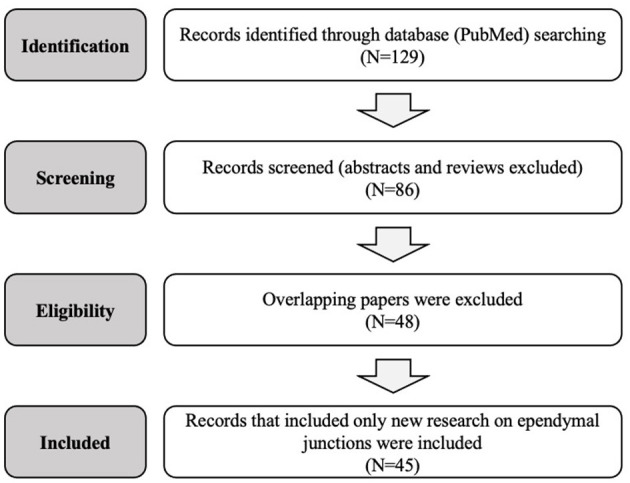
We systematically searched and reviewed original research articles treating ependymal intercellular junctions on PubMed. Reviews, opinion papers, and abstracts were excluded. Research conducted on tissue samples, cell lines, CSF, and animal models was considered.
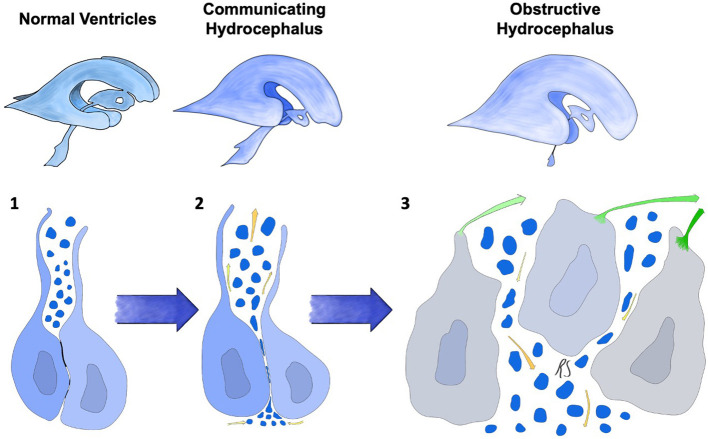
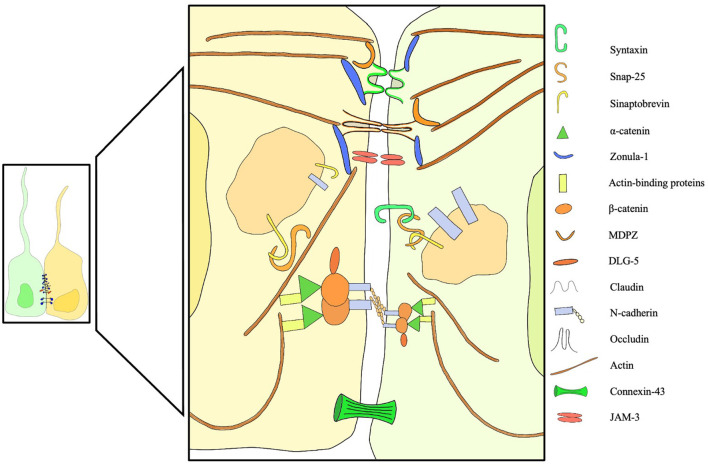
A total of 45 novel articles treating tight, adherens and gap junctions of the ependyma were included in our review, spanning from 1960 to 2022. The findings of this review point toward a central and not yet fully characterized role of the ependymal lining ultrastructure in fluid flow interactions in the brain. In particular, tight junctions circumferentially line the apical equator of ependymal cells, changing between embryonal and adult life in several rodent models, shaping fluid and solute transit in this location. Further, adherens and gap junctions appear to have a pivotal role in several forms of congenital hydrocephalus.
These findings may provide an opportunity for medical management of CSF disorders, potentially allowing for tuning of CSF secretion and absorption. Beyond hydrocephalus, stroke, trauma, this information has relevance for metabolite clearance and drug delivery, with potential to affect many patients with a variety of neurological disorders. This critical look at intercellular junctions in ependyma and the surrounding interstitial spaces is meant to inspire future research on a central and rather unknown component of the CSF-brain interface.
目前对液体和溶质穿过室管膜屏障的运动及其在生理和疾病状态下的变化了解甚少。这一知识空白在很大程度上导致了各种神经系统疾病治疗失败和并发症的发生。
我们系统检索并回顾了PubMed上关于室管膜细胞间连接的原创研究文章。排除综述、观点论文和摘要。纳入了对组织样本、细胞系、脑脊液和动物模型进行的研究。
我们的综述共纳入了45篇关于室管膜紧密连接、黏附连接和缝隙连接的新文章,时间跨度从1960年至2022年。该综述结果表明,室管膜内衬超微结构在脑内流体流动相互作用中发挥着核心且尚未完全明确的作用。特别是,紧密连接沿室管膜细胞顶端赤道周向排列,在几种啮齿动物模型的胚胎期和成年期之间发生变化,决定了该部位液体和溶质的转运。此外,黏附连接和缝隙连接在几种先天性脑积水形式中似乎起着关键作用。
这些发现可能为脑脊液疾病的医学管理提供机会,有可能调节脑脊液的分泌和吸收。除脑积水外,在中风、创伤方面,这些信息与代谢物清除和药物递送相关,可能影响许多患有各种神经系统疾病的患者。对室管膜及其周围间隙细胞间连接的这一关键审视旨在激发对脑脊液 - 脑界面核心且相当未知组成部分的未来研究。