School of Science and Engineering, University of Dundee, Dundee, United Kingdom.
School of Life Sciences, University of Dundee, Dundee, United Kingdom.
Elife. 2023 Apr 11;12:e79862. doi: 10.7554/eLife.79862.
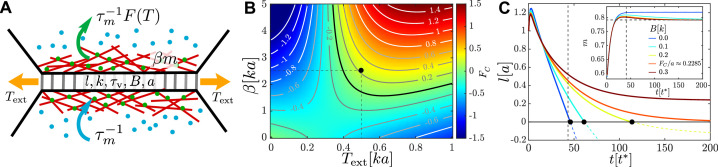
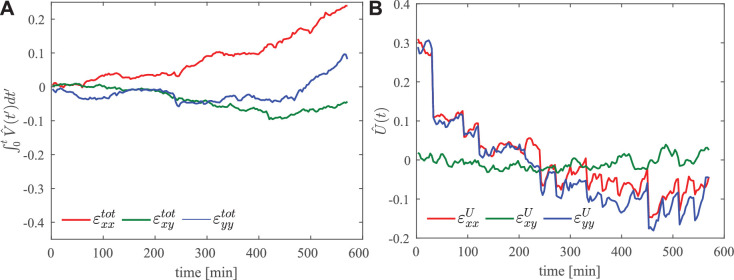
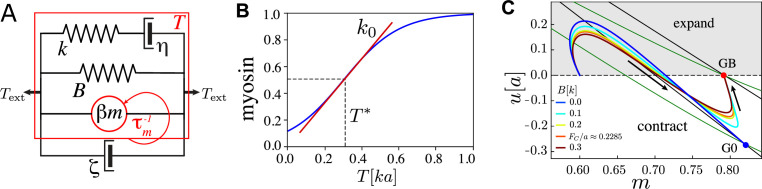
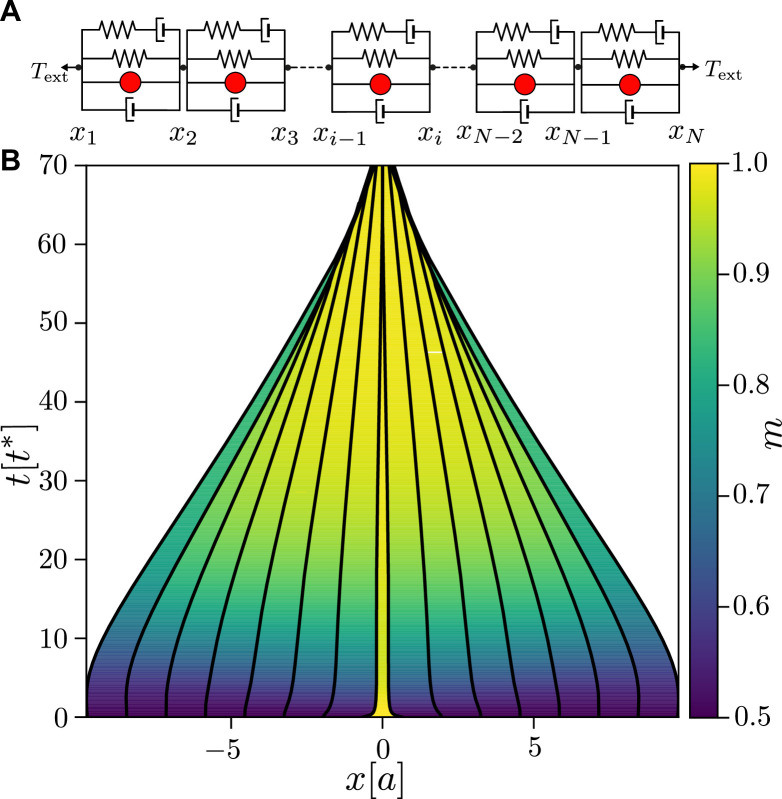
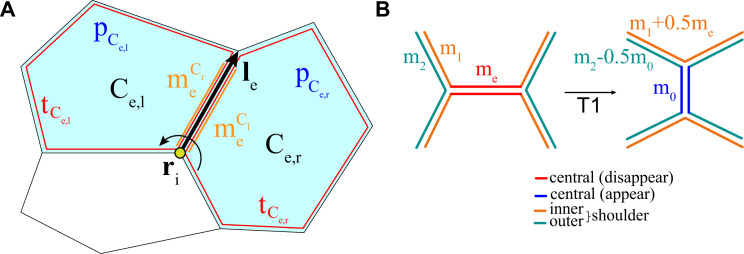
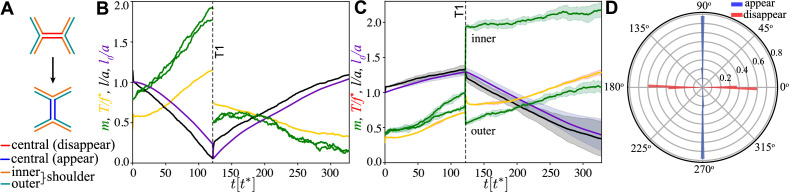
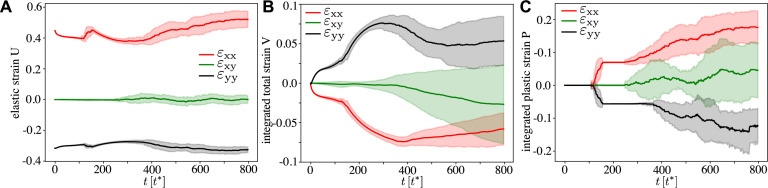
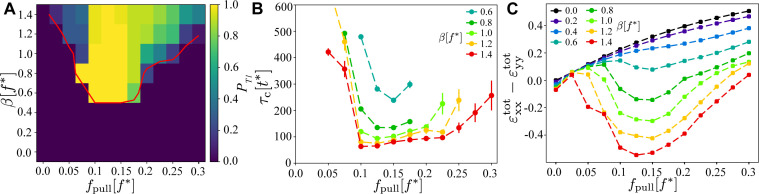
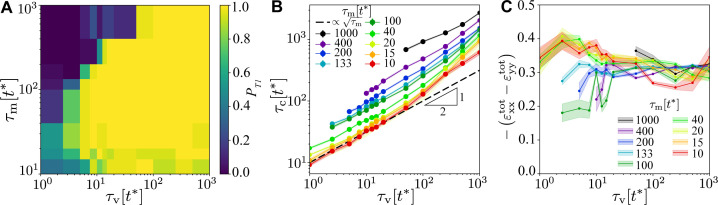
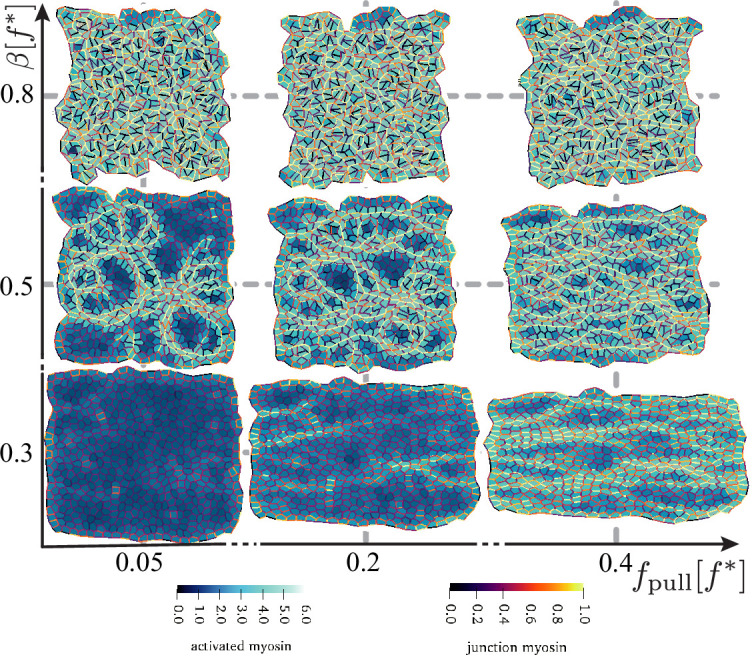
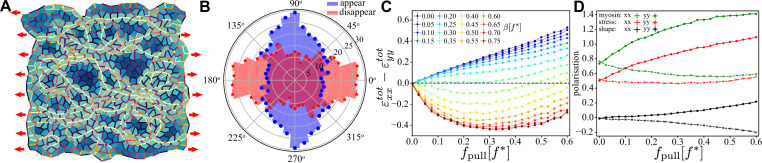
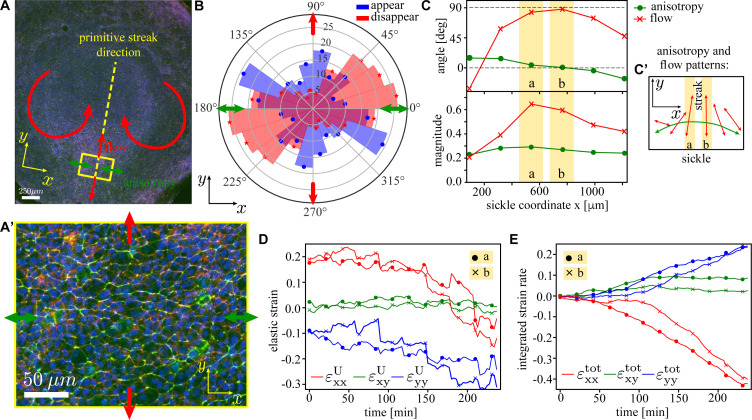
Convergence-extension in embryos is controlled by chemical and mechanical signalling. A key cellular process is the exchange of neighbours via T1 transitions. We propose and analyse a model with positive feedback between recruitment of myosin motors and mechanical tension in cell junctions. The model produces active T1 events, which act to elongate the tissue perpendicular to the main direction of tissue stress. Using an idealised tissue patch comprising several active cells embedded in a matrix of passive hexagonal cells, we identified an optimal range of mechanical stresses to trigger an active T1 event. We show that directed stresses also generate tension chains in a realistic patch made entirely of active cells of random shapes and leads to convergence-extension over a range of parameters. Our findings show that active intercalations can generate stress that activates T1 events in neighbouring cells, resulting in tension-dependent tissue reorganisation, in qualitative agreement with experiments on gastrulation in chick embryos.
胚胎中的汇聚-延伸受化学和机械信号的控制。一个关键的细胞过程是通过 T1 转换交换相邻细胞。我们提出并分析了一个模型,其中肌球蛋白马达的募集与细胞连接中的机械张力之间存在正反馈。该模型产生了积极的 T1 事件,这些事件作用于垂直于组织应力主要方向的组织伸长。使用由几个嵌入在被动六方细胞基质中的活性细胞组成的理想化组织斑块,我们确定了一个可以触发活性 T1 事件的最佳机械应力范围。我们表明,定向应力也会在完全由形状随机的活性细胞组成的实际斑块中产生张力链,并导致在一系列参数下的汇聚-延伸。我们的研究结果表明,活性插入可以产生激活相邻细胞中 T1 事件的应力,从而导致依赖张力的组织重组,这与鸡胚原肠胚形成实验的定性结果一致。