Turku Brain and Mind Center, Clinical Neurosciences, University of Turku, 20014 Turku, Finland.
Turku PET Centre, Neurocenter, Turku University Hospital, 20520 Turku, Finland.
Brain. 2023 Aug 1;146(8):3146-3155. doi: 10.1093/brain/awad123.
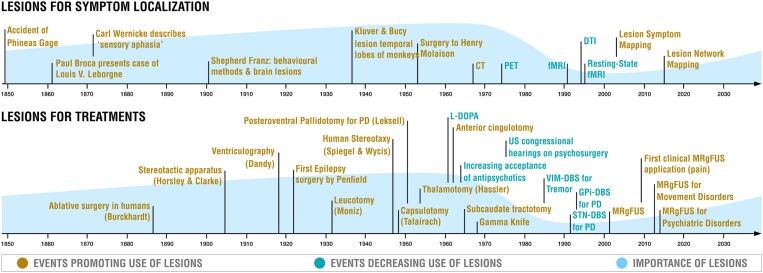
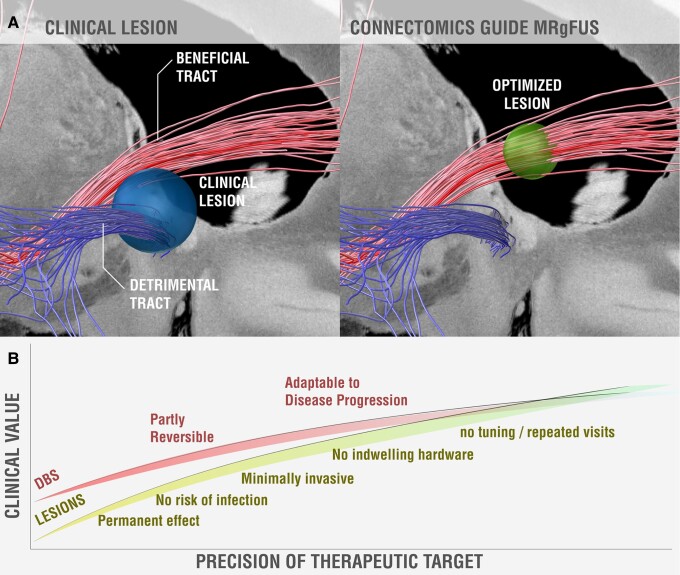
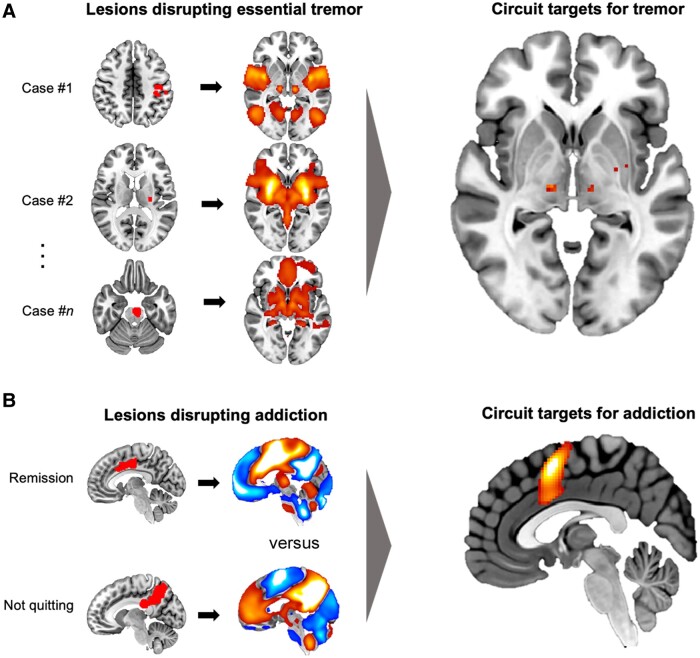
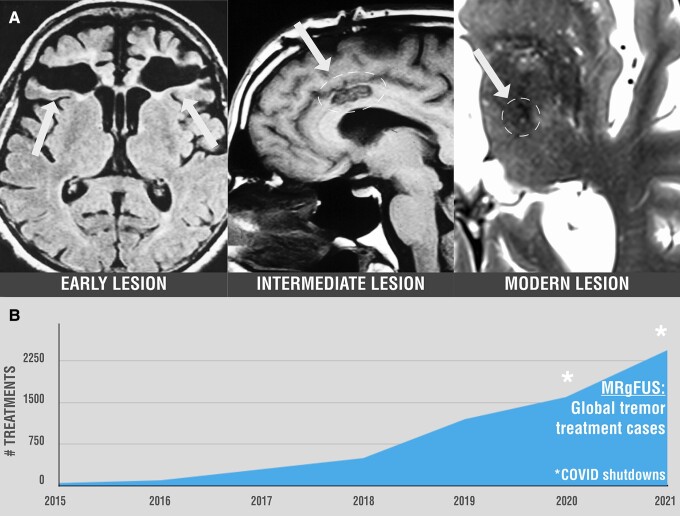
Historically, pathological brain lesions provided the foundation for localization of symptoms and therapeutic lesions were used as a treatment for brain diseases. New medications, functional neuroimaging and deep brain stimulation have led to a decline in lesions in the past few decades. However, recent advances have improved our ability to localize lesion-induced symptoms, including localization to brain circuits rather than individual brain regions. Improved localization can lead to more precise treatment targets, which may mitigate traditional advantages of deep brain stimulation over lesions such as reversibility and tunability. New tools for creating therapeutic brain lesions such as high intensity focused ultrasound allow for lesions to be placed without a skin incision and are already in clinical use for tremor. Although there are limitations, and caution is warranted, improvements in lesion-based localization are refining our therapeutic targets and improved technology is providing new ways to create therapeutic lesions, which together may facilitate the return of the lesion.
从历史上看,病理性脑损伤为症状定位提供了基础,而治疗性损伤则被用作治疗脑部疾病的手段。在过去几十年中,新的药物、功能神经影像学和深部脑刺激技术的发展导致了损伤的减少。然而,最近的进展提高了我们定位损伤引起的症状的能力,包括将定位到脑回路而不是单个脑区。更精确的定位可以导致更精确的治疗靶点,这可能减轻深部脑刺激相对于损伤的传统优势,例如可逆性和可调性。用于创建治疗性脑损伤的新工具,如高强度聚焦超声,可以在无需皮肤切口的情况下放置损伤,并且已经在临床上用于治疗震颤。尽管存在局限性,需要谨慎对待,但基于损伤的定位的改进正在完善我们的治疗靶点,而改进的技术正在为创建治疗性损伤提供新的方法,这两者共同可能促进损伤的回归。