Seminati Davide, Ceola Stefano, Pincelli Angela Ida, Leni Davide, Gatti Andrea, Garancini Mattia, L'Imperio Vincenzo, Cattoni Alessandro, Pagni Fabio
Department of Medicine and Surgery, Pathology, Fondazione IRCCS San Gerardo dei Tintori, 20900 Monza, Italy.
Department of Endocrinology, Fondazione IRCCS San Gerardo dei Tintori, 20900 Monza, Italy.
Cancers (Basel). 2023 Mar 29;15(7):2039. doi: 10.3390/cancers15072039.
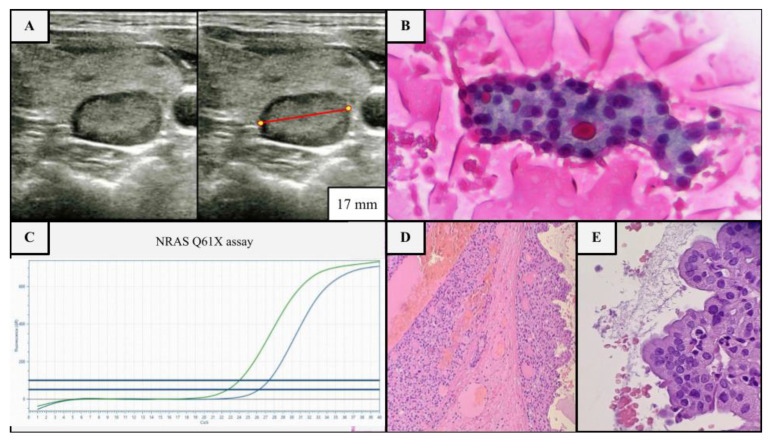
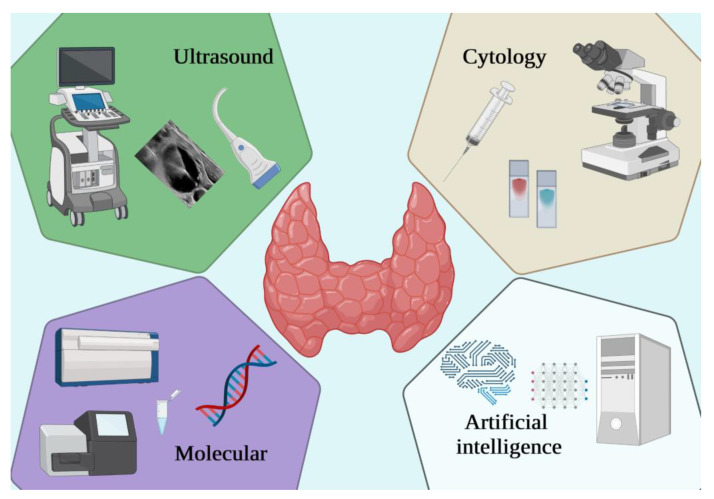
Thyroid fine-needle aspiration (FNA) is a commonly used diagnostic cytological procedure in pediatric patients for the evaluation of thyroid nodules, triaging them for the detection of thyroid cancer. In recent years, greater attention has been paid to thyroid FNA in this setting, including the use of updated ultrasound score algorithms to improve accuracy and yield, especially considering the theoretically higher risk of malignancy of these lesions compared with the adult population, as well as to minimize patient discomfort. Moreover, molecular genetic testing for thyroid disease is an expanding field of research that could aid in distinguishing benign from cancerous nodules and assist in determining their clinical management. Finally, artificial intelligence tools can help in this task by performing a comprehensive analysis of all the obtained data. These advancements have led to greater reliance on FNA as a first-line diagnostic tool for pediatric thyroid disease. This review article provides an overview of these recent developments and their impact on the diagnosis and management of thyroid nodules in children.
甲状腺细针穿刺抽吸活检(FNA)是儿科患者中常用的一种诊断性细胞学检查方法,用于评估甲状腺结节,并对其进行分类以检测甲状腺癌。近年来,在这种情况下,人们对甲状腺FNA给予了更多关注,包括使用更新的超声评分算法来提高准确性和阳性率,特别是考虑到与成人相比,这些病变理论上具有更高的恶性风险,同时尽量减少患者的不适。此外,甲状腺疾病的分子遗传学检测是一个不断扩展的研究领域,有助于区分良性和癌性结节,并协助确定其临床管理。最后,人工智能工具可以通过对所有获得的数据进行全面分析来帮助完成这项任务。这些进展使得人们更加依赖FNA作为儿科甲状腺疾病的一线诊断工具。这篇综述文章概述了这些最新进展及其对儿童甲状腺结节诊断和管理的影响。