Institute of Biomedical Sciences, Faculty of Health Sciences, Universidad Autónoma de Chile, Temuco 4810101, Chile.
Millennium Institute on Immunology and Immunotherapy (MIII), Center for Cancer Prevention and Control (CECAN), Department of Pathology, School of Medicine, Pontificia Universidad Católica de Chile, Santiago 8380000, Chile.
Int J Mol Sci. 2023 Mar 27;24(7):6294. doi: 10.3390/ijms24076294.
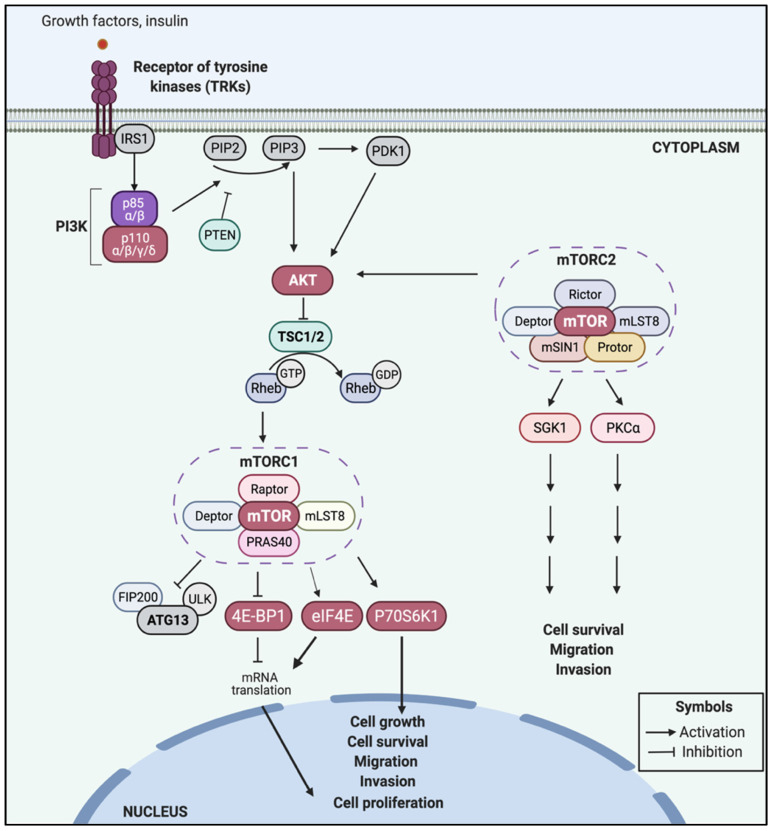
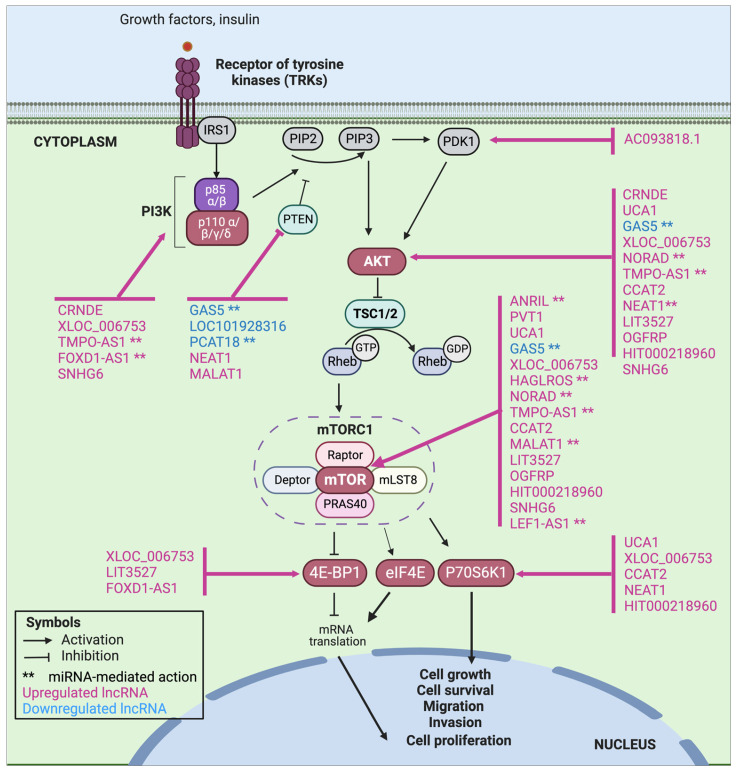
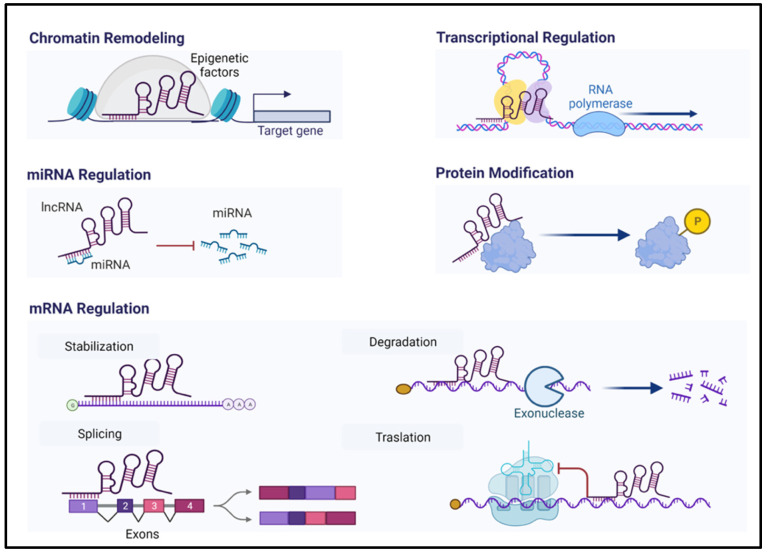
Gastric cancer (GC) represents ~10% of the global cancer-related deaths, increasingly affecting the younger population in active stages of life. The high mortality of GC is due to late diagnosis, the presence of metastasis and drug resistance development. Additionally, current clinical markers do not guide the patient management adequately, thereby new and more reliable biomarkers and therapeutic targets are still needed for this disease. RNA-seq technology has allowed the discovery of new types of RNA transcripts including long non-coding RNAs (lncRNAs), which are able to regulate the gene/protein expression of many signaling pathways (e.g., the PI3K/AKT/mTOR pathway) in cancer cells by diverse molecular mechanisms. In addition, these lncRNAs might also be proposed as promising diagnostic or prognostic biomarkers or as potential therapeutic targets in GC. This review describes important topics about some lncRNAs that have been described as regulators of the PI3K/AKT/mTOR signaling pathway, and hence, their potential oncogenic role in the development of this malignancy.
胃癌(GC)约占全球癌症相关死亡人数的 10%,越来越多地影响到处于活跃生活阶段的年轻人群。GC 死亡率高的原因是诊断较晚、存在转移和耐药性发展。此外,目前的临床标志物不能充分指导患者管理,因此,这种疾病仍然需要新的、更可靠的生物标志物和治疗靶点。RNA-seq 技术已经发现了新的 RNA 转录本类型,包括长非编码 RNA(lncRNA),它们能够通过多种分子机制调节癌细胞中许多信号通路(如 PI3K/AKT/mTOR 通路)的基因/蛋白表达。此外,这些 lncRNA 也可以作为有前途的诊断或预后生物标志物,或作为 GC 潜在的治疗靶点。本综述描述了一些 lncRNA 的重要内容,这些 lncRNA 被描述为 PI3K/AKT/mTOR 信号通路的调节剂,因此,它们在这种恶性肿瘤的发展中具有潜在的致癌作用。