Mazur-Bialy Agnieszka, Tim Sabina, Kołomańska-Bogucka Daria, Burzyński Bartłomiej, Jurys Tomasz, Pławiak Natalia
Department of Biomechanics and Kinesiology, Faculty of Health Science, Jagiellonian University Medical College, Skawińska 8, 31-066 Krakow, Poland.
Department of Rehabilitation, Faculty of Health Sciences in Katowice, Medical University of Silesia, 40-055 Katowice, Poland.
J Clin Med. 2023 Mar 27;12(7):2536. doi: 10.3390/jcm12072536.
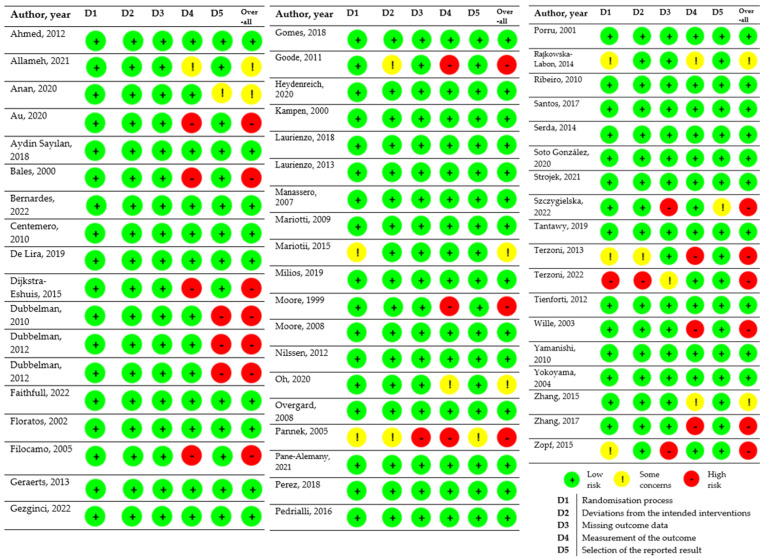
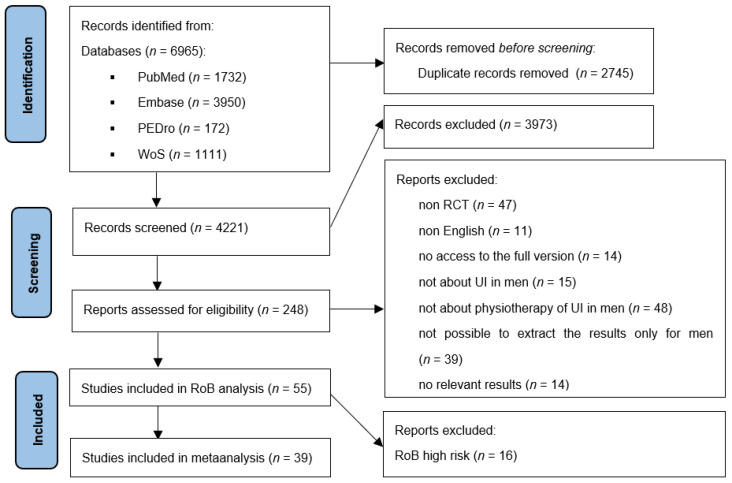
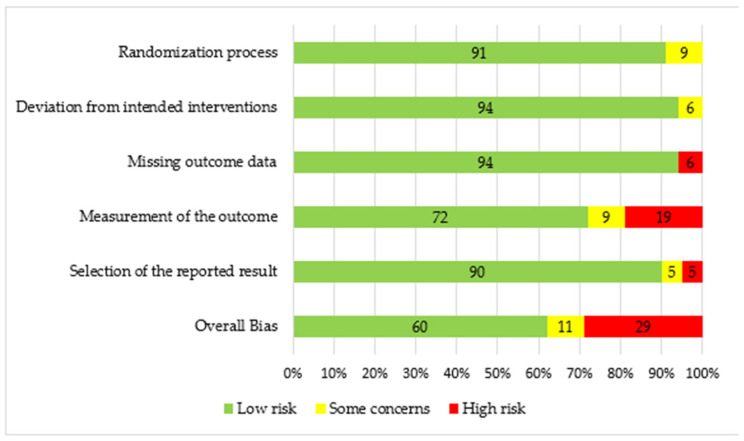
Urinary incontinence (UI) is a serious health issue that affects both women and men. The risk of UI increases in men with age and after treatment for prostate cancer and affects up to 32% of men. Furthermore, UI may affect up to 69% of men after prostatectomy. Considering such a high incidence, it is critical to search for effective methods to mitigate this issue. Hence, the present review aims to provide an overview of physiotherapeutic methods and evaluate their effectiveness in treating UI in men. This systematic review was performed using articles included in PubMed, Embase, WoS, and PEDro databases. A total of 6965 relevant articles were found. However, after a risk of bias assessment, 39 studies met the inclusion criteria and were included in the review. The research showed that the available physiotherapeutic methods for treating men with UI, including those after prostatectomy, involve pelvic floor muscle training (PFMT) alone or in combination with biofeedback (BF) and/or electrostimulation (ES), vibrations, and traditional activity. In conclusion, PFMT is the gold standard of UI therapy, but it may be complemented by other techniques to provide a personalized treatment plan for patients. The effectiveness of the physiotherapeutic methods varies from study to study, and large methodological differences make it difficult to accurately compare individual results and draw unequivocal conclusions.
尿失禁(UI)是一个严重的健康问题,影响着男性和女性。男性尿失禁的风险随着年龄增长以及前列腺癌治疗后而增加,影响多达32%的男性。此外,前列腺切除术后,尿失禁可能影响多达69%的男性。考虑到如此高的发病率,寻找有效的方法来缓解这一问题至关重要。因此,本综述旨在概述物理治疗方法,并评估其在治疗男性尿失禁方面的有效性。本系统综述使用了PubMed、Embase、WoS和PEDro数据库中收录的文章。共找到6965篇相关文章。然而,经过偏倚风险评估后,39项研究符合纳入标准并被纳入综述。研究表明,现有的治疗男性尿失禁(包括前列腺切除术后的男性)的物理治疗方法包括单独的盆底肌训练(PFMT)或与生物反馈(BF)和/或电刺激(ES)、振动及传统活动相结合。总之,盆底肌训练是尿失禁治疗的金标准,但可能需要其他技术辅助,为患者提供个性化的治疗方案。物理治疗方法的有效性因研究而异,且方法上的巨大差异使得难以准确比较个体结果并得出明确结论。