Westmead Private Physiotherapy Services, Westmead Private Hospital, Westmead, New South Wales, Australia.
The Clinical Research Institute, Westmead, New South Wales, Australia.
Nat Rev Urol. 2021 May;18(5):259-281. doi: 10.1038/s41585-021-00445-5. Epub 2021 Apr 8.
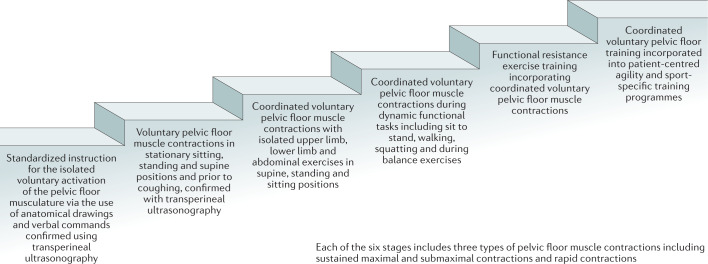
Urinary incontinence is a common and predictable consequence among men with localized prostate cancer who have undergone radical prostatectomy. Despite advances in the surgical technique, urinary continence recovery time remains variable. A range of surgical and patient-related risk factors contributing to urinary incontinence after radical prostatectomy have been described, including age, BMI, membranous urethral length and urethral sphincter insufficiency. Physical activity interventions incorporating aerobic exercise, resistance training and pelvic floor muscle training programmes can positively influence the return to continence in men after radical prostatectomy. Traditional approaches to improving urinary continence after radical prostatectomy have typically focused on interventions delivered during the postoperative period (rehabilitation). However, the limited efficacy of these postoperative approaches has led to a shift from the traditional reactive model of care to more comprehensive interventions incorporating exercise-based programmes that begin in the preoperative period (prehabilitation) and continue after surgery. Comprehensive prehabilitation interventions include appropriately prescribed aerobic exercise, resistance training and specific pelvic floor muscle instruction and exercise training programmes. Transperineal ultrasonography is a non-invasive and validated method for the visualization of the action of the pelvic floor musculature, providing real-time visual biofeedback to the patient during specific pelvic floor muscle instruction and training. Importantly, the waiting time before surgery can be used for the delivery of comprehensive prehabilitation exercise-based interventions to increase patient preparedness in the lead-up to surgery and optimize continence and health-related quality-of-life outcomes following radical prostatectomy.
尿失禁是接受根治性前列腺切除术的局限性前列腺癌男性的常见且可预测的后果。尽管手术技术有所进步,但尿控恢复时间仍然存在差异。已经描述了多种与手术和患者相关的风险因素,这些因素可导致根治性前列腺切除术后发生尿失禁,包括年龄、BMI、膜部尿道长度和尿道括约肌功能不全。包含有氧运动、阻力训练和盆底肌肉训练方案的身体活动干预措施可以积极影响根治性前列腺切除术后男性恢复尿控。传统上改善根治性前列腺切除术后尿控的方法通常侧重于术后期间(康复)进行的干预措施。然而,这些术后方法的疗效有限,导致从传统的反应性护理模式向更全面的干预措施转变,这些措施包括在术前(术前康复)开始并在手术后继续进行的基于运动的方案。综合术前康复干预措施包括适当规定的有氧运动、阻力训练以及特定的盆底肌肉指导和锻炼训练方案。经会阴超声是一种用于可视化盆底肌肉运动的非侵入性和经过验证的方法,可在特定的盆底肌肉指导和训练期间为患者提供实时视觉生物反馈。重要的是,手术前的等待时间可用于提供综合术前基于运动的干预措施,以增加患者在手术前的准备程度,并优化根治性前列腺切除术后的尿控和健康相关生活质量结果。