Siebenbürger Georg, Neudeck Rouven, Daferner Mark Philipp, Fleischhacker Evi, Böcker Wolfgang, Ockert Ben, Helfen Tobias
Department of Orthopaedics and Trauma Surgery, Musculoskeletal University Center Munich (MUM), University Hospital, LMU Munich, 81377 Munchen, Germany.
Augenklinik, Städtisches Klinikum, 76133 Karlsruhe, Germany.
J Clin Med. 2023 Mar 28;12(7):2556. doi: 10.3390/jcm12072556.
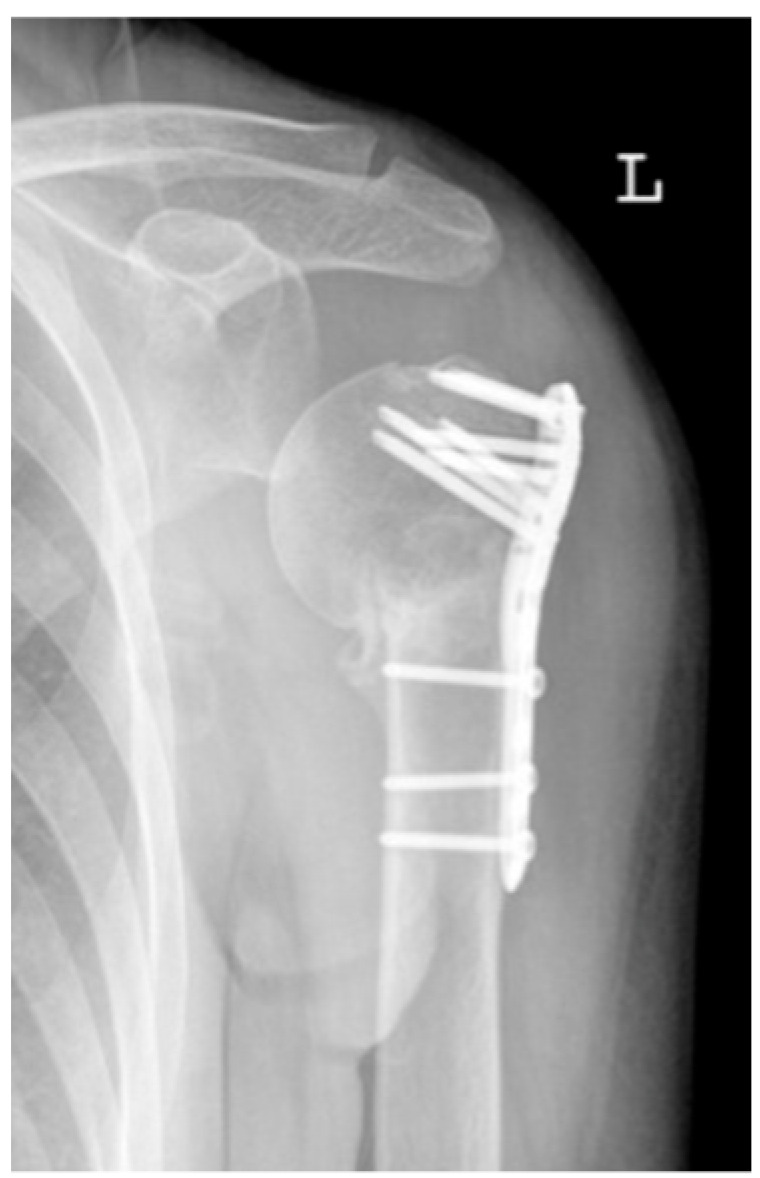
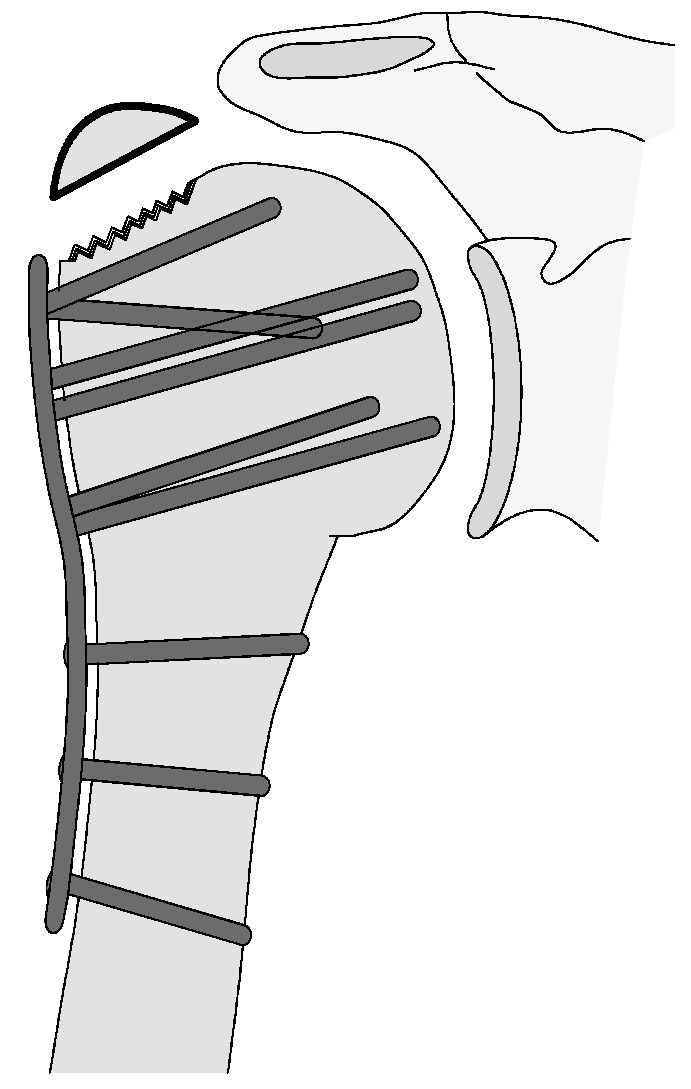
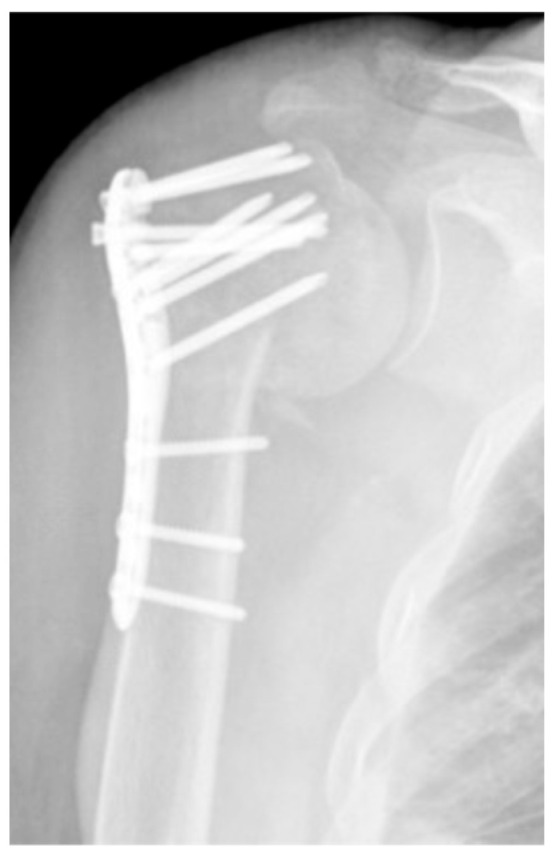
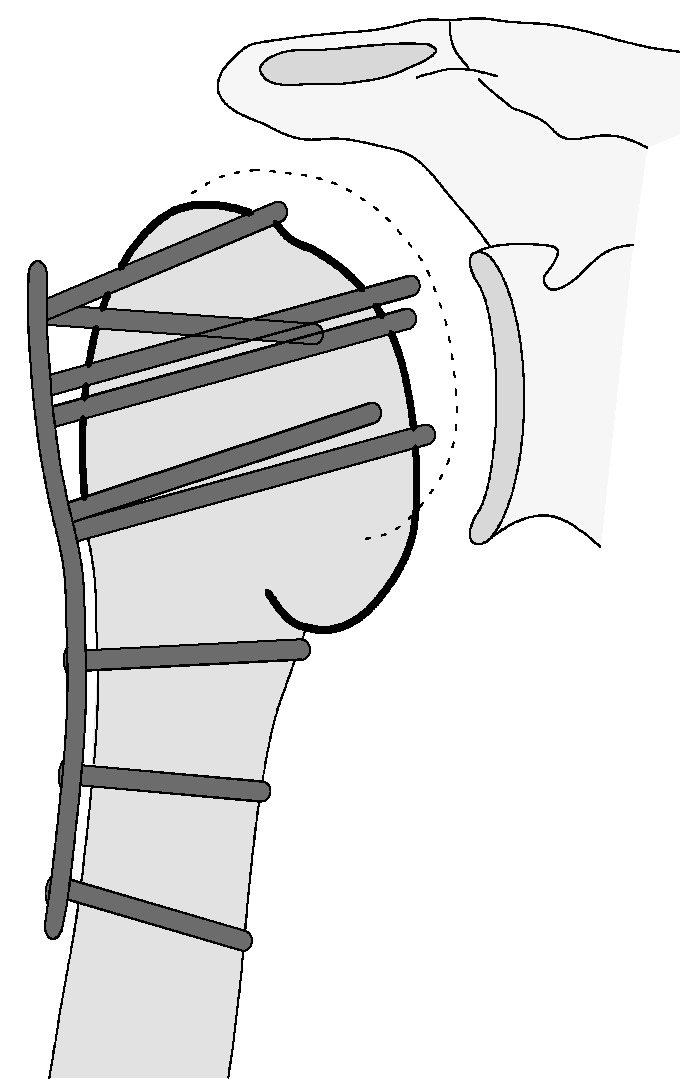
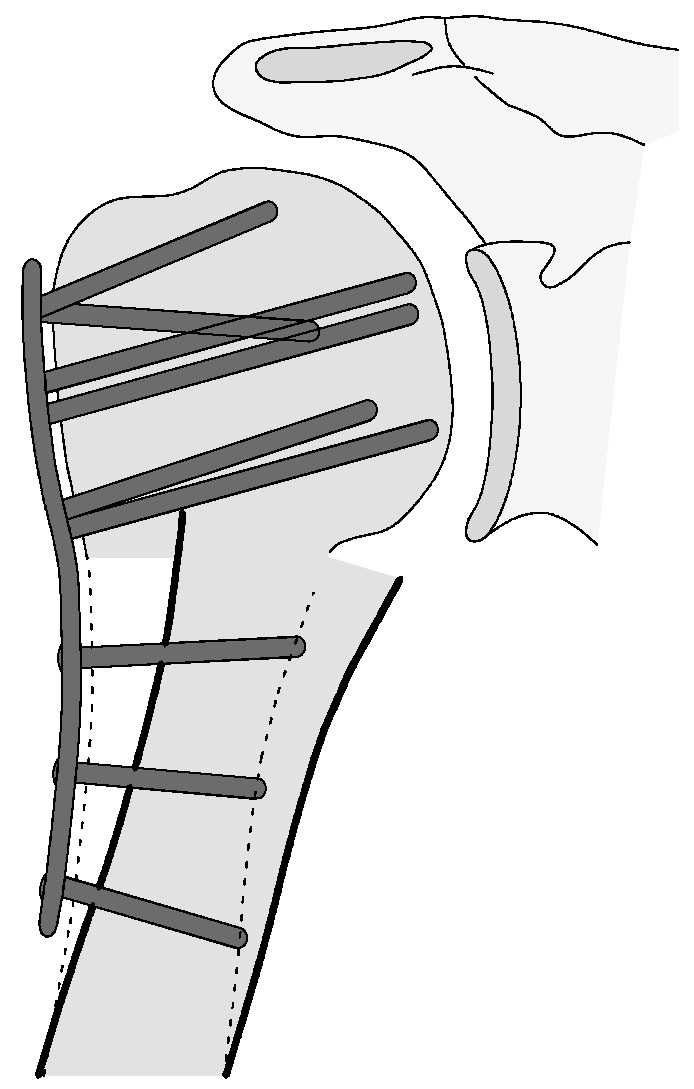
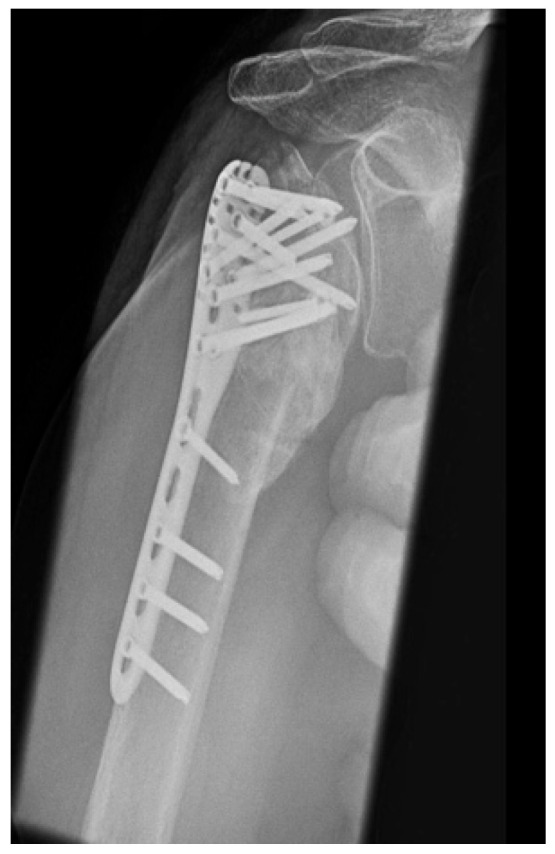
The aim of this study was to create a novel complication classification for osteosynthesis-related complications following angular stable plating of the proximal humerus subsuming the influence of these complications on clinical outcome in relation to fracture morphology and consequent revision strategies. A total of 1047 proximal humerus fractures with overall 193 osteosynthesis-associated complications (24.5%) were included. The following complication types could be clarified: complication Type 1 is defined by mild varus (<20°) or valgus displacement of the humeral head without resulting in a screw cutout through the humeral head cortex. Type 2a is defined by varus displacement (<20°) of the humeral head associated with screw cutout through the humeral head cortex. Type 2b complication is limited to displacement of the greater tuberosity, lesser tuberosity, or both tuberosities. Complication Type 2c is defined by severe varus dislocation (>20°) of the humeral head with screw cutout at the humeral head cortex. Complication Type 3 describes a displacement of the angular stable plate in the humeral shaft region with associated shaft-sided screw cutout, while the position of the humeral head remains static. Complication Type 4 is characterized by the occurrence of AVN with or without glenoidal affection (4a/b). Clinical outcome according to the constant score was mainly affected by type 2-4, leading to a deteriorated result. Depending on the type of complication, specific revision strategies can be considered. Additionally, more complex fracture patterns fostered the incidence of complications.
本研究的目的是创建一种针对肱骨近端角稳定钢板固定术后与接骨术相关并发症的新型分类方法,纳入这些并发症对与骨折形态相关的临床结果的影响以及相应的翻修策略。共纳入1047例肱骨近端骨折,其中193例(24.5%)发生了与接骨术相关的并发症。以下并发症类型得以明确:并发症1型定义为肱骨头轻度内翻(<20°)或外翻移位,未导致螺钉穿出肱骨头皮质。2a型定义为肱骨头内翻移位(<20°)并伴有螺钉穿出肱骨头皮质。2b型并发症仅限于大结节、小结节或两者同时移位。并发症2c型定义为肱骨头严重内翻脱位(>20°)且肱骨头皮质处有螺钉穿出。并发症3型描述的是角稳定钢板在肱骨干区域移位并伴有骨干侧螺钉穿出,而肱骨头位置保持不变。并发症4型的特征是出现有或无关节盂受累(4a/b)的缺血性坏死。根据Constant评分得出的临床结果主要受2 - 4型影响,导致结果恶化。根据并发症类型,可以考虑特定的翻修策略。此外,更复杂的骨折模式会增加并发症的发生率。