Narita Yukiya, Muro Kei
Department of Clinical Oncology, Aichi Cancer Center Hospital, Nagoya 464-8681, Japan.
J Clin Med. 2023 Apr 1;12(7):2636. doi: 10.3390/jcm12072636.
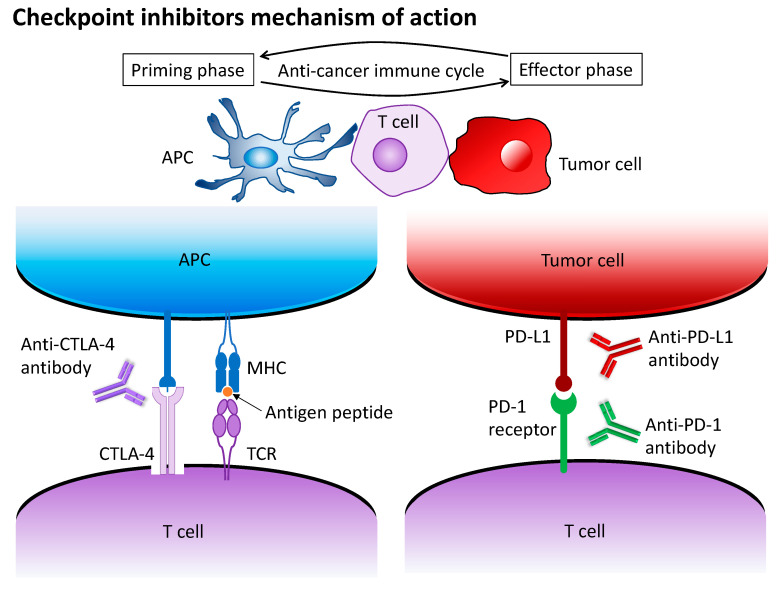
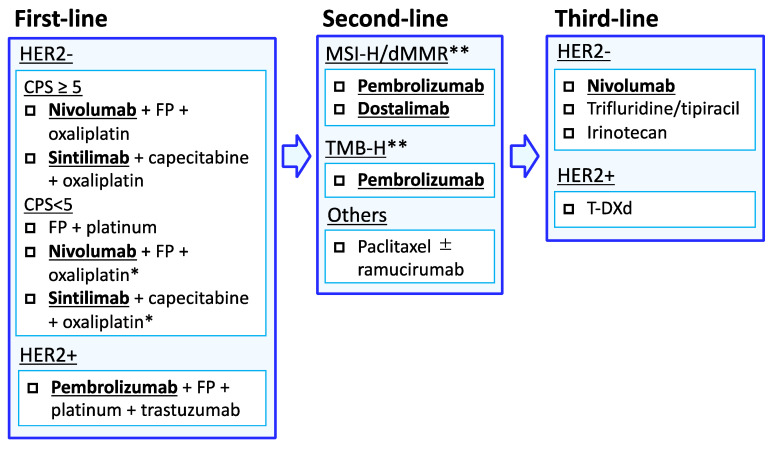
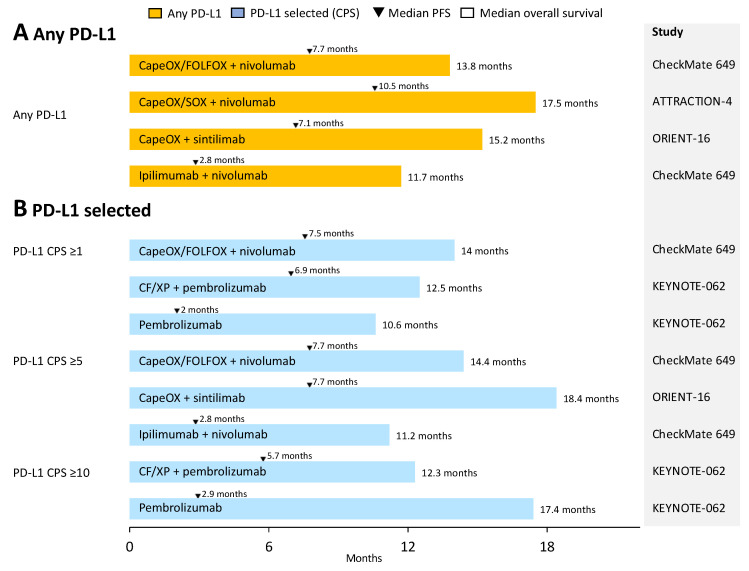
Gastric cancer treatments are evolving rapidly. For example, immune checkpoint inhibitors, especially those that target PD-1 or PD-L1, have long-term efficacy in a subset of gastric cancer patients, and are currently the first-line therapy. Immunotherapies approved for use in untreated gastric cancer patients include monotherapy and chemotherapy-immunotherapy combinations. Major clinical trials have reported efficacy and safety data suggesting that PD-L1 expression is important for regimen selection, although other biomarkers, clinicopathologic factors, and patient preference might also be relevant in other situations. Currently, several novel biomarkers and therapeutic strategies are being assessed, which might refine the current treatment paradigm. In this review, we describe the current treatment regimens for patients with gastric cancer and detail the approach we use for the selection of first-line immunotherapy regimens.
胃癌治疗方法正在迅速发展。例如,免疫检查点抑制剂,尤其是那些靶向PD-1或PD-L1的抑制剂,在一部分胃癌患者中具有长期疗效,目前是一线治疗方法。被批准用于未治疗的胃癌患者的免疫疗法包括单一疗法以及化疗-免疫疗法联合方案。主要临床试验报告了疗效和安全性数据,表明PD-L1表达对于治疗方案的选择很重要,尽管在其他情况下其他生物标志物、临床病理因素和患者偏好可能也相关。目前,几种新型生物标志物和治疗策略正在评估中,这可能会完善当前的治疗模式。在本综述中,我们描述了目前胃癌患者的治疗方案,并详细介绍了我们选择一线免疫治疗方案的方法。