Benato Alberto, Menna Grazia, Rapisarda Alessandro, Polli Filippo Maria, D'Ercole Manuela, Izzo Alessandro, D'Alessandris Quintino Giorgio, Montano Nicola
Department of Neuroscience, Neurosurgery Section, Fondazione Policlinico Universitario Agostino Gemelli IRCCS-Università Cattolica del Sacro Cuore, 00168 Rome, Italy.
J Clin Med. 2023 Apr 3;12(7):2664. doi: 10.3390/jcm12072664.
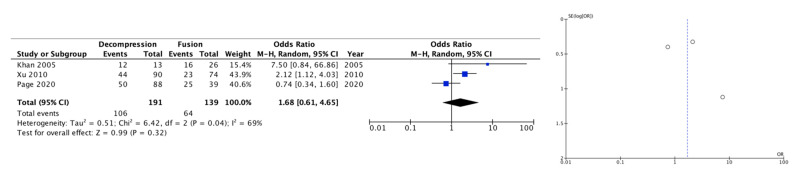
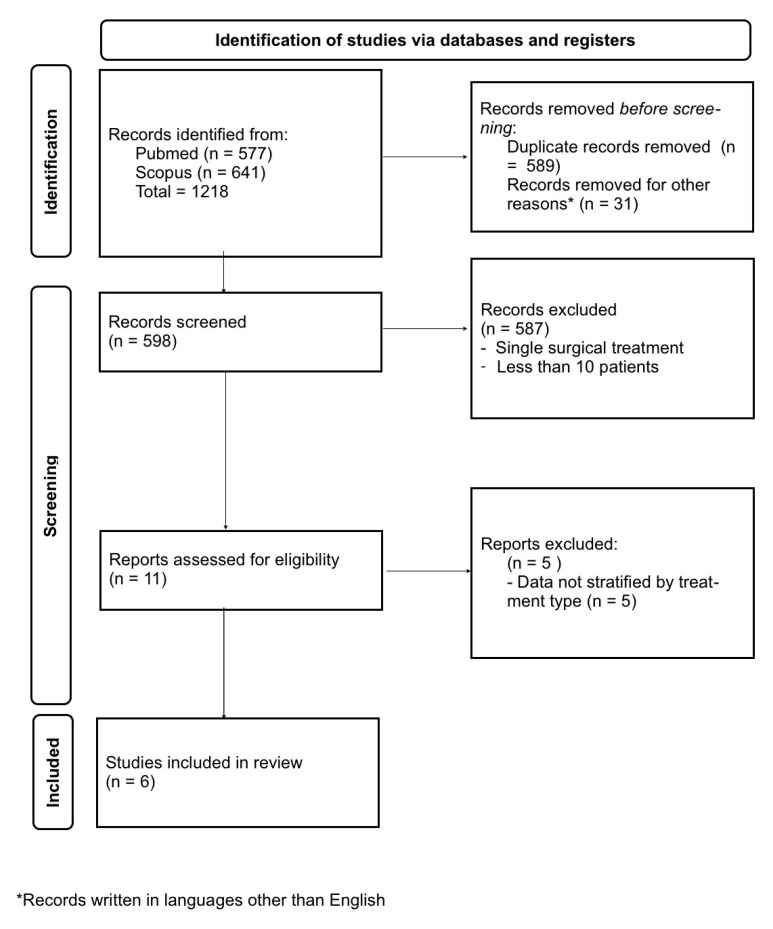
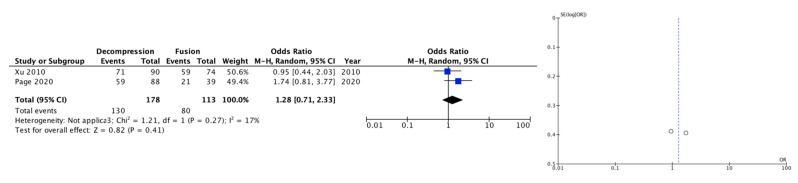
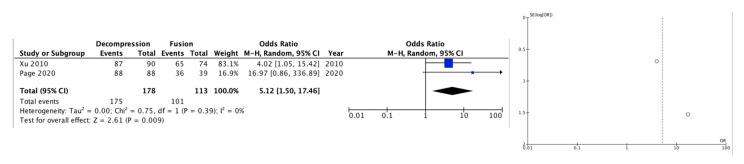
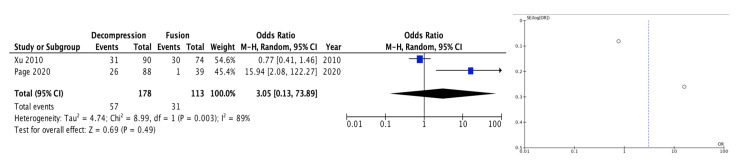
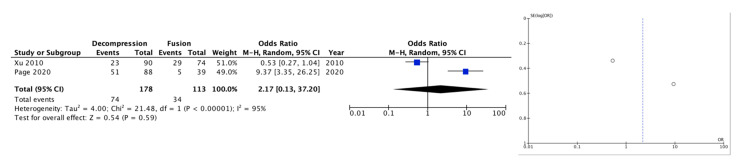
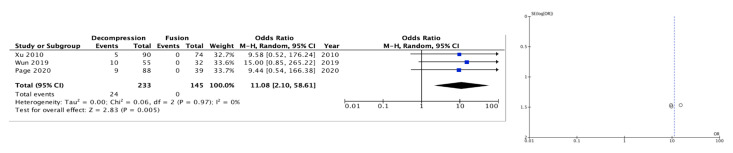
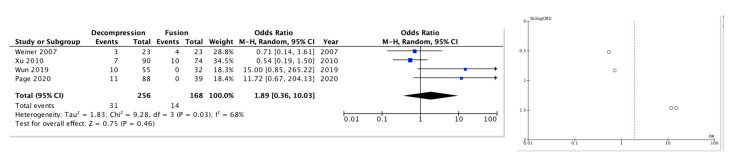
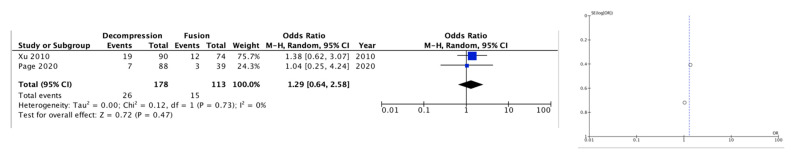
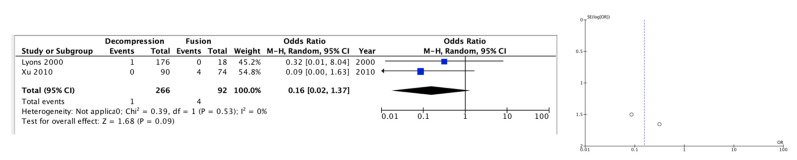
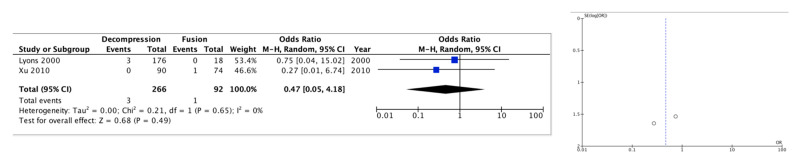
The management of symptomatic lumbar synovial cysts (LSC) is still a matter of debate. Previous systematic reviews did not stratify data according to different treatment techniques or incompletely reported comparative data on patients treated with lumbar posterior decompression (LPD) and lumbar decompression and fusion (LDF). The aim of our study was to compare LPD and LDF via a systematic review and meta-analysis of the existing literature. The design of this study was in accordance with the 2020 Preferred Reporting Items for Systematic Reviews and Meta-Analyses (PRISMA) guidelines. The review questions were as follows: among patients suffering from symptomatic lumbar synovial cysts (population) and treated with either posterior lumbar decompression or posterior decompression with fusion (intervention), who gets the best results (outcome), in terms of cyst recurrence, reoperation rates, and improvement of postoperative symptoms (comparison)? The search of the literature yielded a total of 1218 results. Duplicate records were then removed ( = 589). A total of 598 articles were screened, and 587 records were excluded via title and abstract screening; 11 studies were found to be relevant to our research question and were assessed for eligibility. Upon full-text review, 5 were excluded because they failed to report any parameter separately for both LPD and LDF. Finally, 6 studies for a total of 657 patients meeting the criteria stated above were included in the present investigation. Our analysis showed that LDF is associated with better results in terms of lower postoperative back pain and cyst recurrence compared with LPD. No differences were found in reoperation rates and complication rates between the two techniques. The impact of minimally invasive decompression techniques on the different outcomes in LSC should be assessed in the future and compared with instrumentation techniques.
有症状的腰椎滑膜囊肿(LSC)的治疗仍存在争议。以往的系统评价未根据不同的治疗技术对数据进行分层,或未完整报告接受腰椎后路减压(LPD)和腰椎减压融合术(LDF)治疗患者的比较数据。我们研究的目的是通过对现有文献进行系统评价和荟萃分析,比较LPD和LDF。本研究的设计符合2020年系统评价和荟萃分析优先报告项目(PRISMA)指南。审查问题如下:在患有有症状腰椎滑膜囊肿的患者(人群)中,接受腰椎后路减压或后路减压融合术(干预)治疗的患者,在囊肿复发、再次手术率和术后症状改善方面(比较),谁能获得最佳结果(结局)?文献检索共获得1218条结果。然后删除重复记录(=589条)。共筛选了598篇文章,通过标题和摘要筛选排除了587条记录;发现11项研究与我们的研究问题相关,并对其进行了资格评估。在全文审查中,排除了5项研究,因为它们未分别报告LPD和LDF的任何参数。最后,本研究纳入了6项研究,共657例符合上述标准的患者。我们的分析表明,与LPD相比,LDF在降低术后背痛和囊肿复发方面效果更好。两种技术在再次手术率和并发症发生率方面未发现差异。未来应评估微创减压技术对LSC不同结局的影响,并与器械技术进行比较。