2nd Department of Internal Medicine, Pavol Jozef Safarik University and Louis Pasteur University Hospital, 040 12 Kosice, Slovakia.
Department of Translational and Precision Medicine, Sapienza University of Rome, 00185 Rome, Italy.
Nutrients. 2023 Mar 27;15(7):1617. doi: 10.3390/nu15071617.
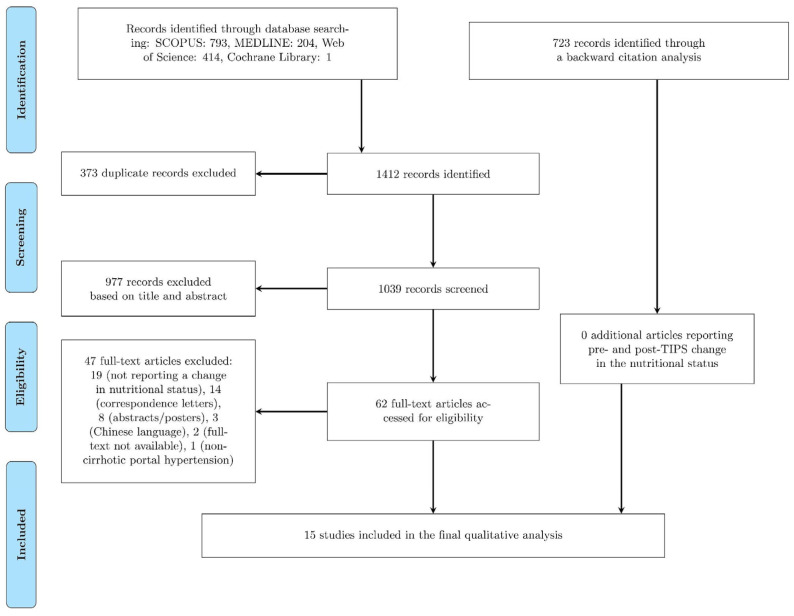
Liver cirrhosis leads to clinically significant portal hypertension. Transjugular intrahepatic portosystemic shunt (TIPS) has been shown to effectively reduce the degree of portal hypertension and treat its complications. However, poor nutritional status has been shown to be associated with hepatic encephalopathy, acute on chronic liver failure, and mortality following TIPS placement. The purpose of this systematic review is to create another perspective and evaluate the effect of TIPS placement on the nutritional status of patients with liver cirrhosis.
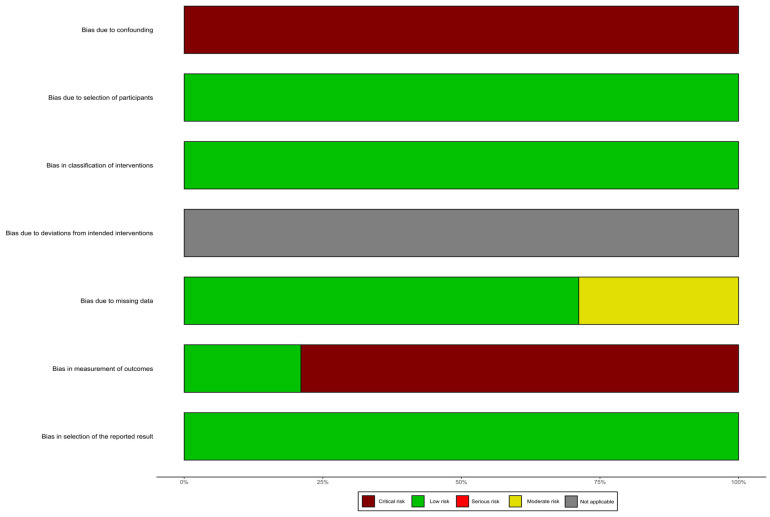
A comprehensive search of four major electronic databases was conducted to identify studies that assessed the nutritional status of cirrhotic patients before and after TIPS placement. The risk of bias was evaluated using ROBINS-I guidelines.
Fifteen studies were analyzed in this review. The results indicate that among the 11 studies that evaluated changes in ascites-free weight and body mass index or body cell mass, 10 reported an improvement in one or more measures. Furthermore, all seven studies that evaluated changes in muscle mass demonstrated an increase in muscle mass. Among the four studies that evaluated subcutaneous fat tissue, three showed a significant expansion, while two out of three studies evaluating visceral fat tissue reported a significant reduction.
The results of this systematic review suggest that TIPS placement is associated with improvement in the nutritional status of cirrhotic patients, indicated by an increase in ascites-free weight, body mass index, and muscle mass. Additionally, TIPS placement leads to a shift in the distribution of fat mass, with a preference for subcutaneous over visceral adipose tissue. Notably, sarcopenic patients seem to benefit the most from TIPS placement in terms of nutritional status.
肝硬化可导致显著的临床门静脉高压。经颈静脉肝内门体分流术(TIPS)已被证明可有效降低门静脉高压程度并治疗其并发症。然而,已有研究表明,营养状况不良与肝性脑病、慢加急性肝衰竭以及 TIPS 术后死亡率相关。本系统评价旨在从另一个角度评估 TIPS 对肝硬化患者营养状况的影响。
对四个主要电子数据库进行全面检索,以确定评估 TIPS 前后肝硬化患者营养状况的研究。采用 ROBINS-I 指南评估偏倚风险。
本综述分析了 15 项研究。结果表明,在评估腹水消退体重和体重指数或细胞体质量变化的 11 项研究中,有 10 项研究报告了一项或多项指标的改善。此外,在评估肌肉质量变化的 7 项研究中,所有研究均显示肌肉质量增加。在评估皮下脂肪组织的 4 项研究中,有 3 项显示出显著的扩张,而评估内脏脂肪组织的 3 项研究中有 2 项报告内脏脂肪组织显著减少。
本系统评价的结果表明,TIPS 可改善肝硬化患者的营养状况,表现为腹水消退体重、体重指数和肌肉质量增加。此外,TIPS 还会导致脂肪质量分布的改变,倾向于皮下脂肪而非内脏脂肪。值得注意的是,在营养状况方面,肌少症患者似乎从 TIPS 中获益最大。