Department of Pediatrics, Dr. von Hauner Children's Hospital, University Hospital, LMU Munich, 80337 Munich, Germany.
Clinical Microbiome Research Group, Department of Internal Medicine I, University Hospital of Cologne, 50931 Cologne, Germany.
Nutrients. 2023 Apr 2;15(7):1742. doi: 10.3390/nu15071742.
Exclusive enteral nutrition (EEN) is a highly effective therapy for remission induction in pediatric Crohn's disease (CD), but relapse rates after return to a regular diet are high. Autologous fecal microbiota transfer (FMT) using stool collected during EEN-induced clinical remission might represent a novel approach to maintaining the benefits of EEN.
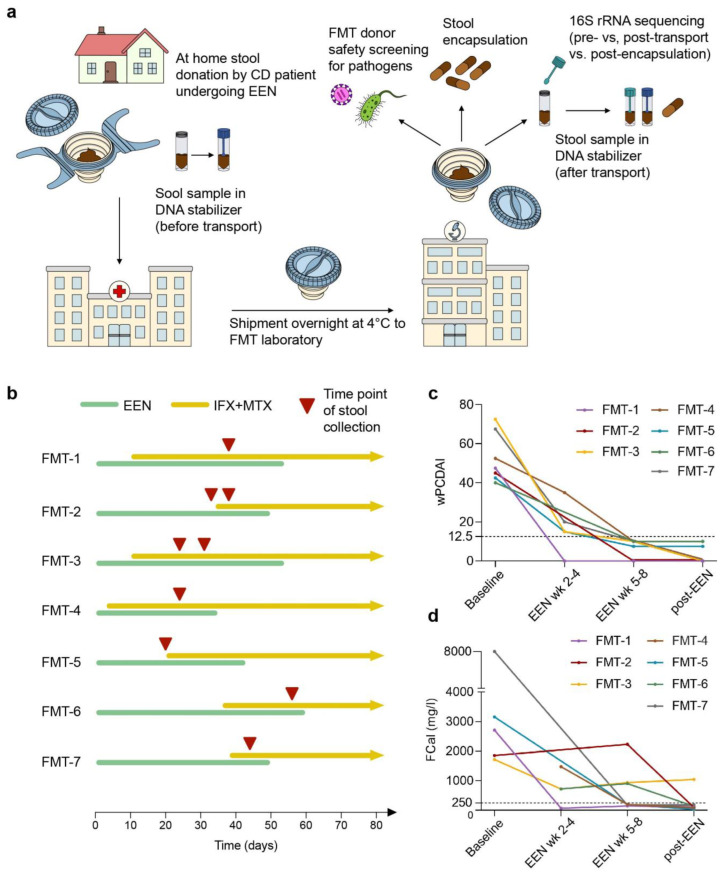
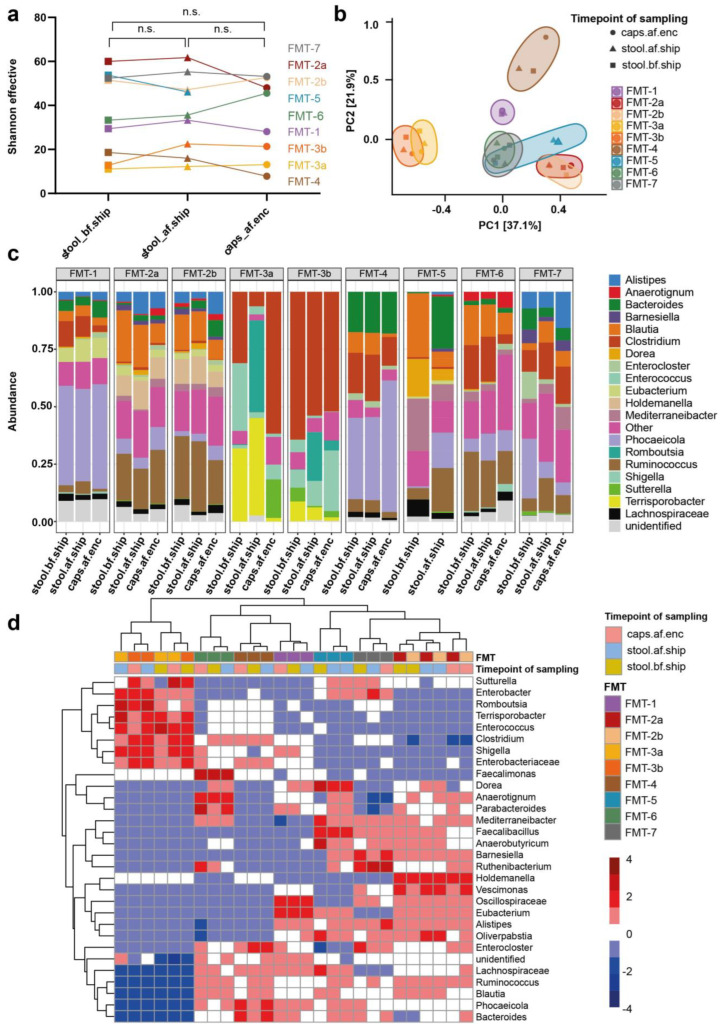
Pediatric CD patients provided fecal material at home, which was shipped at 4 °C to an FMT laboratory for FMT capsule generation and extensive pathogen safety screening. The microbial community composition of samples taken before and after shipment and after encapsulation was characterized using 16S rRNA amplicon sequencing.
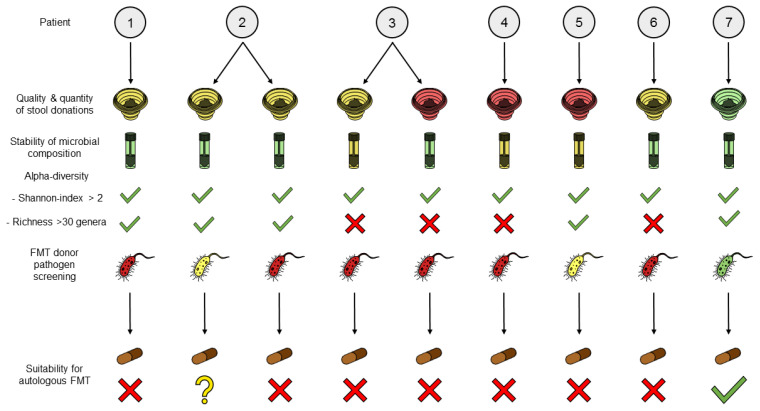
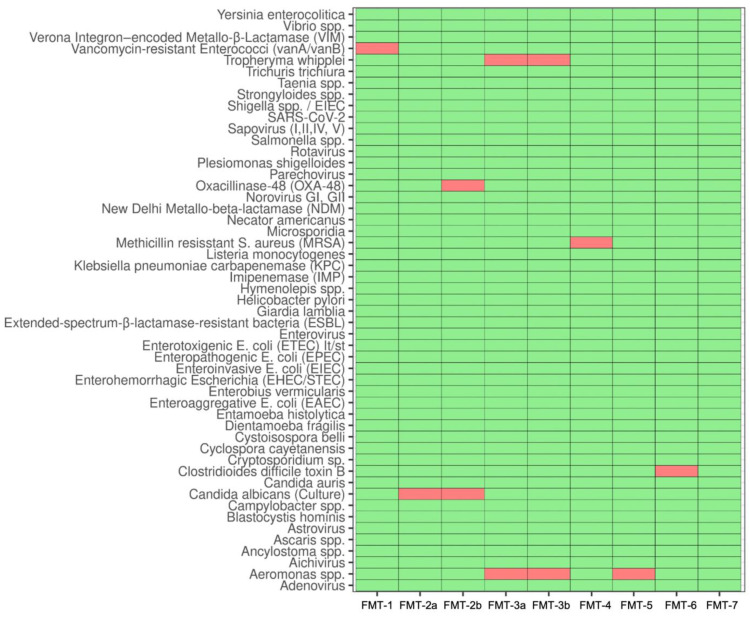
Seven pediatric patients provided fecal material for nine test runs after at least three weeks of nutritional therapy. FMT capsules were successfully generated in 6/8 deliveries, but stool weight and consistency varied widely. Transport and processing of fecal material into FMT capsules did not fundamentally change microbial composition, but microbial richness was <30 genera in 3/9 samples. Stool safety screening was positive for potential pathogens or drug resistance genes in 8/9 test runs.
A high pathogen burden, low-diversity microbiota, and practical deficiencies of EEN-conditioned fecal material might render autologous capsule-FMT an unsuitable approach as maintenance therapy for pediatric CD patients.
在小儿克罗恩病(CD)的缓解诱导中,肠内营养(EEN)是一种非常有效的治疗方法,但在恢复正常饮食后复发率很高。使用在 EEN 诱导的临床缓解期间收集的粪便进行自体粪便微生物群移植(FMT)可能代表维持 EEN 益处的一种新方法。
小儿 CD 患者在家中提供粪便,将其在 4°C 下运送到 FMT 实验室,以生成 FMT 胶囊并进行广泛的病原体安全筛查。在运输前后和封装后,使用 16S rRNA 扩增子测序来描述样本的微生物群落组成。
在至少进行了 3 周营养治疗后,7 名小儿患者提供了 9 次测试运行的粪便材料。在 6/8 次交付中成功生成了 FMT 胶囊,但粪便重量和稠度差异很大。粪便材料运输和加工成 FMT 胶囊并没有从根本上改变微生物组成,但在 3/9 个样本中微生物丰富度<30 属。在 9 次测试运行中的 8 次中,粪便安全性筛查出潜在病原体或耐药基因呈阳性。
高病原体负担、低多样性的微生物群和 EEN 条件下粪便材料的实际缺陷可能使自体胶囊-FMT 不适合作为小儿 CD 患者的维持治疗方法。