African Center of Excellence in Internet of Things (ACEIoT), College of Science and Technology, University of Rwanda, Kigali P.O. Box 3900, Rwanda.
Rwanda Polytechnic, Kigali P.O. Box 164, Rwanda.
Sensors (Basel). 2023 Mar 28;23(7):3536. doi: 10.3390/s23073536.
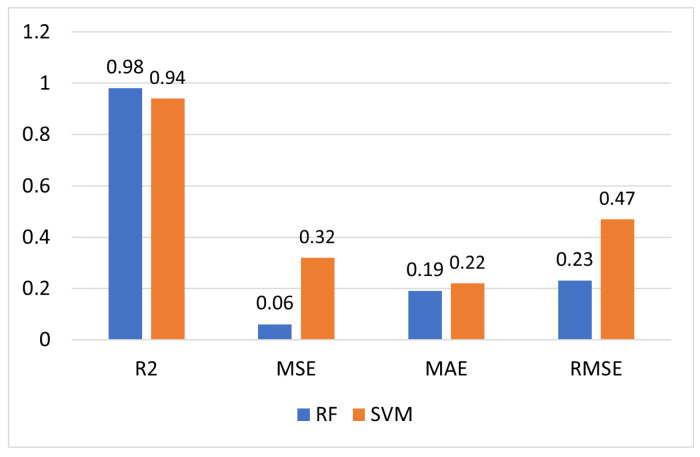
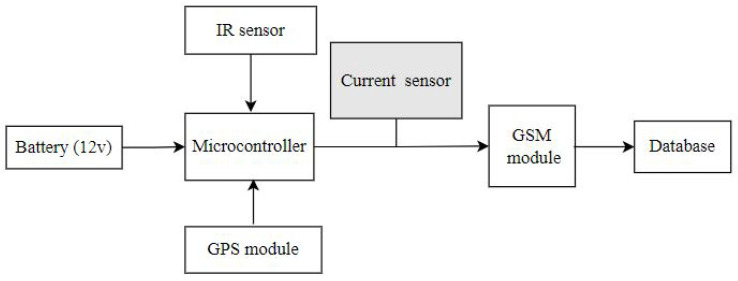
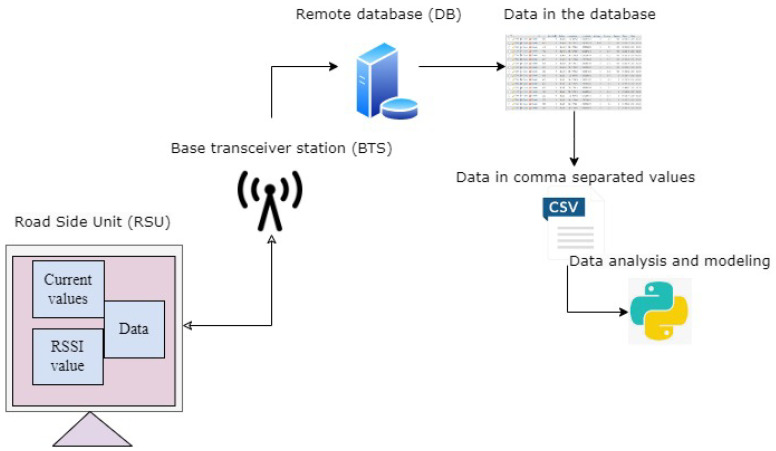
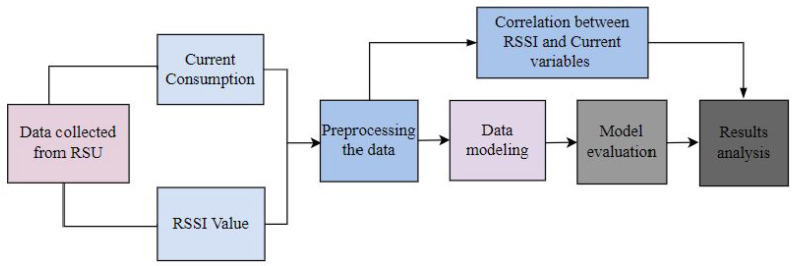
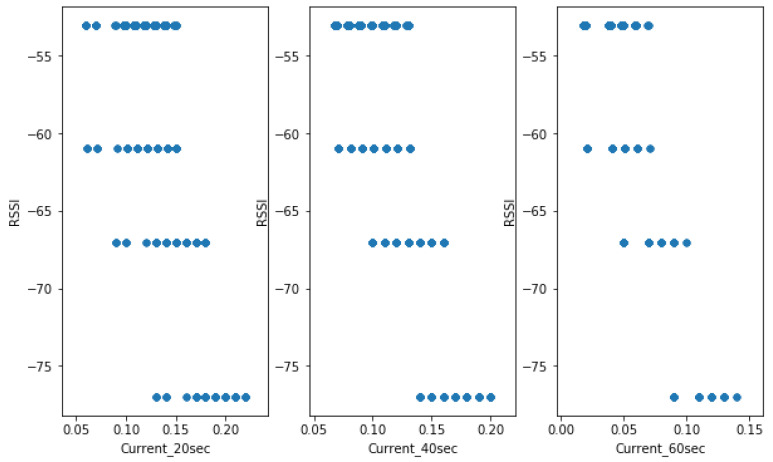
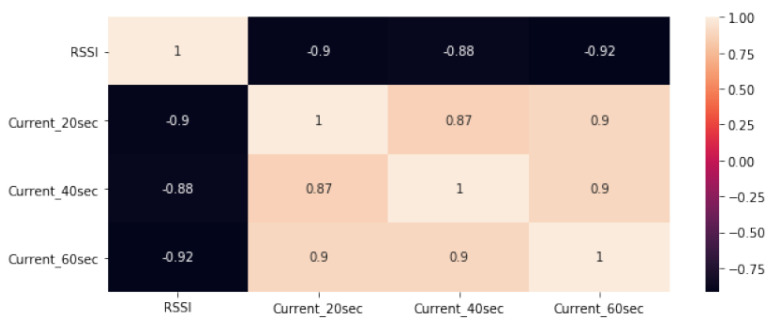
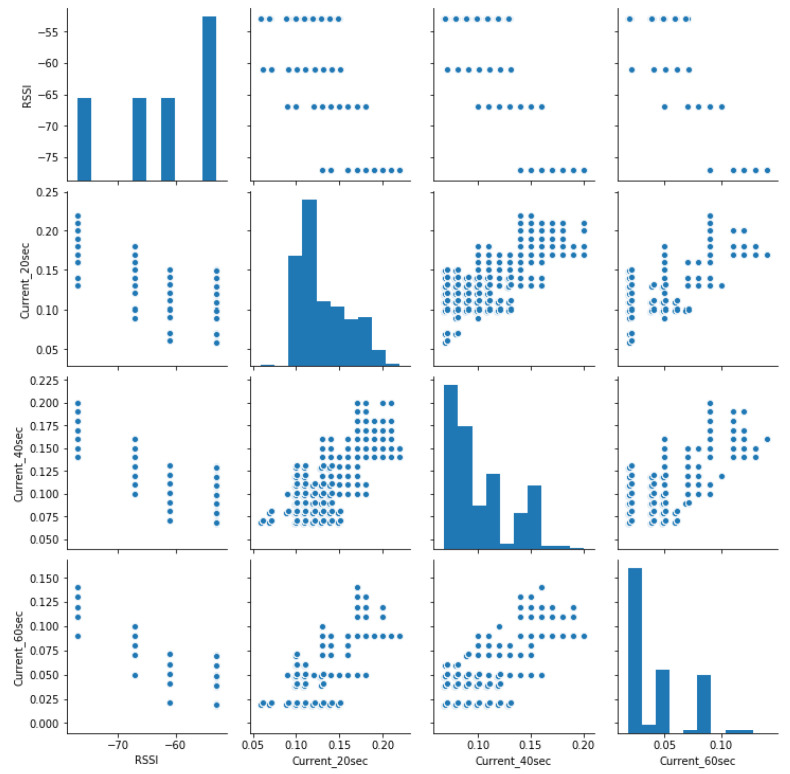
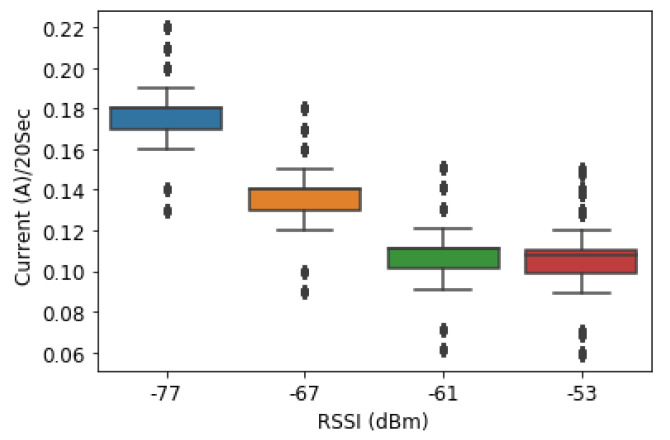
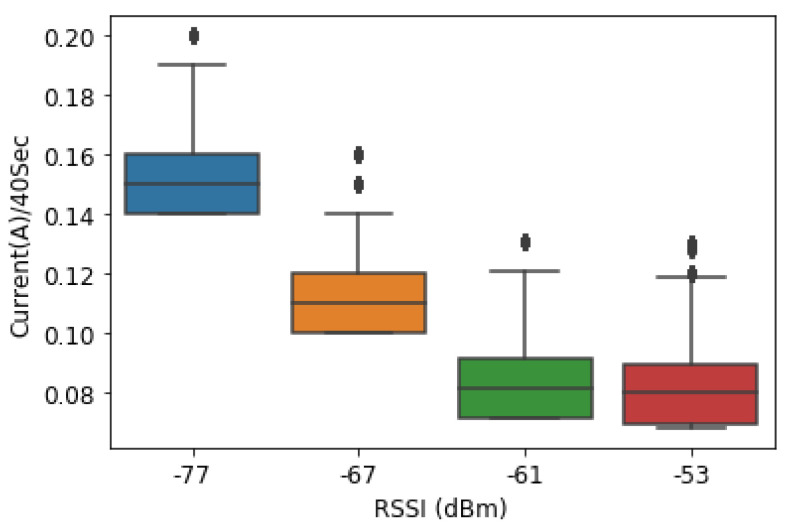
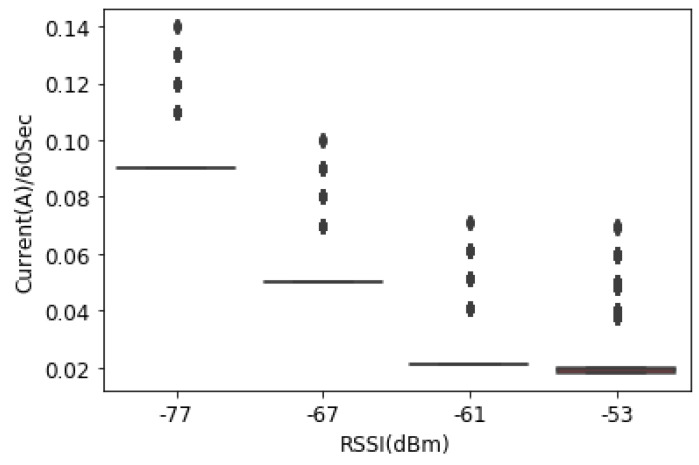
The application of the Internet of Things (IoT), vehicles to infrastructure (V2I) communication and intelligent roadside units (RSU) are promising paradigms to improve road traffic safety. However, for the RSUs to communicate with the vehicles and transmit the data to the remote location, RSUs require enough power and good network quality. Recent advances in technology have improved lithium-ion battery capabilities. However, other complementary methodologies including battery management systems (BMS) have to be developed to provide an early warning sign of the battery's state of health. In this paper, we have evaluated the impact of the received signal strength indication (RSSI) and the current consumption at different transmission frequencies on a static battery-based RSU that depends on the global system for mobile communications (GSM)/general packet radio services (GPRS). Machine learning (ML) models, for instance, Random Forest (RF) and Support Vector Machine (SVM), were employed and tested on the collected data and later compared using the coefficient of determination (R2). The models were used to predict the battery current consumption based on the RSSI of the location where the RSUs were imposed and the frequency at which the RSU transmits the data to the remote database. The RF was preferable to SVM for predicting current consumption with an R2 of 98% and 94%, respectively. It is essential to accurately forecast the battery health of RSUs to assess their dependability and running time. The primary duty of the BMS is to estimate the status of the battery and its dynamic operating limits. However, achieving an accurate and robust battery state of charge remains a significant challenge. Referring to that can help road managers make alternative decisions, such as replacing the battery before the RSU power source gets drained. The proposed method can be deployed in other remote WSN and IoT-based applications.
物联网 (IoT)、车辆到基础设施 (V2I) 通信和智能路侧单元 (RSU) 的应用是提高道路交通安全的有前途的范例。然而,为了让 RSU 与车辆进行通信并将数据传输到远程位置,RSU 需要足够的功率和良好的网络质量。最近技术的进步提高了锂离子电池的性能。但是,必须开发其他补充方法,包括电池管理系统 (BMS),以提供电池健康状况的早期预警信号。在本文中,我们评估了接收信号强度指示 (RSSI) 和不同传输频率下的电流消耗对基于静态电池的 RSU 的影响,该 RSU依赖于全球移动通信系统 (GSM)/通用分组无线电服务 (GPRS)。例如,随机森林 (RF) 和支持向量机 (SVM) 等机器学习 (ML) 模型被用于对收集到的数据进行训练和测试,然后使用确定系数 (R2) 进行比较。该模型用于根据 RSUs 所在位置的 RSSI 和 RSU 向远程数据库传输数据的频率来预测电池的电流消耗。RF 比 SVM 更适合预测电流消耗,其 R2 分别为 98%和 94%。准确预测 RSU 的电池健康状况对于评估其可靠性和运行时间至关重要。BMS 的主要职责是估计电池的状态及其动态工作极限。然而,实现准确和稳健的电池荷电状态仍然是一个重大挑战。参考这一点可以帮助道路管理者做出替代决策,例如在 RSU 电源耗尽之前更换电池。所提出的方法可以部署在其他远程无线传感器网络和基于物联网的应用中。