University of Miami, Department of Biology, Coral Gables, FL, USA.
University of Miami, Department of Biology, Coral Gables, FL, USA; Sylvester Comprehensive Cancer Center, Miller School of Medicine, University of Miami, Miami, FL, USA.
J Steroid Biochem Mol Biol. 2023 Jul;231:106308. doi: 10.1016/j.jsbmb.2023.106308. Epub 2023 Apr 11.
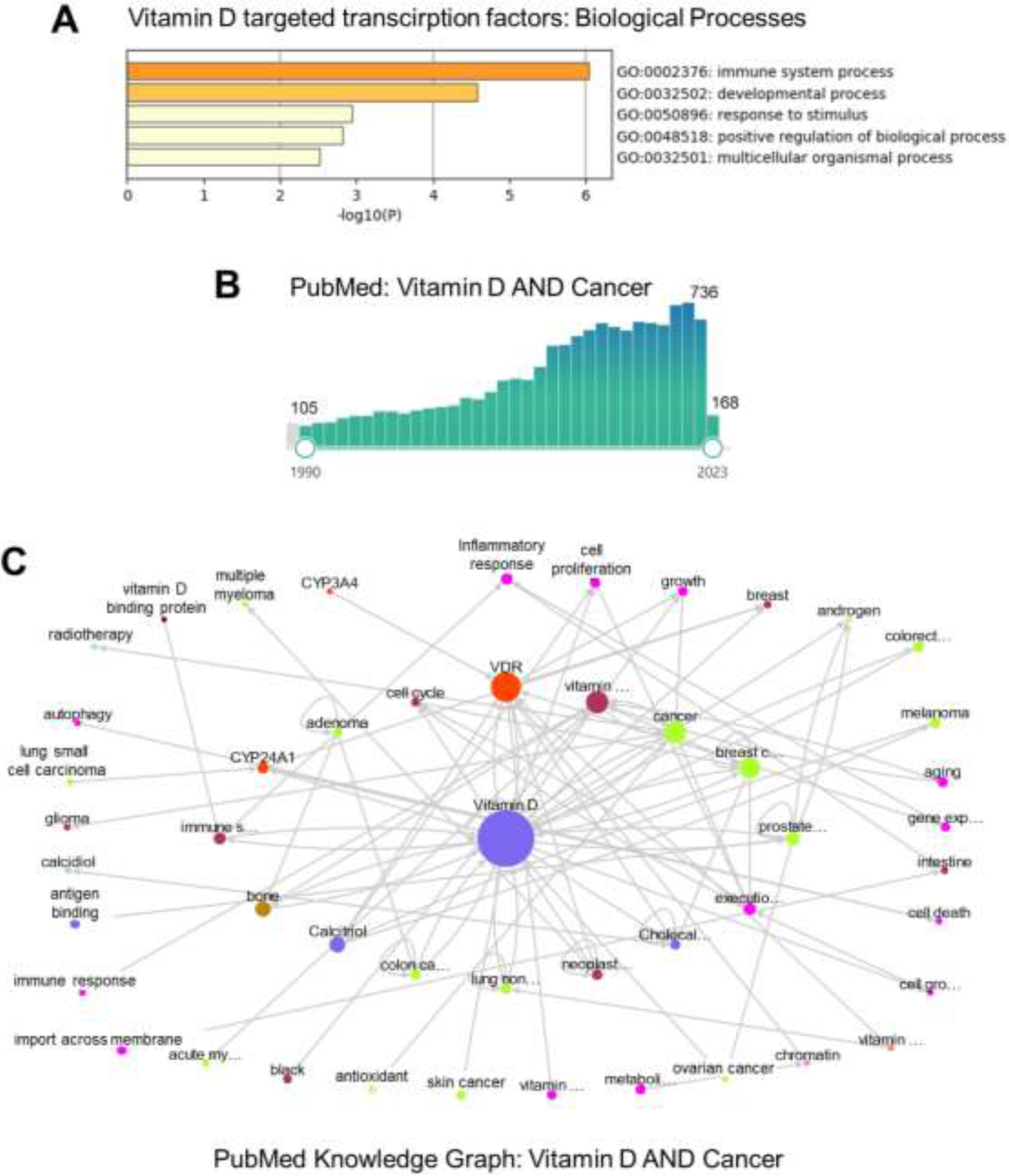
In this review, we summarize the most recent advances in vitamin D cancer research to provide molecular clarity, as well as its translational trajectory across the cancer landscape. Vitamin D is well known for its role in regulating mineral homeostasis; however, vitamin D deficiency has also been linked to the development and progression of a number of cancer types. Recent epigenomic, transcriptomic, and proteomic studies have revealed novel vitamin D-mediated biological mechanisms that regulate cancer cell self-renewal, differentiation, proliferation, transformation, and death. Tumor microenvironmental studies have also revealed dynamic relationships between the immune system and vitamin D's anti-neoplastic properties. These findings help to explain the large number of population-based studies that show clinicopathological correlations between circulating vitamin D levels and risk of cancer development and death. The majority of evidence suggests that low circulating vitamin D levels are associated with an increased risk of cancers, whereas supplementation alone or in combination with other chemo/immunotherapeutic drugs may improve clinical outcomes even further. These promising results still necessitate further research and development into novel approaches that target vitamin D signaling and metabolic systems to improve cancer outcomes.
在这篇综述中,我们总结了维生素 D 与癌症研究的最新进展,以提供分子水平上的认识,以及其在癌症领域的转化轨迹。维生素 D 是众所周知的调节矿物质稳态的角色;然而,维生素 D 缺乏也与许多癌症类型的发生和发展有关。最近的表观基因组学、转录组学和蛋白质组学研究揭示了新的维生素 D 介导的生物学机制,这些机制调节着癌细胞的自我更新、分化、增殖、转化和死亡。肿瘤微环境研究还揭示了免疫系统与维生素 D 的抗肿瘤特性之间的动态关系。这些发现有助于解释大量基于人群的研究,这些研究表明循环维生素 D 水平与癌症发展和死亡的风险之间存在临床病理相关性。大多数证据表明,低循环维生素 D 水平与癌症风险增加有关,而单独补充或与其他化疗/免疫治疗药物联合使用可能会进一步改善临床结果。这些有希望的结果仍然需要进一步的研究和开发,以针对维生素 D 信号和代谢系统的新方法,以改善癌症的结果。