• 文献检索
  • 文档翻译
  • 深度研究
  • 学术资讯
  • Suppr Zotero 插件Zotero 插件
  • 邀请有礼
  • 套餐&价格
  • 历史记录
应用&插件
Suppr Zotero 插件Zotero 插件浏览器插件Mac 客户端Windows 客户端微信小程序
定价
高级版会员购买积分包购买API积分包
服务
文献检索文档翻译深度研究API 文档MCP 服务
关于我们
关于 Suppr公司介绍联系我们用户协议隐私条款
关注我们

Suppr 超能文献

核心技术专利:CN118964589B侵权必究
粤ICP备2023148730 号-1Suppr @ 2026

文献检索

告别复杂PubMed语法,用中文像聊天一样搜索,搜遍4000万医学文献。AI智能推荐,让科研检索更轻松。

立即免费搜索

文件翻译

保留排版,准确专业,支持PDF/Word/PPT等文件格式,支持 12+语言互译。

免费翻译文档

深度研究

AI帮你快速写综述,25分钟生成高质量综述,智能提取关键信息,辅助科研写作。

立即免费体验

体液免疫和细胞免疫在三种不同类型的 COVID-19 疫苗对 SARS-CoV-2 变异株的真实世界数据分析中的作用。

Humoral and cellular immunity in three different types of COVID-19 vaccines against SARS-CoV-2 variants in a real-world data analysis.

机构信息

Graduate Institute of Integrated Medicine, College of Chinese Medicine, China Medical University, Taichung, Taiwan; Chinese Medicine Research Center, China Medical University, Taichung, Taiwan; Research Center of Traditional Chinese Medicine, Department of Medical Research, China Medical University Hospital, Taichung, Taiwan.

National Institute of Infectious Diseases and Vaccinology, National Health Research Institutes, Miaoli, Taiwan; Graduate Institute of Biomedical Sciences, China Medical University, Taichung, Taiwan; Graduate Institute of Medicine, College of Medicine, Kaohsiung Medical University, Kaohsiung, Taiwan.

出版信息

J Microbiol Immunol Infect. 2023 Aug;56(4):705-717. doi: 10.1016/j.jmii.2023.03.008. Epub 2023 Mar 31.

DOI:10.1016/j.jmii.2023.03.008
PMID:37055256
原文链接:https://pmc.ncbi.nlm.nih.gov/articles/PMC10065040/
Abstract

BACKGROUND

An effective vaccine response is currently a critical issue in the control of COVID-19. Little is known about humoral and cellular immunity comparing protein-based vaccine with other types of vaccines. The relevance of basal immunity to antibody production is also unknown.

METHODS

Seventy-eight individuals were enrolled in the study. The primary outcome were the level of spike-specific antibodies and neutralizing antibodies measured by ELISA. Secondary measures included memory T cells and basal immunity estimated by flow cytometry and ELISA. Correlations for all parameters were calculated using the nonparametric Spearman correlation method.

RESULTS

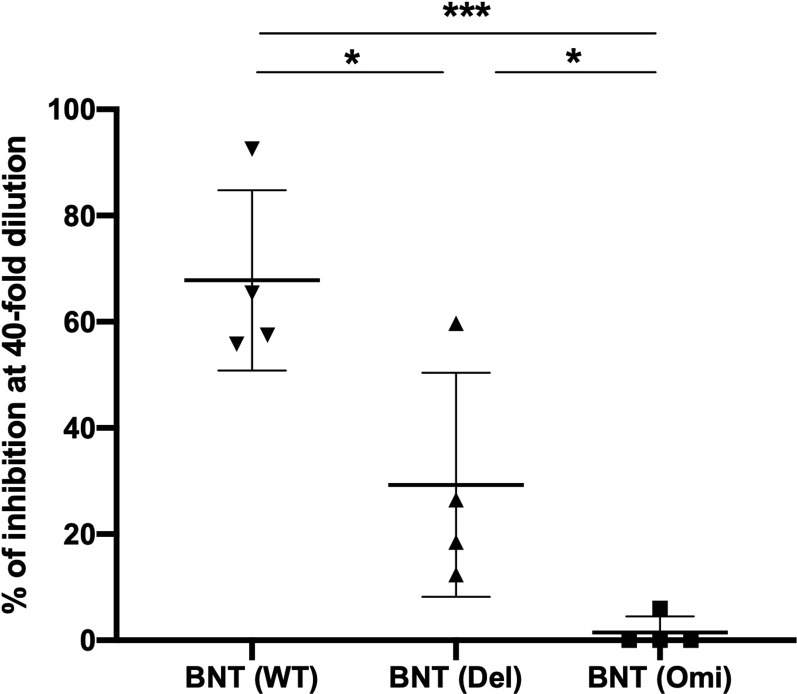
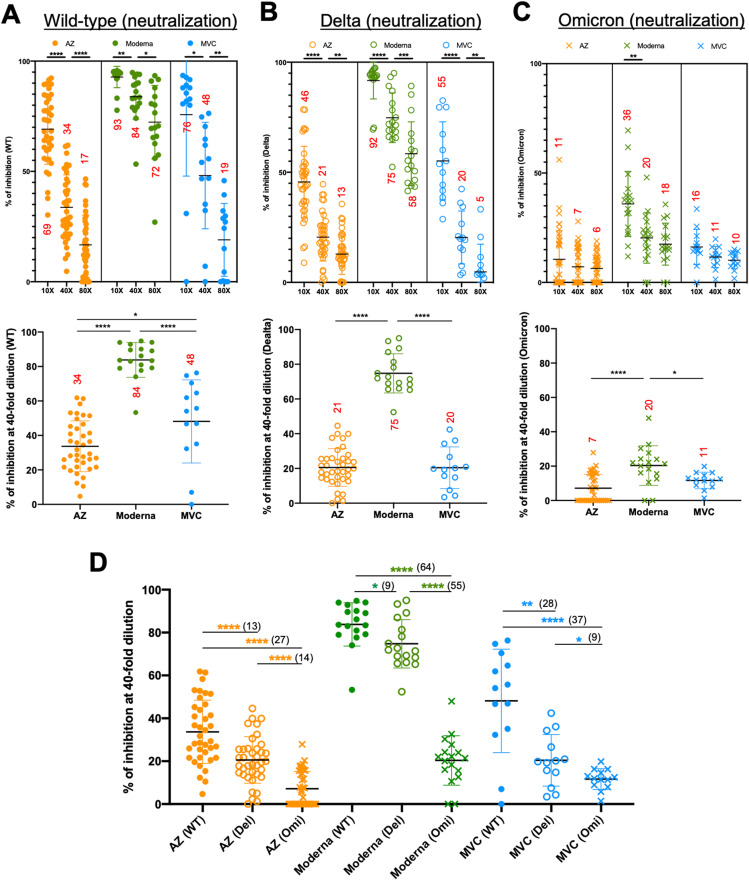
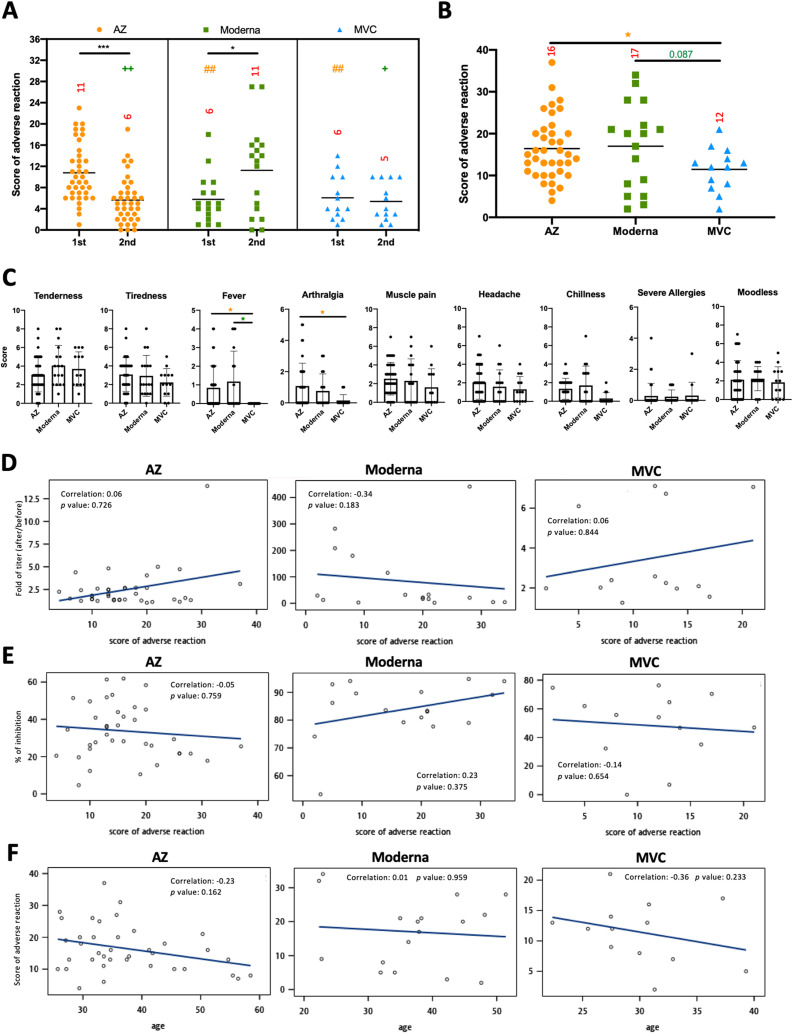
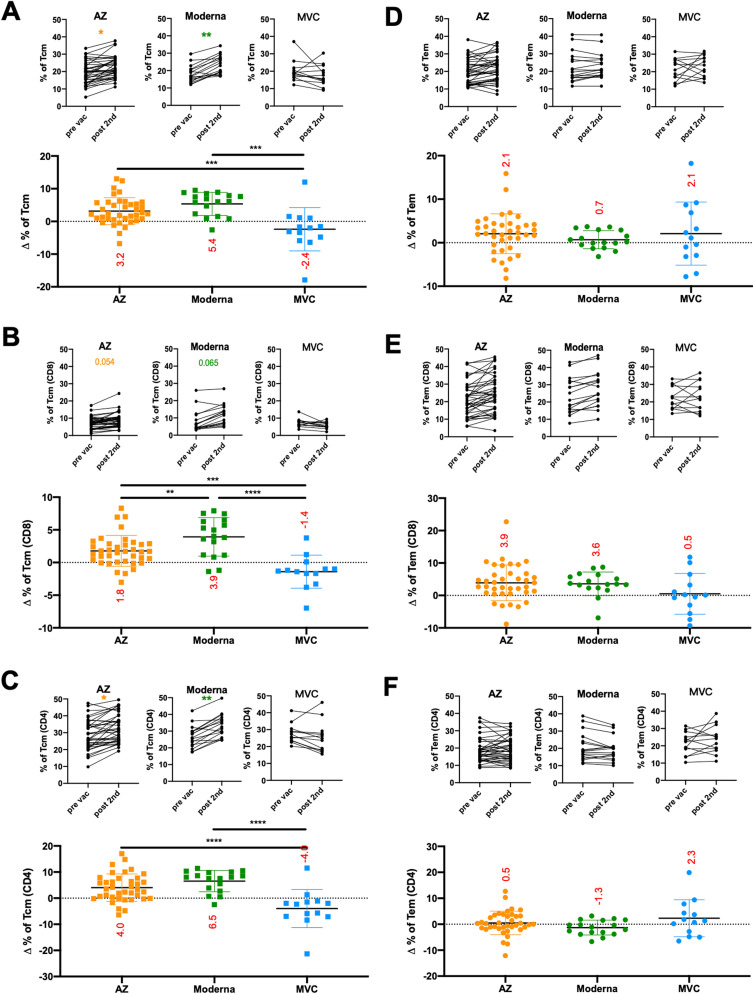
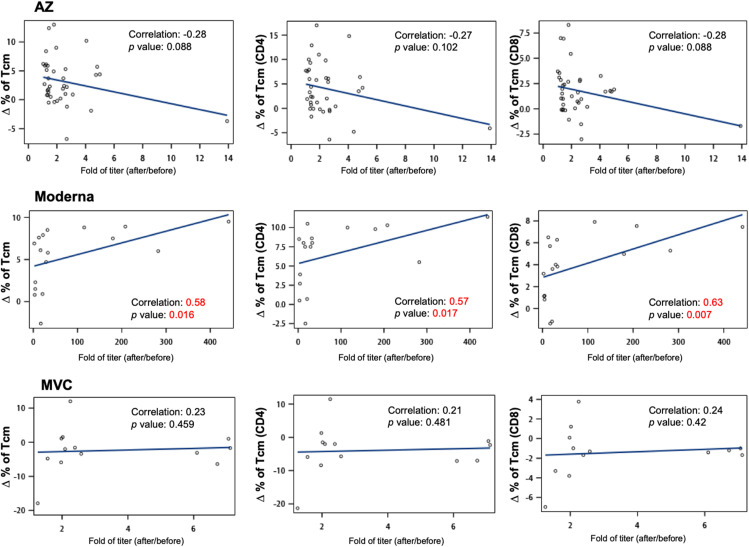
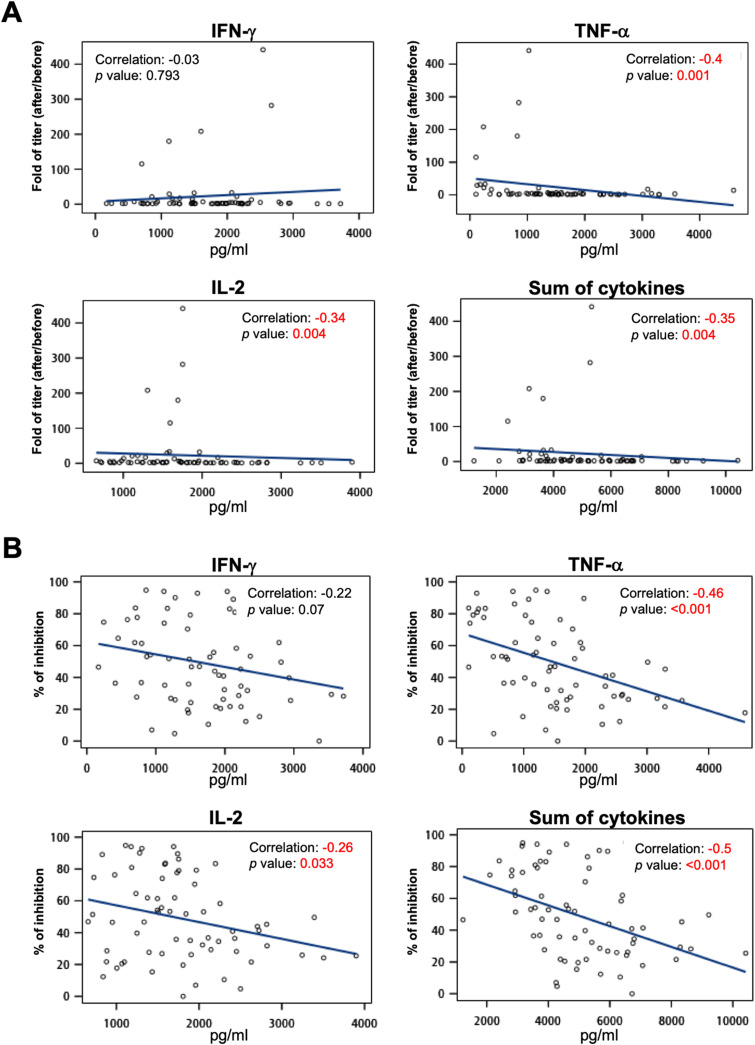
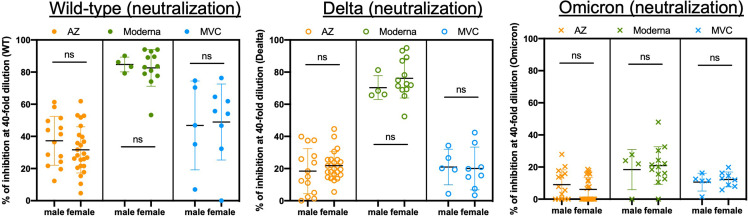
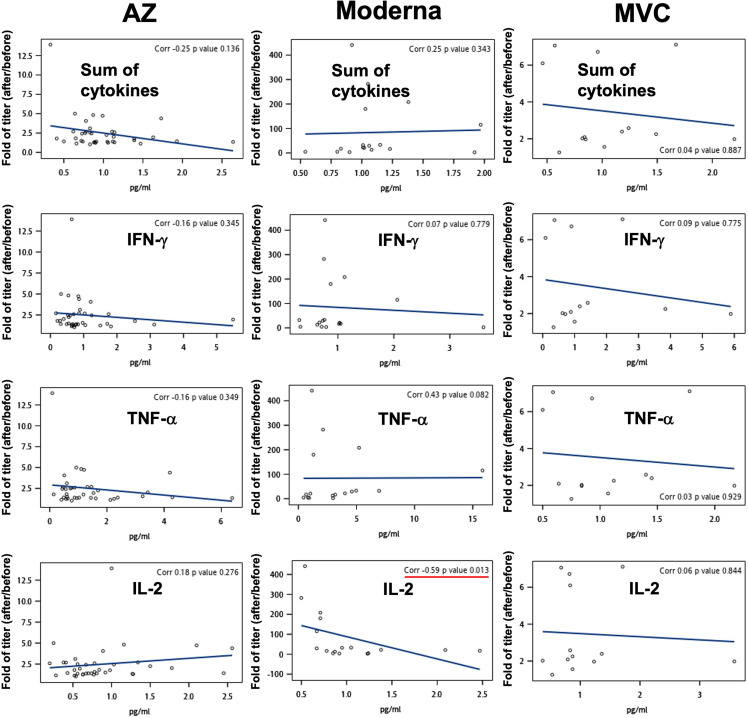
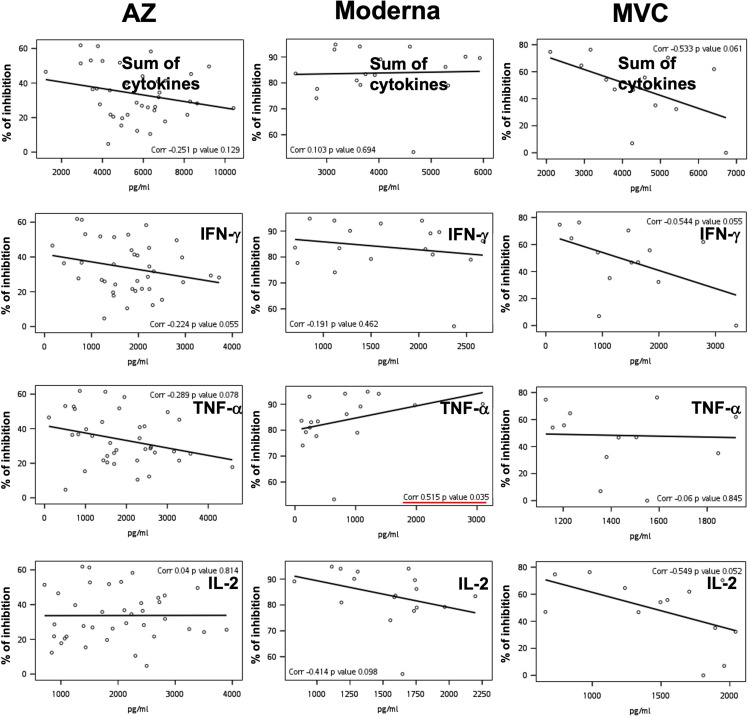
We observed that two doses of mRNA-based Moderna mRNA-1273 (Moderna) vaccine produced the highest total spike-binding antibody and neutralizing ability against the wild-type (WT), Delta, and Omicron variants. The protein-based MVC-COV1901 (MVC) vaccine developed in Taiwan produced higher spike-binding antibodies against Delta and Omicron variants and neutralizing ability against the WT strain than the adenovirus-based AstraZeneca-Oxford AZD1222 (AZ) vaccine. Moderna and AZ vaccination produced more central memory T cells in PBMC than the MVC vaccine. However, the MVC vaccine had the lowest adverse effects compared to the Moderna and AZ vaccines. Surprisingly, the basal immunity represented by TNF-α, IFN-γ, and IL-2 prior to vaccination was negatively correlated with the production of spike-binding antibodies and neutralizing ability.

CONCLUSION

This study compared memory T cells, total spike-binding antibody levels, and neutralizing capacity against WT, Delta, and Omicron variants between the MVC vaccine and the widely used Moderna and AZ vaccines, which provides valuable information for future vaccine development strategies.

摘要

背景

目前,有效的疫苗反应是控制 COVID-19 的关键问题。与其他类型的疫苗相比,人们对基于蛋白质的疫苗的体液和细胞免疫知之甚少。基础免疫对抗体产生的相关性也不清楚。

方法

本研究纳入了 78 名个体。主要结局是通过 ELISA 测量的刺突特异性抗体和中和抗体水平。次要措施包括通过流式细胞术和 ELISA 估计的记忆 T 细胞和基础免疫。使用非参数 Spearman 相关系数法计算所有参数的相关性。

结果

我们观察到,两剂基于 mRNA 的 Moderna mRNA-1273(Moderna)疫苗产生了最高的总刺突结合抗体和对野生型(WT)、Delta 和奥密克戎变异株的中和能力。台湾开发的基于蛋白质的 MVC-COV1901(MVC)疫苗对 Delta 和奥密克戎变异株的刺突结合抗体产生了更高的中和能力,对 WT 株的中和能力高于基于腺病毒的阿斯利康-牛津 AZD1222(AZ)疫苗。与 MVC 疫苗相比,Moderna 和 AZ 疫苗在 PBMC 中产生了更多的中央记忆 T 细胞。然而,与 Moderna 和 AZ 疫苗相比,MVC 疫苗的不良反应最低。令人惊讶的是,接种前 TNF-α、IFN-γ 和 IL-2 代表的基础免疫与刺突结合抗体和中和能力的产生呈负相关。

结论

本研究比较了 MVC 疫苗与广泛使用的 Moderna 和 AZ 疫苗之间的记忆 T 细胞、总刺突结合抗体水平和对 WT、Delta 和奥密克戎变异株的中和能力,为未来的疫苗开发策略提供了有价值的信息。

https://cdn.ncbi.nlm.nih.gov/pmc/blobs/cf48/10065040/418a58d2b5a7/figs8_lrg.jpg
https://cdn.ncbi.nlm.nih.gov/pmc/blobs/cf48/10065040/9aae72acaaba/gr1_lrg.jpg
https://cdn.ncbi.nlm.nih.gov/pmc/blobs/cf48/10065040/82d6da3a5ef6/gr2_lrg.jpg
https://cdn.ncbi.nlm.nih.gov/pmc/blobs/cf48/10065040/ce08db1e4a75/gr3_lrg.jpg
https://cdn.ncbi.nlm.nih.gov/pmc/blobs/cf48/10065040/73511cf6bd3a/gr4_lrg.jpg
https://cdn.ncbi.nlm.nih.gov/pmc/blobs/cf48/10065040/300b8d6f131c/gr5_lrg.jpg
https://cdn.ncbi.nlm.nih.gov/pmc/blobs/cf48/10065040/4860b91c6735/gr6_lrg.jpg
https://cdn.ncbi.nlm.nih.gov/pmc/blobs/cf48/10065040/e29a28007776/figs1_lrg.jpg
https://cdn.ncbi.nlm.nih.gov/pmc/blobs/cf48/10065040/abc1fc6bed1b/figs2_lrg.jpg
https://cdn.ncbi.nlm.nih.gov/pmc/blobs/cf48/10065040/58e845d7591b/figs3_lrg.jpg
https://cdn.ncbi.nlm.nih.gov/pmc/blobs/cf48/10065040/ee90bfa12734/figs4_lrg.jpg
https://cdn.ncbi.nlm.nih.gov/pmc/blobs/cf48/10065040/f84aaceee322/figs5_lrg.jpg
https://cdn.ncbi.nlm.nih.gov/pmc/blobs/cf48/10065040/9a686b0eee4f/figs6_lrg.jpg
https://cdn.ncbi.nlm.nih.gov/pmc/blobs/cf48/10065040/7ffb1bea8327/figs7_lrg.jpg
https://cdn.ncbi.nlm.nih.gov/pmc/blobs/cf48/10065040/418a58d2b5a7/figs8_lrg.jpg
https://cdn.ncbi.nlm.nih.gov/pmc/blobs/cf48/10065040/9aae72acaaba/gr1_lrg.jpg
https://cdn.ncbi.nlm.nih.gov/pmc/blobs/cf48/10065040/82d6da3a5ef6/gr2_lrg.jpg
https://cdn.ncbi.nlm.nih.gov/pmc/blobs/cf48/10065040/ce08db1e4a75/gr3_lrg.jpg
https://cdn.ncbi.nlm.nih.gov/pmc/blobs/cf48/10065040/73511cf6bd3a/gr4_lrg.jpg
https://cdn.ncbi.nlm.nih.gov/pmc/blobs/cf48/10065040/300b8d6f131c/gr5_lrg.jpg
https://cdn.ncbi.nlm.nih.gov/pmc/blobs/cf48/10065040/4860b91c6735/gr6_lrg.jpg
https://cdn.ncbi.nlm.nih.gov/pmc/blobs/cf48/10065040/e29a28007776/figs1_lrg.jpg
https://cdn.ncbi.nlm.nih.gov/pmc/blobs/cf48/10065040/abc1fc6bed1b/figs2_lrg.jpg
https://cdn.ncbi.nlm.nih.gov/pmc/blobs/cf48/10065040/58e845d7591b/figs3_lrg.jpg
https://cdn.ncbi.nlm.nih.gov/pmc/blobs/cf48/10065040/ee90bfa12734/figs4_lrg.jpg
https://cdn.ncbi.nlm.nih.gov/pmc/blobs/cf48/10065040/f84aaceee322/figs5_lrg.jpg
https://cdn.ncbi.nlm.nih.gov/pmc/blobs/cf48/10065040/9a686b0eee4f/figs6_lrg.jpg
https://cdn.ncbi.nlm.nih.gov/pmc/blobs/cf48/10065040/7ffb1bea8327/figs7_lrg.jpg
https://cdn.ncbi.nlm.nih.gov/pmc/blobs/cf48/10065040/418a58d2b5a7/figs8_lrg.jpg

相似文献

1
Humoral and cellular immunity in three different types of COVID-19 vaccines against SARS-CoV-2 variants in a real-world data analysis.体液免疫和细胞免疫在三种不同类型的 COVID-19 疫苗对 SARS-CoV-2 变异株的真实世界数据分析中的作用。
J Microbiol Immunol Infect. 2023 Aug;56(4):705-717. doi: 10.1016/j.jmii.2023.03.008. Epub 2023 Mar 31.
2
Boosting with Multiple Doses of mRNA Vaccine after Priming with Two Doses of Protein Subunit Vaccine MVC-COV1901 Elicited Robust Humoral and Cellular Immune Responses against Emerging SARS-CoV-2 Variants.两剂蛋白亚单位疫苗 MVC-COV1901 初免后加强接种多剂 mRNA 疫苗可增强针对新型 SARS-CoV-2 变异株的体液和细胞免疫应答。
Microbiol Spectr. 2022 Oct 26;10(5):e0060922. doi: 10.1128/spectrum.00609-22. Epub 2022 Aug 25.
3
Long-term analysis of humoral responses and spike-specific T cell memory to Omicron variants after different COVID-19 vaccine regimens.不同 COVID-19 疫苗接种方案后对奥密克戎变异株的体液反应和 Spike 特异性 T 细胞记忆的长期分析。
Front Immunol. 2024 Mar 12;15:1340645. doi: 10.3389/fimmu.2024.1340645. eCollection 2024.
4
An evaluation of the safety and immunogenicity of MVC-COV1901: Results of an interim analysis of a phase III, parallel group, randomized, double-blind, active-controlled immunobridging study in Paraguay.MVC-COV1901 的安全性和免疫原性评估:巴拉圭 III 期、平行组、随机、双盲、活性对照免疫桥接研究的中期分析结果。
Vaccine. 2023 Jan 4;41(1):109-118. doi: 10.1016/j.vaccine.2022.10.030. Epub 2022 Nov 18.
5
Cell immunity to SARS-CoV-2 after natural infection and/or different vaccination regimens.自然感染和/或不同疫苗接种方案后对 SARS-CoV-2 的细胞免疫。
Front Cell Infect Microbiol. 2024 Mar 20;14:1370859. doi: 10.3389/fcimb.2024.1370859. eCollection 2024.
6
Profiling Humoral Immunity After Mixing and Matching COVID-19 Vaccines Using SARS-CoV-2 Variant Protein Microarrays.利用 SARS-CoV-2 变异蛋白微阵列分析混合和匹配 COVID-19 疫苗后的体液免疫反应。
Mol Cell Proteomics. 2023 Apr;22(4):100507. doi: 10.1016/j.mcpro.2023.100507. Epub 2023 Feb 12.
7
Titers and breadth of neutralizing antibodies against SARS-CoV-2 variants after heterologous booster vaccination in health care workers primed with two doses of ChAdOx1 nCov-19: A single-blinded, randomized clinical trial.两剂腺病毒载体新冠疫苗(ChAdOx1 nCov-19)基础免疫后异源加强接种对医护人员体内针对 SARS-CoV-2 变异株中和抗体滴度和广度的影响:一项单盲、随机临床试验。
J Clin Virol. 2022 Dec;157:105328. doi: 10.1016/j.jcv.2022.105328. Epub 2022 Nov 12.
8
COVID-19 Vaccination Responses with Different Vaccine Platforms in Patients with Inborn Errors of Immunity.COVID-19 疫苗接种在先天性免疫缺陷患者中不同疫苗平台的反应。
J Clin Immunol. 2023 Feb;43(2):271-285. doi: 10.1007/s10875-022-01382-7. Epub 2022 Oct 17.
9
Safety and immunogenicity against ancestral, Delta and Omicron virus variants following a booster dose of an inactivated whole-virus COVID-19 vaccine (VLA2001): Interim analysis of an open-label extension of the randomized, controlled, phase 3 COV-COMPARE trial.在接种一剂灭活全病毒 COVID-19 疫苗(VLA2001)加强针后针对原始株、Delta 株和奥密克戎株变异病毒的安全性和免疫原性:COV-COMPARE 随机对照 3 期试验开放标签扩展的中期分析。
J Infect. 2023 Sep;87(3):242-254. doi: 10.1016/j.jinf.2023.06.022. Epub 2023 Jul 3.
10
Safety and immunogenicity of homologous versus heterologous booster dose with AZD1222, mRNA-1273, or MVC-COV1901 SARS-CoV-2 vaccines in adults: An observer-blinded, multi-center, phase 2 randomized trial.成人用 AZD1222、mRNA-1273 或 MVC-COV1901 SARS-CoV-2 疫苗进行同源或异源加强免疫接种的安全性和免疫原性:一项观察者设盲、多中心、2 期随机试验。
Vaccine. 2023 May 26;41(23):3497-3505. doi: 10.1016/j.vaccine.2023.04.029. Epub 2023 Apr 12.

引用本文的文献

1
Correlation between the immune response to COVID-19 vaccines and the constitutions of traditional Chinese medicine.新型冠状病毒肺炎疫苗免疫反应与中医体质的相关性
Hum Vaccin Immunother. 2025 Dec;21(1):2553371. doi: 10.1080/21645515.2025.2553371. Epub 2025 Sep 5.
2
Comparison of post-acute sequelae following hospitalization for COVID-19 and influenza.比较因 COVID-19 和流感住院后的急性后期后遗症。
BMC Med. 2023 Dec 5;21(1):480. doi: 10.1186/s12916-023-03200-2.
3
Antibody Profiling of Microbial Antigens in the Blood of COVID-19 mRNA Vaccine Recipients Using Microbial Protein Microarrays.
使用微生物蛋白质微阵列对新冠mRNA疫苗接种者血液中的微生物抗原进行抗体谱分析。
Vaccines (Basel). 2023 Nov 7;11(11):1694. doi: 10.3390/vaccines11111694.