Department of Biology, Beijing Key Laboratory of Gene Resource and Molecular Development, School of Life Sciences, and Key Laboratory of Cell Proliferation and Regulation Biology, Ministry of Education, School of Life Sciences, Beijing Normal University, Beijing, China.
Beijing Neurosurgical Institute, Beijing, 100070, China.
Genome Med. 2023 Apr 13;15(1):24. doi: 10.1186/s13073-023-01175-6.
Roughly 50% of adult gliomas harbor isocitrate dehydrogenase (IDH) mutations. According to the 2021 WHO classification guideline, these gliomas are diagnosed as astrocytomas, harboring no 1p19q co-deletion, or oligodendrogliomas, harboring 1p19q co-deletion. Recent studies report that IDH-mutant gliomas share a common developmental hierarchy. However, the neural lineages and differentiation stages in IDH-mutant gliomas remain inadequately characterized.
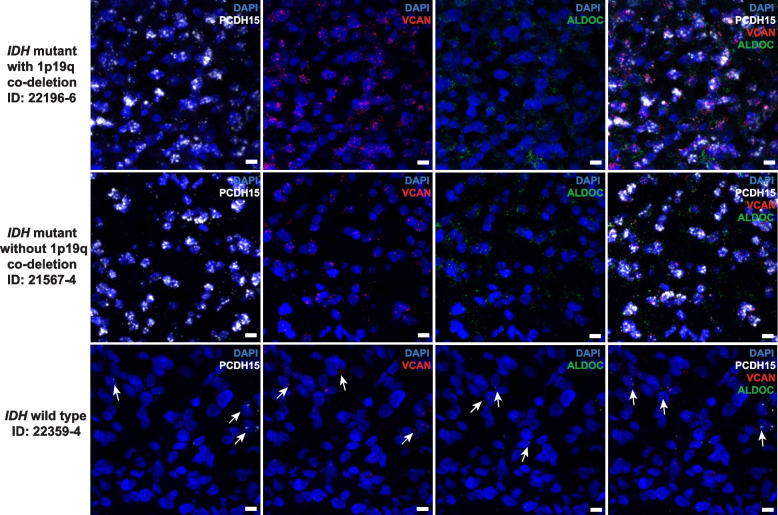
Using bulk transcriptomes and single-cell transcriptomes, we identified genes enriched in IDH-mutant gliomas with or without 1p19q co-deletion, we also assessed the expression pattern of stage-specific signatures and key regulators of oligodendrocyte lineage differentiation. We compared the expression of oligodendrocyte lineage stage-specific markers between quiescent and proliferating malignant single cells. The gene expression profiles were validated using RNAscope analysis and myelin staining and were further substantiated using data of DNA methylation and single-cell ATAC-seq. As a control, we assessed the expression pattern of astrocyte lineage markers.
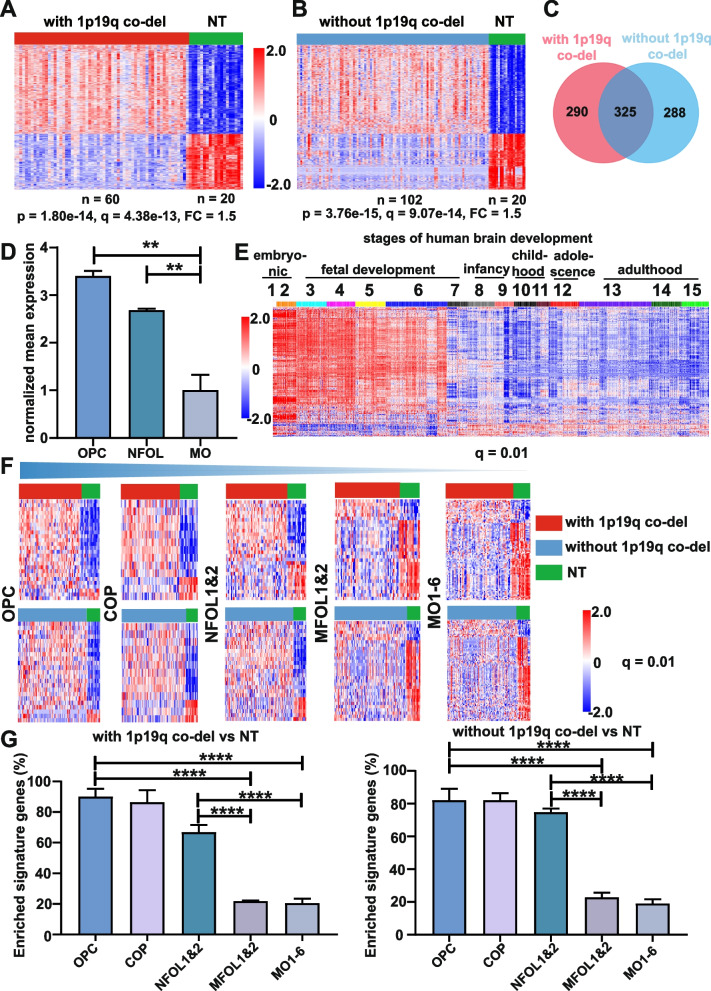
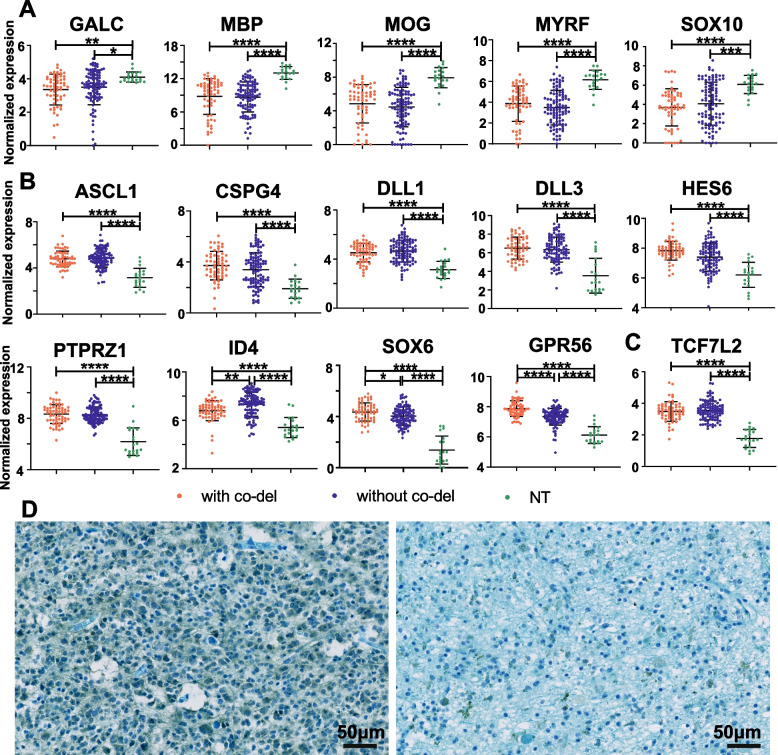
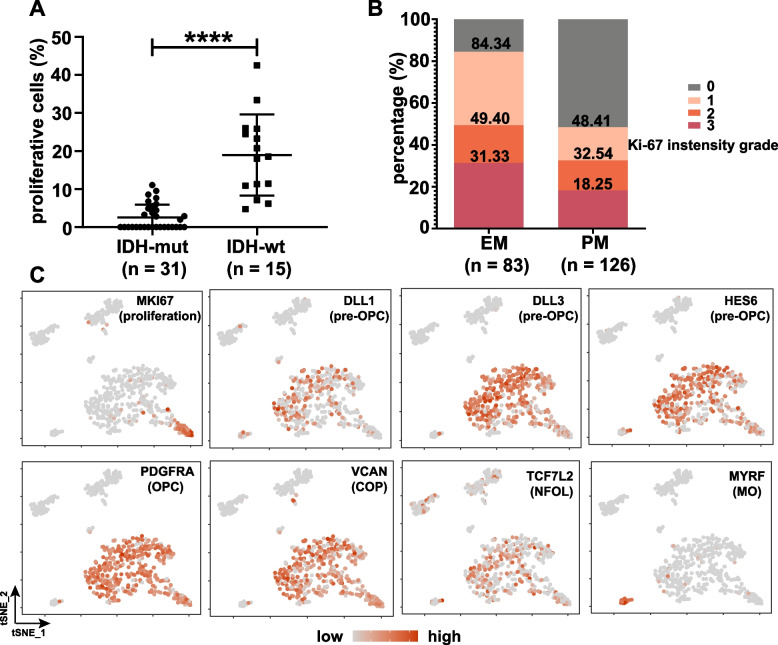
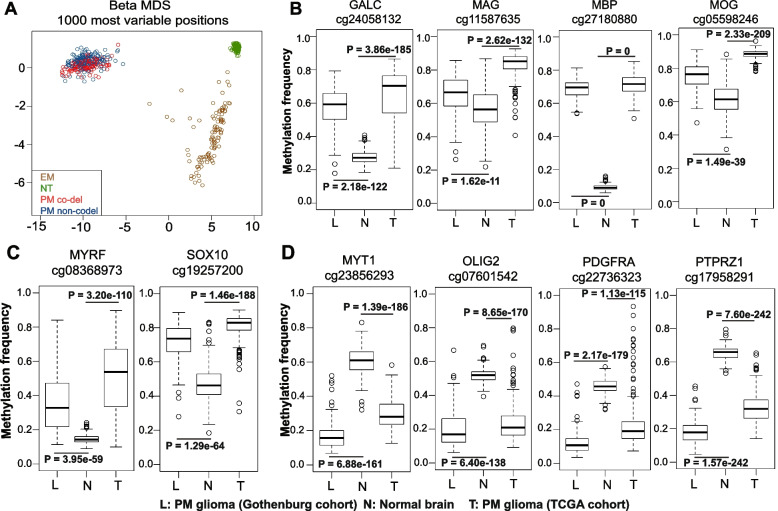
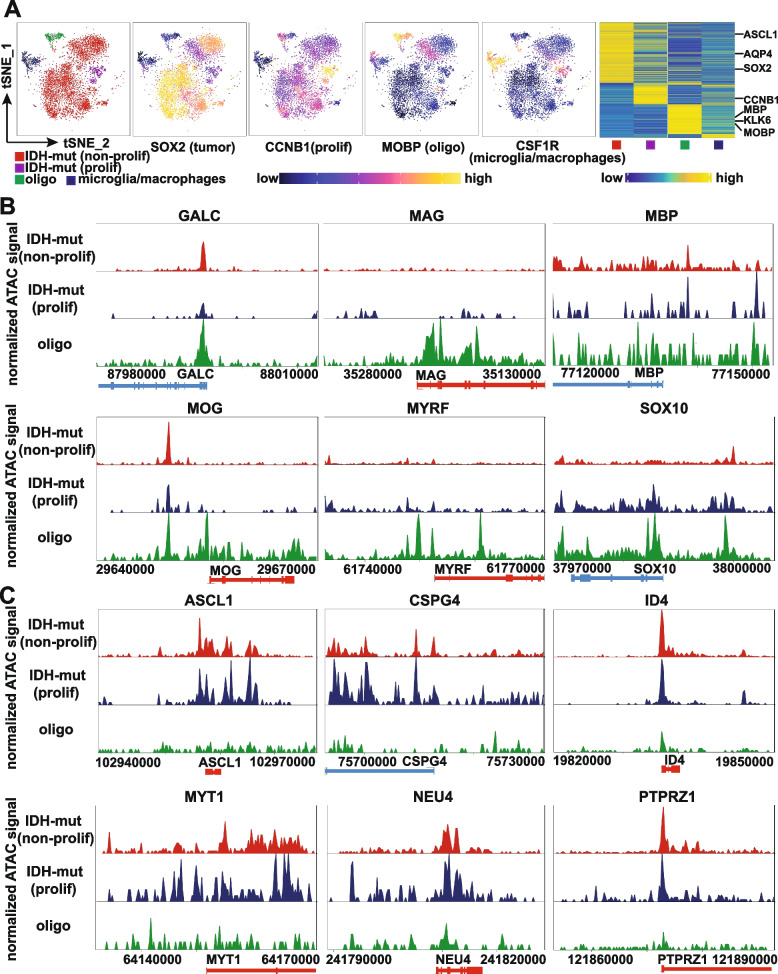
Genes concordantly enriched in both subtypes of IDH-mutant gliomas are upregulated in oligodendrocyte progenitor cells (OPC). Signatures of early stages of oligodendrocyte lineage and key regulators of OPC specification and maintenance are enriched in all IDH-mutant gliomas. In contrast, signature of myelin-forming oligodendrocytes, myelination regulators, and myelin components are significantly down-regulated or absent in IDH-mutant gliomas. Further, single-cell transcriptomes of IDH-mutant gliomas are similar to OPC and differentiation-committed oligodendrocyte progenitors, but not to myelinating oligodendrocyte. Most IDH-mutant glioma cells are quiescent; quiescent cells and proliferating cells resemble the same differentiation stage of oligodendrocyte lineage. Mirroring the gene expression profiles along the oligodendrocyte lineage, analyses of DNA methylation and single-cell ATAC-seq data demonstrate that genes of myelination regulators and myelin components are hypermethylated and show inaccessible chromatin status, whereas regulators of OPC specification and maintenance are hypomethylated and show open chromatin status. Markers of astrocyte precursors are not enriched in IDH-mutant gliomas.
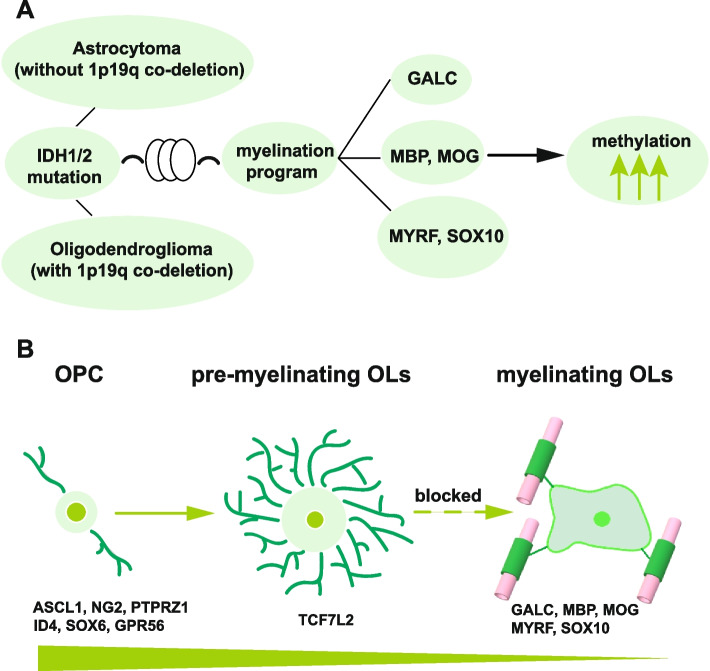
Our studies show that despite differences in clinical manifestation and genomic alterations, all IDH-mutant gliomas resemble early stages of oligodendrocyte lineage and are stalled in oligodendrocyte differentiation due to blocked myelination program. These findings provide a framework to accommodate biological features and therapy development for IDH-mutant gliomas.
大约 50%的成人神经胶质瘤携带异柠檬酸脱氢酶(IDH)突变。根据 2021 年世卫组织分类指南,这些神经胶质瘤被诊断为星形细胞瘤,不伴有 1p19q 共缺失,或少突胶质细胞瘤,伴有 1p19q 共缺失。最近的研究报告称,IDH 突变型神经胶质瘤具有共同的发育层次结构。然而,IDH 突变型神经胶质瘤中的神经谱系和分化阶段仍未得到充分描述。
我们使用批量转录组和单细胞转录组,鉴定了 IDH 突变型神经胶质瘤中是否存在 1p19q 共缺失的基因富集,还评估了阶段特异性特征和少突胶质细胞谱系分化关键调节因子的表达模式。我们比较了静止和增殖恶性单细胞中少突胶质细胞谱系阶段特异性标记物的表达。使用 RNAscope 分析和髓鞘染色验证基因表达谱,并使用 DNA 甲基化和单细胞 ATAC-seq 数据进一步证实。作为对照,我们评估了星形胶质细胞谱系标记物的表达模式。
两种 IDH 突变型神经胶质瘤亚型中均上调的基因在少突胶质前体细胞(OPC)中富集。少突胶质细胞谱系早期阶段的特征和 OPC 特化和维持的关键调节因子在所有 IDH 突变型神经胶质瘤中均富集。相比之下,形成髓鞘的少突胶质细胞、髓鞘形成调节因子和髓鞘成分的特征在 IDH 突变型神经胶质瘤中显著下调或缺失。此外,IDH 突变型神经胶质瘤的单细胞转录组与 OPC 和分化定向的少突胶质细胞祖细胞相似,而与髓鞘形成的少突胶质细胞不同。大多数 IDH 突变型神经胶质瘤细胞处于静止状态;静止细胞和增殖细胞类似于少突胶质细胞谱系的相同分化阶段。与少突胶质细胞谱系的基因表达谱相呼应,DNA 甲基化和单细胞 ATAC-seq 数据分析表明,髓鞘形成调节因子和髓鞘成分的基因呈高甲基化状态,表现出不可接近的染色质状态,而 OPC 特化和维持的调节因子呈低甲基化状态,表现出开放的染色质状态。星形胶质细胞前体标志物在 IDH 突变型神经胶质瘤中不富集。
我们的研究表明,尽管在临床表现和基因组改变方面存在差异,但所有 IDH 突变型神经胶质瘤都类似于少突胶质细胞谱系的早期阶段,并由于髓鞘形成程序受阻而停滞在少突胶质细胞分化中。这些发现为 IDH 突变型神经胶质瘤的生物学特征和治疗开发提供了一个框架。