Institute of Anatomy, University of Leipzig, Liebigstraße 13, 04103, Leipzig, Germany.
Faculty of Chemistry and Mineralogy, University of Leipzig, 04103, Leipzig, Germany.
J Biomed Sci. 2023 Apr 13;30(1):23. doi: 10.1186/s12929-023-00917-3.
The tumor microenvironment (TME) has a central role in the oncogenesis of osteosarcomas. The composition of the TME is essential for the interaction between tumor and immune cells. The aim of this study was to establish a prognostic index (TMEindex) for osteosarcoma based on the TME, from which estimates about patient survival and individual response to immune checkpoint inhibitor (ICI) therapy can be deduced.
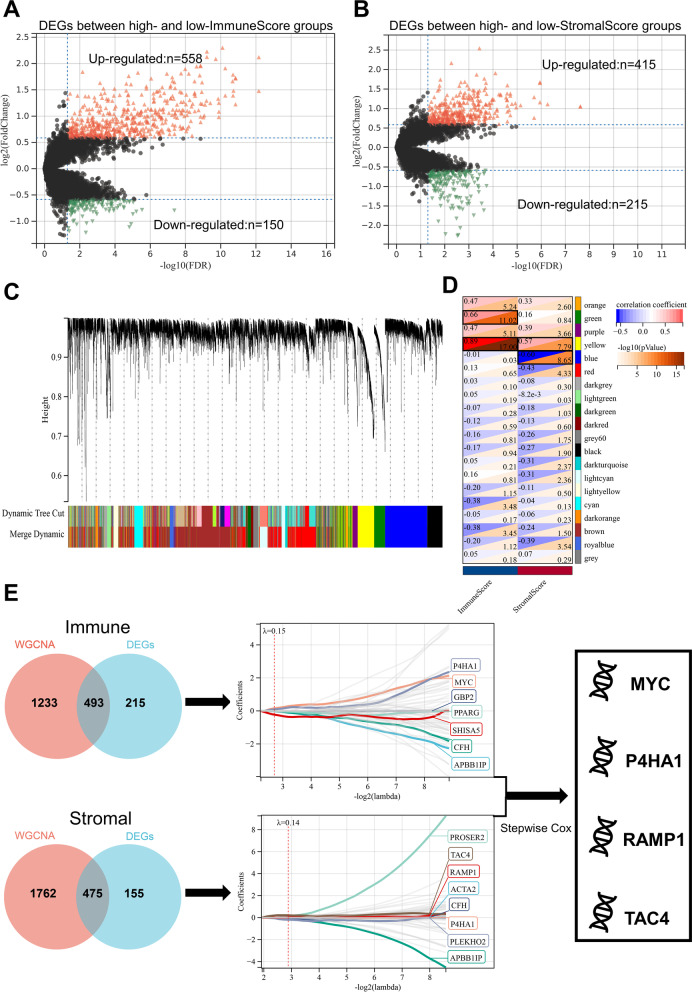
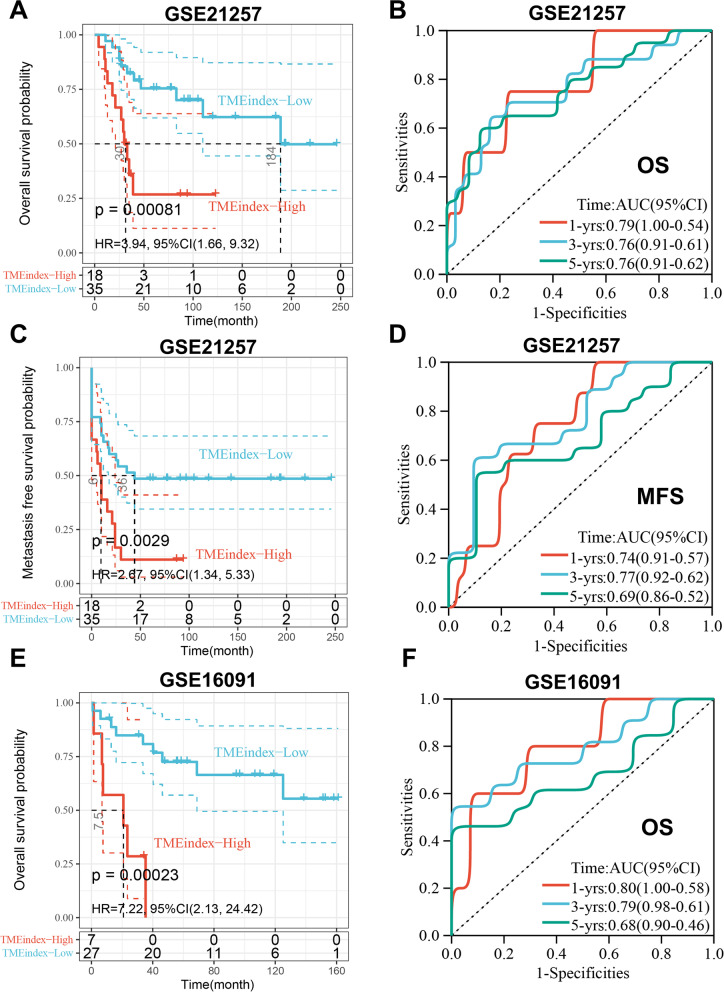
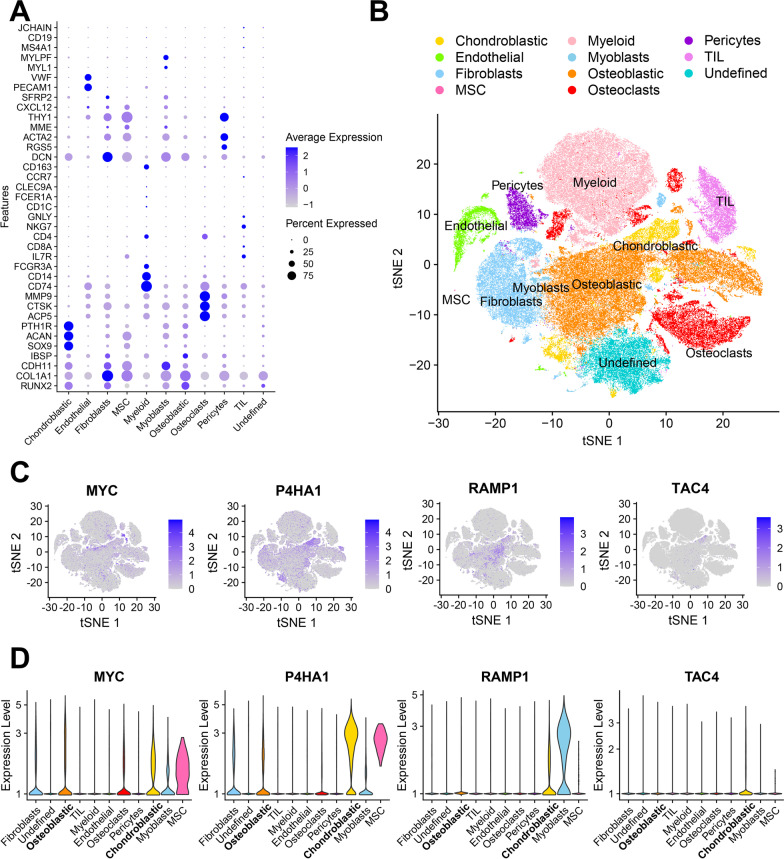
Based on osteosarcoma samples from the Therapeutically Applicable Research to Generate Effective Treatments (TARGET) database, the ESTIMATE algorithm was used to estimate ImmuneScore and StromalScore. Combined differentially expressed gene analysis, weighted gene co-expression network analyses, the Least Absolute Shrinkage and Selection Operator regression and stepwise regression to construct the TMEindex. The prognostic role of TMEindex was validated in three independent datasets. The molecular and immune characteristics of TMEindex and the impact on immunotherapy were then comprehensively investigated. The expression of TMEindex genes in different cell types and its effects on osteosarcoma cells were explored by scRNA-Seq analysis and molecular biology experiments.
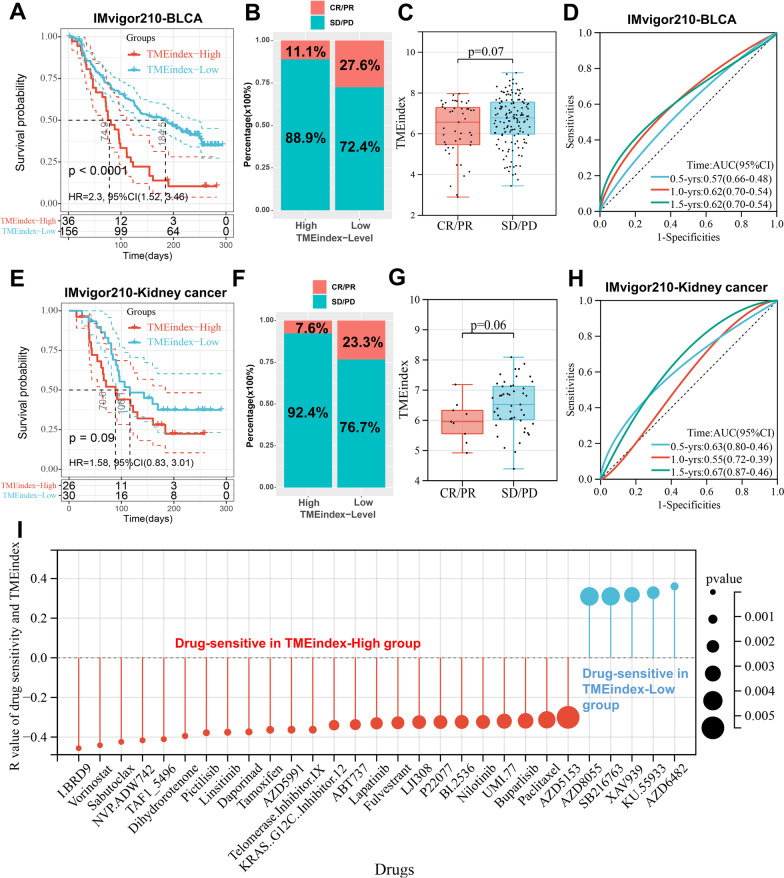
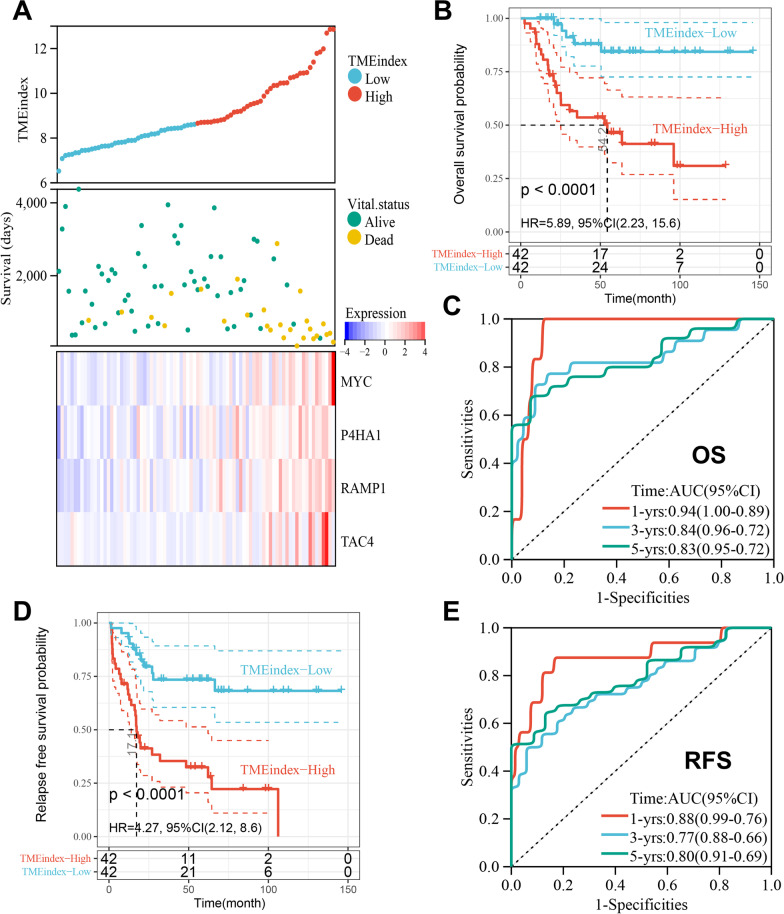
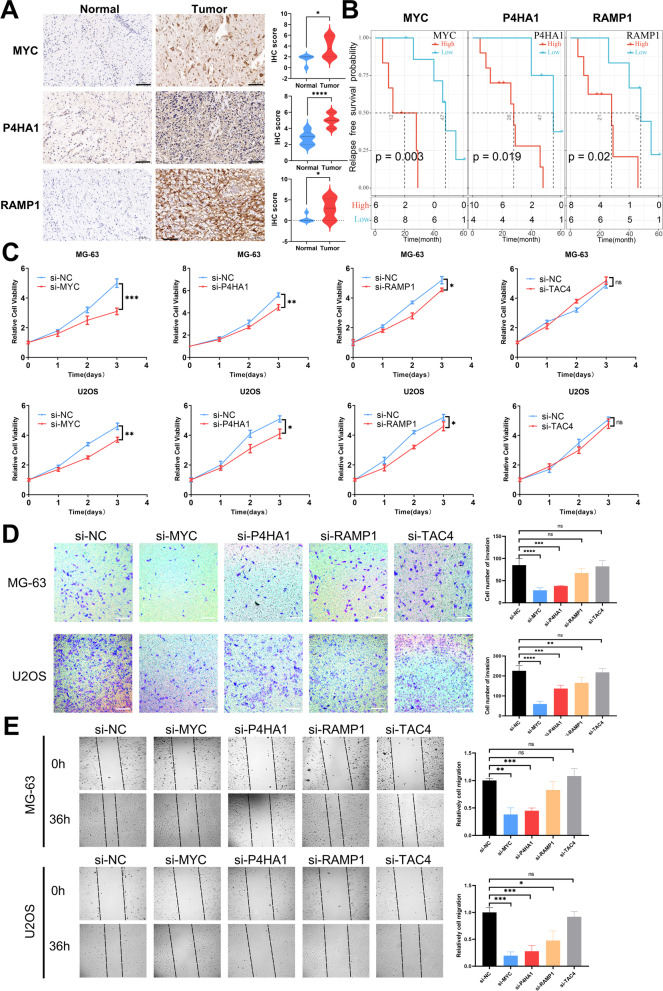
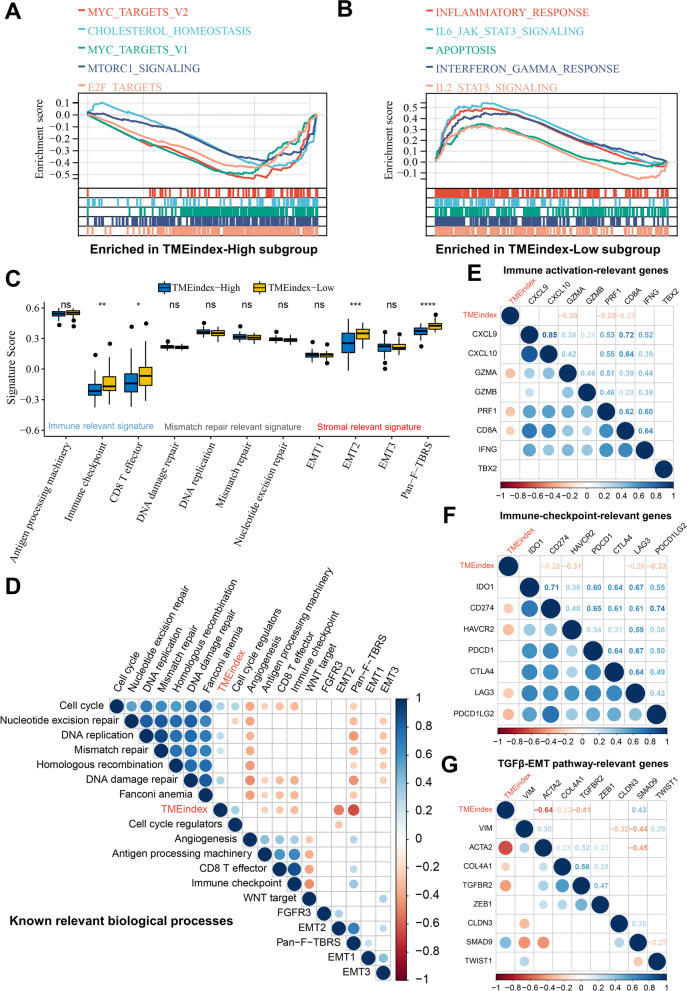
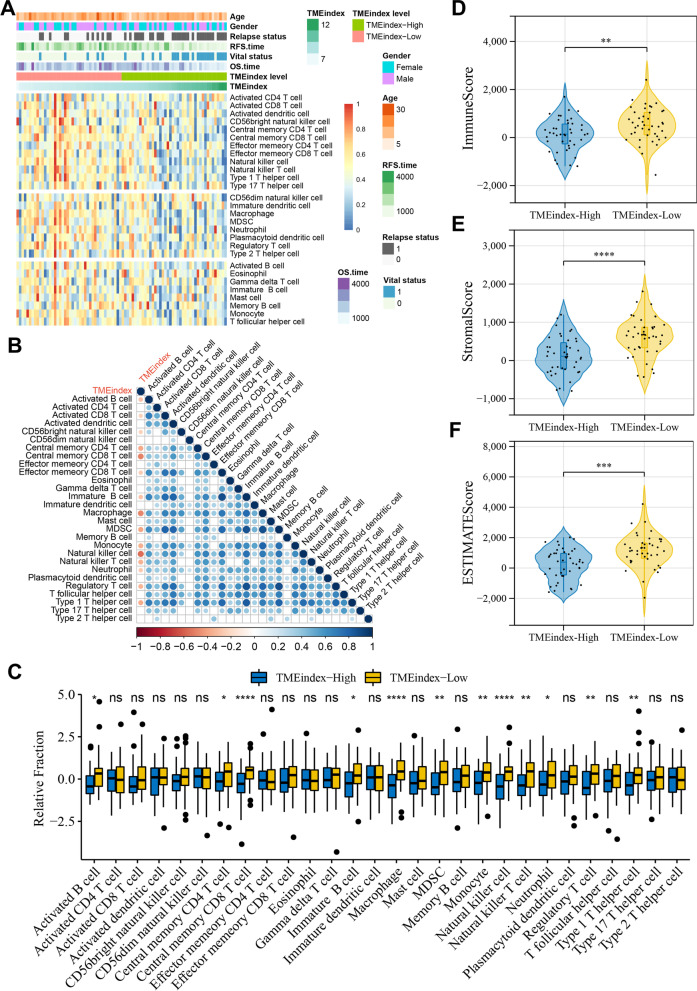
Fundamental is the expression of MYC, P4HA1, RAMP1 and TAC4. Patients with high TMEindex had worse overall survival, recurrence-free survival, and metastasis-free survival. TMEindex is an independent prognostic factor in osteosarcoma. TMEindex genes were mainly expressed in malignant cells. The knockdown of MYC and P4HA1 significantly inhibited the proliferation, invasion and migration of osteosarcoma cells. A high TME index is related to the MYC, mTOR, and DNA replication-related pathways. In contrast, a low TME index is related to immune-related signaling pathways such as the inflammatory response. The TMEindex was negatively correlated with ImmuneScore, StromalScore, immune cell infiltration, and various immune-related signature scores. Patients with a higher TMEindex had an immune-cold TME and higher invasiveness. Patients with a low TME index were more likely to respond to ICI therapy and achieve clinical benefit. In addition, the TME index correlated with response to 29 oncologic drugs.
The TMEindex is a promising biomarker to predict the prognosis of patients with osteosarcoma and their response to ICI therapy, and to distinguish the molecular and immune characteristics.
肿瘤微环境(TME)在骨肉瘤的发生发展中起着核心作用。TME 的组成对于肿瘤与免疫细胞的相互作用至关重要。本研究旨在建立基于 TME 的骨肉瘤预后指数(TMEindex),由此可以推断患者的生存和对免疫检查点抑制剂(ICI)治疗的个体反应。
基于 Therapeutically Applicable Research to Generate Effective Treatments(TARGET)数据库中的骨肉瘤样本,使用 ESTIMATE 算法估计 ImmuneScore 和 StromalScore。结合差异表达基因分析、加权基因共表达网络分析、最小绝对收缩和选择算子回归以及逐步回归构建 TMEindex。在三个独立的数据集验证 TMEindex 的预后作用。然后全面研究 TMEindex 的分子和免疫特征及其对免疫治疗的影响。通过 scRNA-Seq 分析和分子生物学实验,探索 TMEindex 基因在不同细胞类型中的表达及其对骨肉瘤细胞的影响。
基本的是 MYC、P4HA1、RAMP1 和 TAC4 的表达。TMEindex 高的患者总生存率、无复发生存率和无转移生存率更差。TMEindex 是骨肉瘤的独立预后因素。TMEindex 基因主要在恶性细胞中表达。MYC 和 P4HA1 的敲低显著抑制骨肉瘤细胞的增殖、侵袭和迁移。高 TME 指数与 MYC、mTOR 和 DNA 复制相关途径有关。相比之下,低 TME 指数与炎症反应等免疫相关信号通路有关。TMEindex 与 ImmuneScore、StromalScore、免疫细胞浸润和各种免疫相关特征评分呈负相关。TMEindex 较高的患者 TME 呈免疫冷型,侵袭性较高。TMEindex 较低的患者更有可能对 ICI 治疗有反应并获得临床获益。此外,TME 指数与 29 种肿瘤药物的反应相关。
TMEindex 是一种有前途的生物标志物,可预测骨肉瘤患者的预后及其对 ICI 治疗的反应,并区分分子和免疫特征。