Department of Pathology, Shenzhen Hospital, Southern Medical University, 1333 Xinhu Road, Shenzhen, 518101, Guangdong, People's Republic of China.
Department of Pathology, School of Basic Medical Sciences, Southern Medical University, Guangzhou, 510515, Guangdong, People's Republic of China.
Cell Mol Biol Lett. 2023 Apr 16;28(1):31. doi: 10.1186/s11658-023-00443-y.
Metastasis is the leading cause of death among patients with colorectal cancer (CRC). Therefore, it is important to explore the molecular mechanisms of metastasis to develop effective therapeutic targets for CRC. In the present study, ribosomal protein L21 (RPL21) was considered as being involved in promoting CRC metastasis, yet the underlying mechanism requires further investigation.
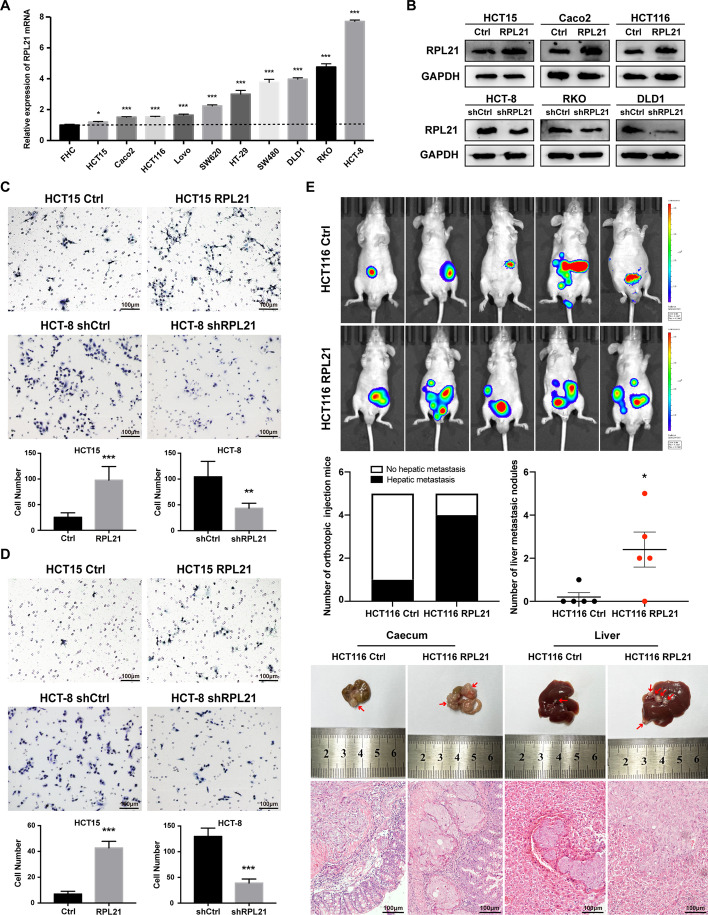
Immunohistochemistry, western blotting, and quantitative reverse transcription polymerase chain reaction were performed to measure the expression of RPL21 and lysosome-associated membrane protein 3 (LAMP3) in CRC tissues and cells. Wound healing, transwell migration, and invasion assays were performed to study the migration and invasion of cultured CRC cells. An orthotopic CRC mouse model was developed to investigate the metastatic ability of CRC. Transcriptome sequencing was conducted to identify the genes related to RPL21. The dual-luciferase reporter gene assay was performed to determine the transcriptional activity of transcription factor EB (TFEB). The GST/His pull-down assay was performed to investigate the specific binding sites of RPL21 and LAMP3. The cell adhesion assay was performed to determine the adhesion ability of CRC cells. Immunofluorescence staining was performed to observe focal adhesions (FAs).
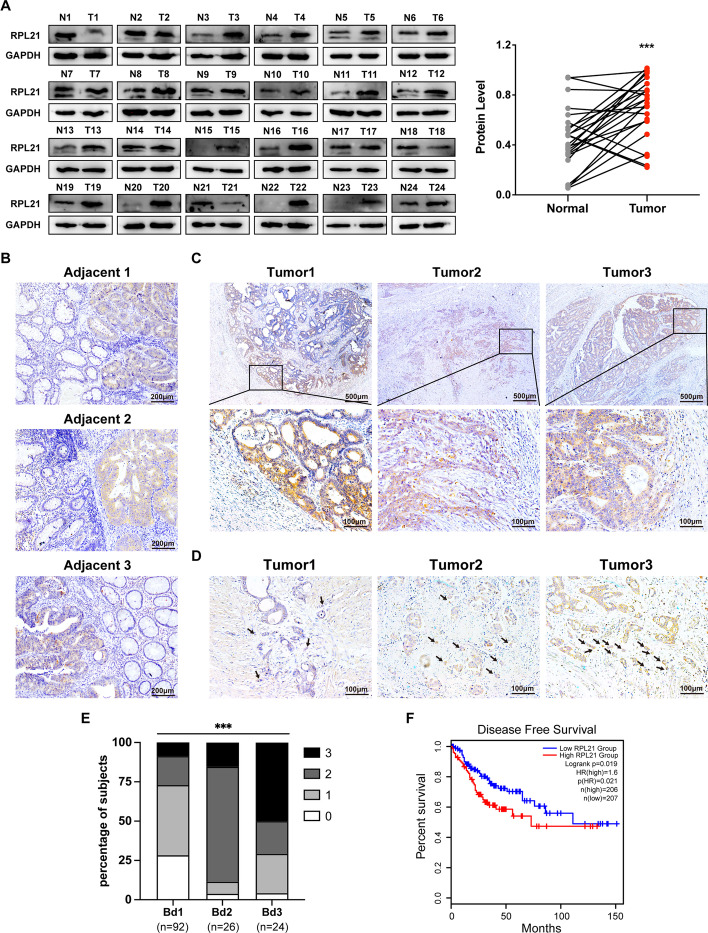
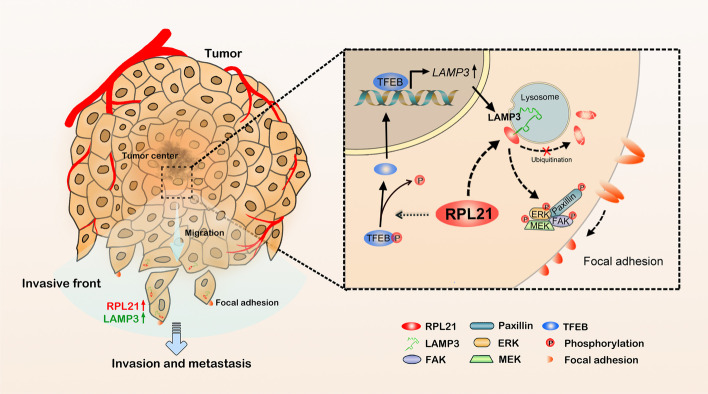
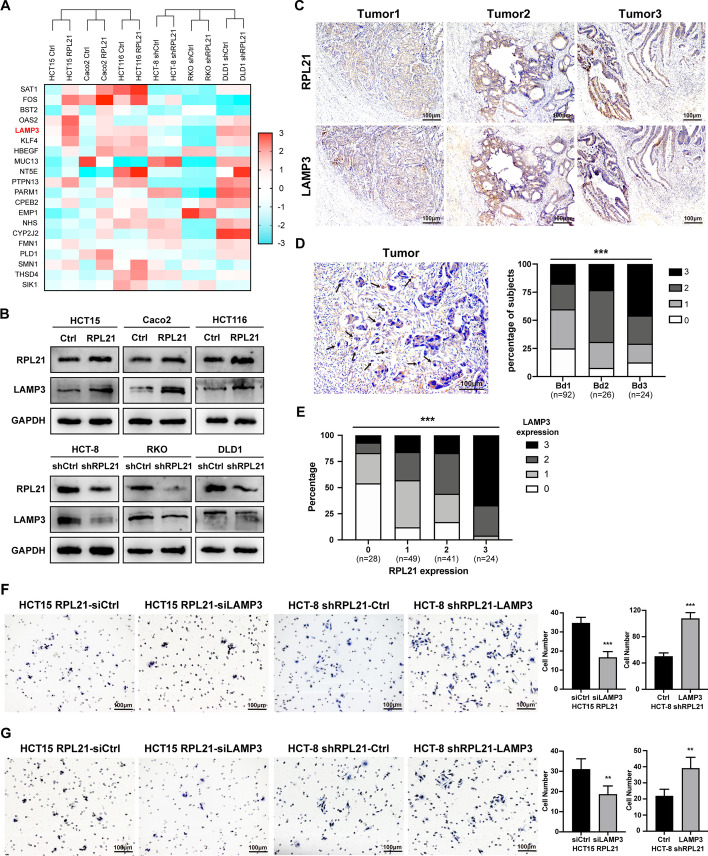
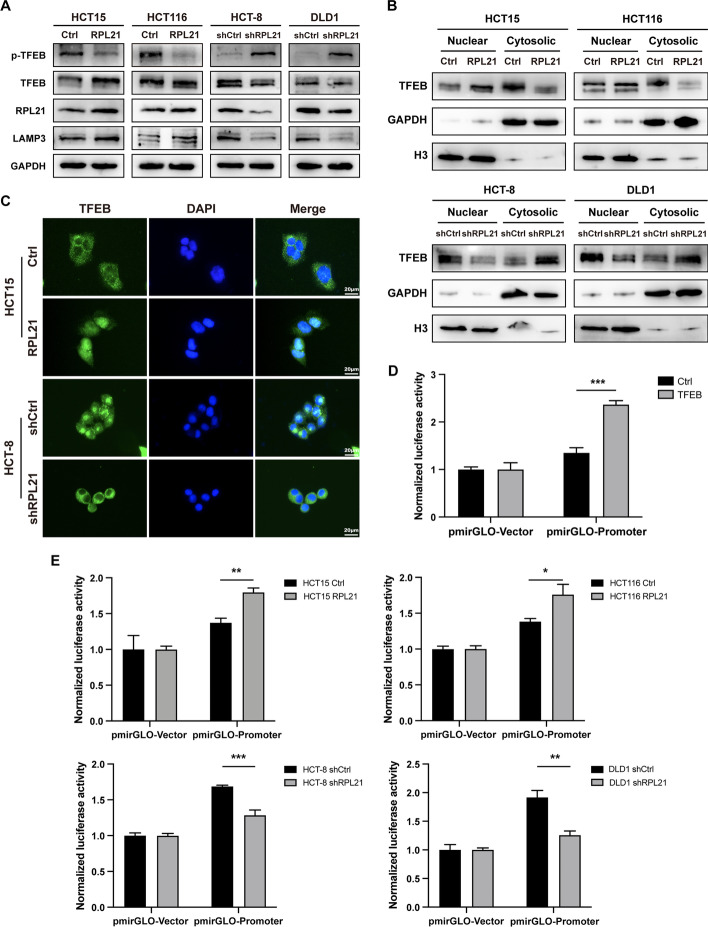
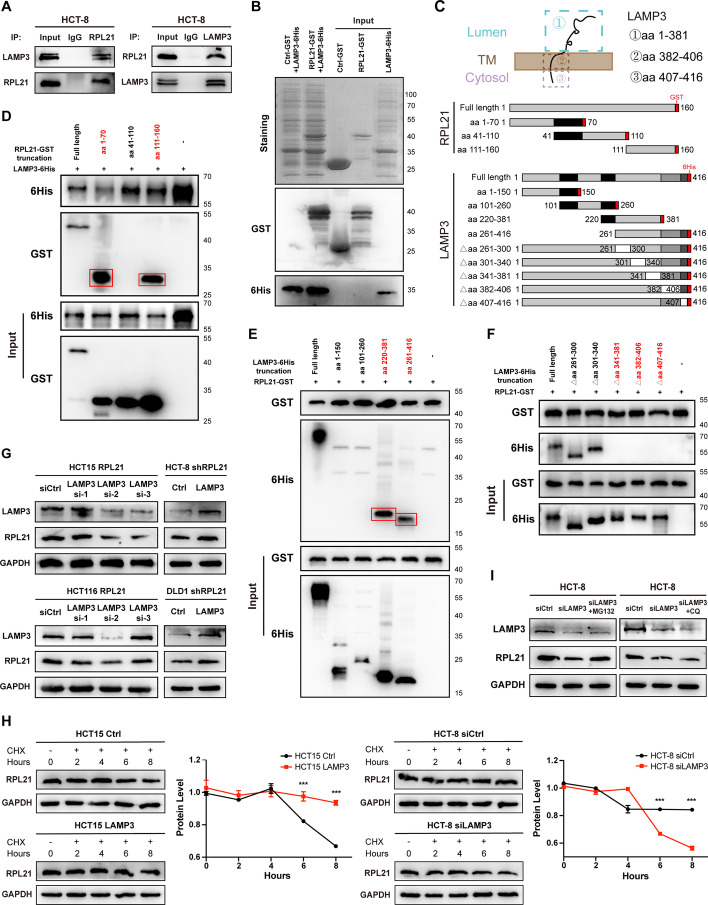
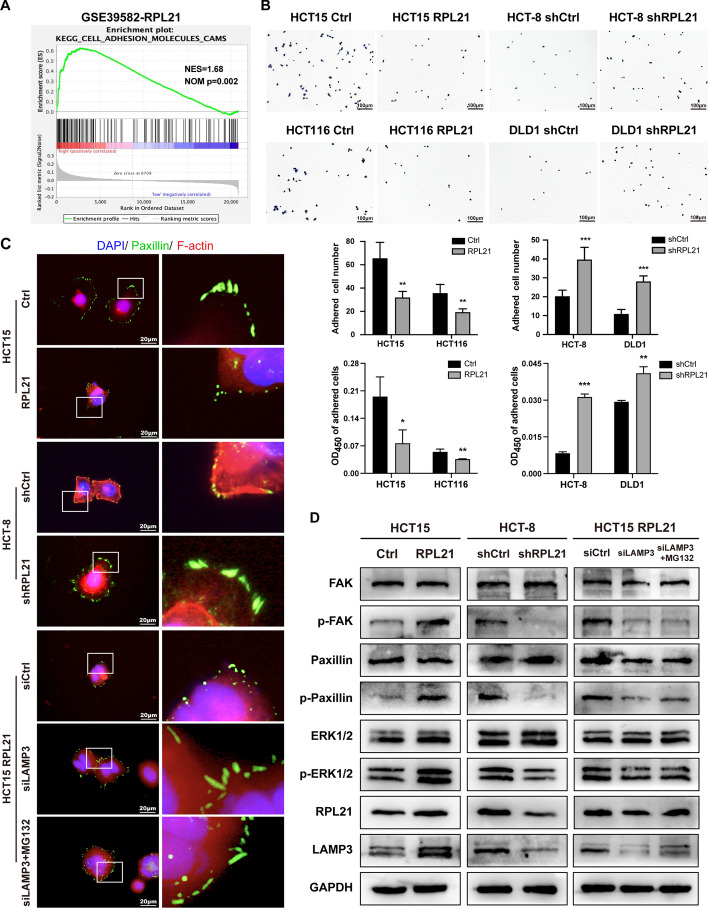
RPL21 was highly expressed in CRC, contributing to tumor invasiveness and poor patient prognosis. Functionally, RPL21 promoted the migration and invasion of CRC cells in vitro and tumor metastasis in vivo. Moreover, LAMP3 was identified as being highly related to RPL21 and was essential in promoting the migration and invasion of CRC cells. Mechanistically, RPL21 activated the transcriptional function of TFEB to upregulate LAMP3 expression. RPL21 directly bound to the aa 341-416 domain of LAMP3 via its aa 1-40 and aa 111-160 segments. The combination of RPL21 and LAMP3 enhanced the stability of the RPL21 protein by suppressing the degradation of the ubiquitin-proteasome system. Furthermore, RPL21 and LAMP3 promoted the formation of immature FAs by activating the FAK/paxillin/ERK signaling pathway.
RPL21 promoted invasion and metastasis by regulating FA formation in a LAMP3-dependent manner during CRC progression. The interaction between RPL21 and LAMP3 may function as a potential therapeutic target against CRC.
转移是结直肠癌(CRC)患者死亡的主要原因。因此,探索转移的分子机制对于开发 CRC 的有效治疗靶点非常重要。在本研究中,核糖体蛋白 L21(RPL21)被认为参与促进 CRC 转移,但潜在机制需要进一步研究。
免疫组织化学、Western blot 和定量逆转录聚合酶链反应用于测量 CRC 组织和细胞中 RPL21 和溶酶体相关膜蛋白 3(LAMP3)的表达。划痕愈合、Transwell 迁移和侵袭实验用于研究培养的 CRC 细胞的迁移和侵袭。建立了原位 CRC 小鼠模型以研究 CRC 的转移能力。进行转录组测序以鉴定与 RPL21 相关的基因。双荧光素酶报告基因实验用于确定转录因子 EB(TFEB)的转录活性。GST/His 下拉实验用于研究 RPL21 和 LAMP3 的特定结合位点。细胞黏附实验用于确定 CRC 细胞的黏附能力。免疫荧光染色用于观察焦点黏附(FA)。
RPL21 在 CRC 中高表达,促进肿瘤侵袭性和患者预后不良。功能上,RPL21 促进 CRC 细胞在体外的迁移和侵袭以及体内肿瘤转移。此外,LAMP3 被鉴定为与 RPL21 高度相关,对于促进 CRC 细胞的迁移和侵袭至关重要。机制上,RPL21 激活 TFEB 的转录功能以上调 LAMP3 的表达。RPL21 通过其 aa1-40 和 aa111-160 片段直接与 LAMP3 的 aa341-416 结构域结合。RPL21 和 LAMP3 的结合通过抑制泛素-蛋白酶体系统的降解增强 RPL21 蛋白的稳定性。此外,RPL21 和 LAMP3 通过激活 FAK/paxillin/ERK 信号通路促进不成熟 FA 的形成。
RPL21 通过在 CRC 进展过程中以 LAMP3 依赖的方式调节 FA 形成来促进侵袭和转移。RPL21 和 LAMP3 之间的相互作用可能是针对 CRC 的潜在治疗靶点。