Ding Xinjiang, Yao Tao, Liu Xi, Fan Zhongwen, Liu Yuanxing
Division of Hepatobiliary and Pancreatic Surgery, Department of Surgery, First Affiliated Hospital, School of Medicine, Zhejiang University, Hangzhou, China.
College of Life Science, Zhejiang Chinese Medicine University, Hangzhou, China.
Front Oncol. 2023 Mar 30;13:1143013. doi: 10.3389/fonc.2023.1143013. eCollection 2023.
Available treatments for hepatocellular carcinoma (HCC), a common human malignancy with a low survival rate, remain unsatisfactory. Macropinocytosis (MPC), a type of endocytosis that involves the non-specific uptake of dissolved molecules, has been shown to contribute to HCC pathology; however, its biological mechanism remains unknown.
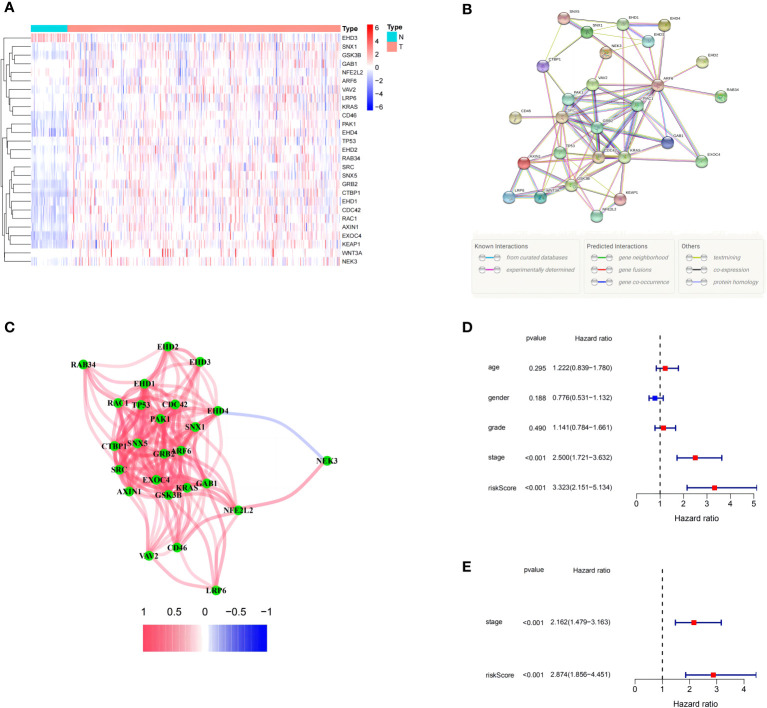
The current study identified 27 macropinocytosis-related genes (MRGs) from 71 candidate genes using bioinformatics. The R software was used to create a prognostic signature model by filtering standardized mRNA expression data from HCC patients and using various methods to verify the reliability of the model and indicate immune activity.
The prognostic signature was constructed using seven MPC-related differentially expressed genes, , , , , , , and , through LASSO Cox regression. The risk score was acquired from the expression of these genes and their corresponding coefficients. HCC patients in the discovery and validation cohorts were stratified, and the survival of low-risk score patients was improved in both cohorts. Time-dependent ROC analysis indicated that the model's prediction reliability was the highest in the short term. Subsequent immunologic analysis, including KEGG, located the immune action pathway of the differentially expressed genes in the direction of the cancer pathway, etc. Immune infiltration and immune checkpoint tests provided valuable guidance for future follow-up experiments.
A risk model with MRGs was constructed to effectively predict HCC patient prognoses and suggest changes in the immune microenvironment during the disease process. The findings should benefit the development of a prognostic stratification and treatment strategy for HCC.
肝细胞癌(HCC)是一种常见的人类恶性肿瘤,生存率较低,现有的治疗方法仍不尽人意。巨胞饮作用(MPC)是一种胞吞作用,涉及溶解分子的非特异性摄取,已被证明与HCC病理有关;然而,其生物学机制尚不清楚。
本研究利用生物信息学从71个候选基因中鉴定出27个巨胞饮作用相关基因(MRGs)。使用R软件,通过筛选HCC患者的标准化mRNA表达数据,并采用多种方法验证模型的可靠性并指示免疫活性,创建了一个预后特征模型。
通过LASSO Cox回归,使用7个与MPC相关的差异表达基因,即 、 、 、 、 、 、 和 ,构建了预后特征。从这些基因的表达及其相应系数中获得风险评分。对发现队列和验证队列中的HCC患者进行分层,两个队列中低风险评分患者的生存率均有所提高。时间依赖性ROC分析表明,该模型在短期内的预测可靠性最高。随后的免疫学分析,包括KEGG分析,将差异表达基因的免疫作用途径定位在癌症途径等方向。免疫浸润和免疫检查点测试为未来的后续实验提供了有价值的指导。
构建了一个包含MRGs的风险模型,以有效预测HCC患者的预后,并提示疾病过程中免疫微环境的变化。这些发现应有助于HCC预后分层和治疗策略的制定。