Shelton Erica, Mossburg Sarah, Thompson Lee, Savitz Lucy
Health Division American Institutes for Research (AIR) Rockville Maryland USA.
Department of Emergency Medicine Johns Hopkins University School of Medicine Baltimore Maryland USA.
Learn Health Syst. 2022 Aug 23;7(2):e10326. doi: 10.1002/lrh2.10326. eCollection 2023 Apr.
A mission-critical aspect of learning health systems (LHSs) is the provision of evidence-based practice. One source of such evidence is provided by the Agency for Healthcare Research and Quality (AHRQ) through rigorous systematic reviews, termed evidence reports that synthesize available evidence on nominated topics of interest. However, the AHRQ Evidence-based Practice Center (EPC) program recognizes that the production of high-quality evidence reviews does not guarantee or promote their use and usability in practice.
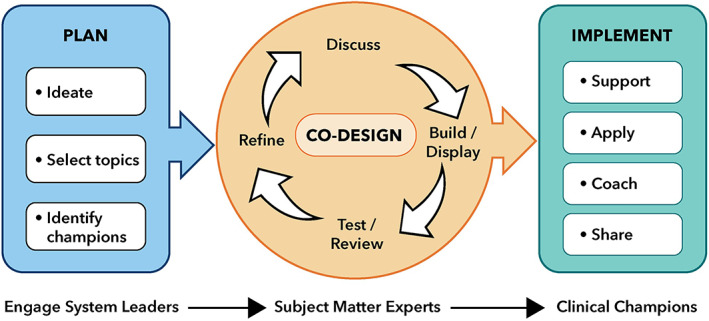
To make these reports more relevant to LHSs and promote evidence dissemination, AHRQ awarded a contract to the American Institutes for Research (AIR) and its Kaiser Permanente ACTION (KPNW ACTION) partner to design and implement web-based tools to meet the gap in dissemination and implementation of EPC reports in LHSs. We used a co-production approach to accomplish this work across three phases of activity: planning, co-design, and implementation between 2018 and 2021. We describe the methods and results and discuss implications for future efforts.
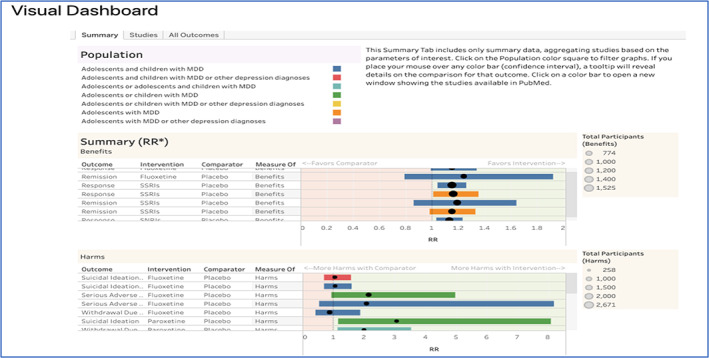
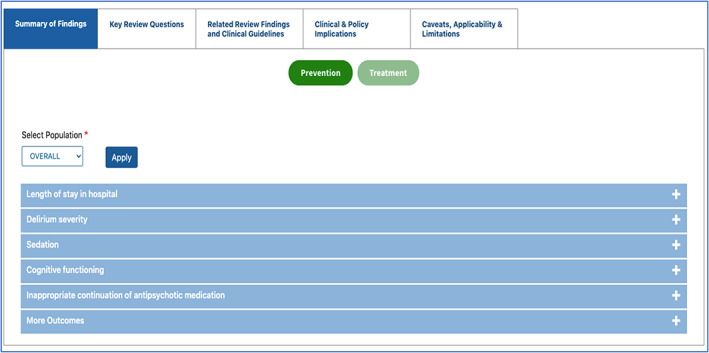
Web-based information tools that provide clinically relevant summaries with clear visual representations from the AHRQ EPC systematic evidence reports may be used by LHSs to increase awareness and accessibility of EPC reports, formalize and enhance LHSs' evidence review infrastructure, develop system-specific protocols and care pathways, improve practice at the point of care, and train and educate.
The co-design of these tools and facilitated implementation generated an approach to making EPC reports more accessible and allows for more widespread application of systematic review results in supporting evidence-based practices in LHSs.
学习型健康系统(LHS)的一个关键任务是提供循证实践。医疗保健研究与质量局(AHRQ)通过严格的系统评价提供了此类证据的一个来源,即证据报告,该报告综合了关于指定感兴趣主题的现有证据。然而,AHRQ循证实践中心(EPC)项目认识到,高质量证据评价的产生并不能保证或促进其在实践中的应用和可用性。
为了使这些报告与LHS更相关并促进证据传播,AHRQ授予美国研究所(AIR)及其凯撒永久医疗行动(KPNW ACTION)合作伙伴一份合同,设计并实施基于网络的工具,以弥补EPC报告在LHS传播和实施方面的差距。我们采用共同生产的方法,在2018年至2021年的三个活动阶段完成这项工作:规划、共同设计和实施。我们描述了方法和结果,并讨论了对未来工作的影响。
基于网络的信息工具可由LHS使用,这些工具提供与临床相关的摘要,并带有来自AHRQ EPC系统证据报告的清晰视觉呈现,以提高对EPC报告的认识和可及性,规范和加强LHS的证据评价基础设施,制定特定系统的方案和护理路径,改善即时护理实践,并进行培训和教育。
这些工具的共同设计和便利的实施产生了一种使EPC报告更易于获取的方法,并允许更广泛地应用系统评价结果,以支持LHS中的循证实践。