British Heart Foundation Centre of Research Excellence and National Institute for Health and Care Research Biomedical Research Centre at the School of Cardiovascular and Metabolic Medicine and Sciences, King's College London, UK (S.M.E., M.R., D.P.).
University Medical Center Utrecht, Utrecht University; and Cardiovascular and Respiratory Physiology, University of Twente, Enschede, the Netherlands (D.W.D.).
Circulation. 2023 Apr 18;147(16):1237-1250. doi: 10.1161/CIRCULATIONAHA.122.062371. Epub 2023 Apr 17.
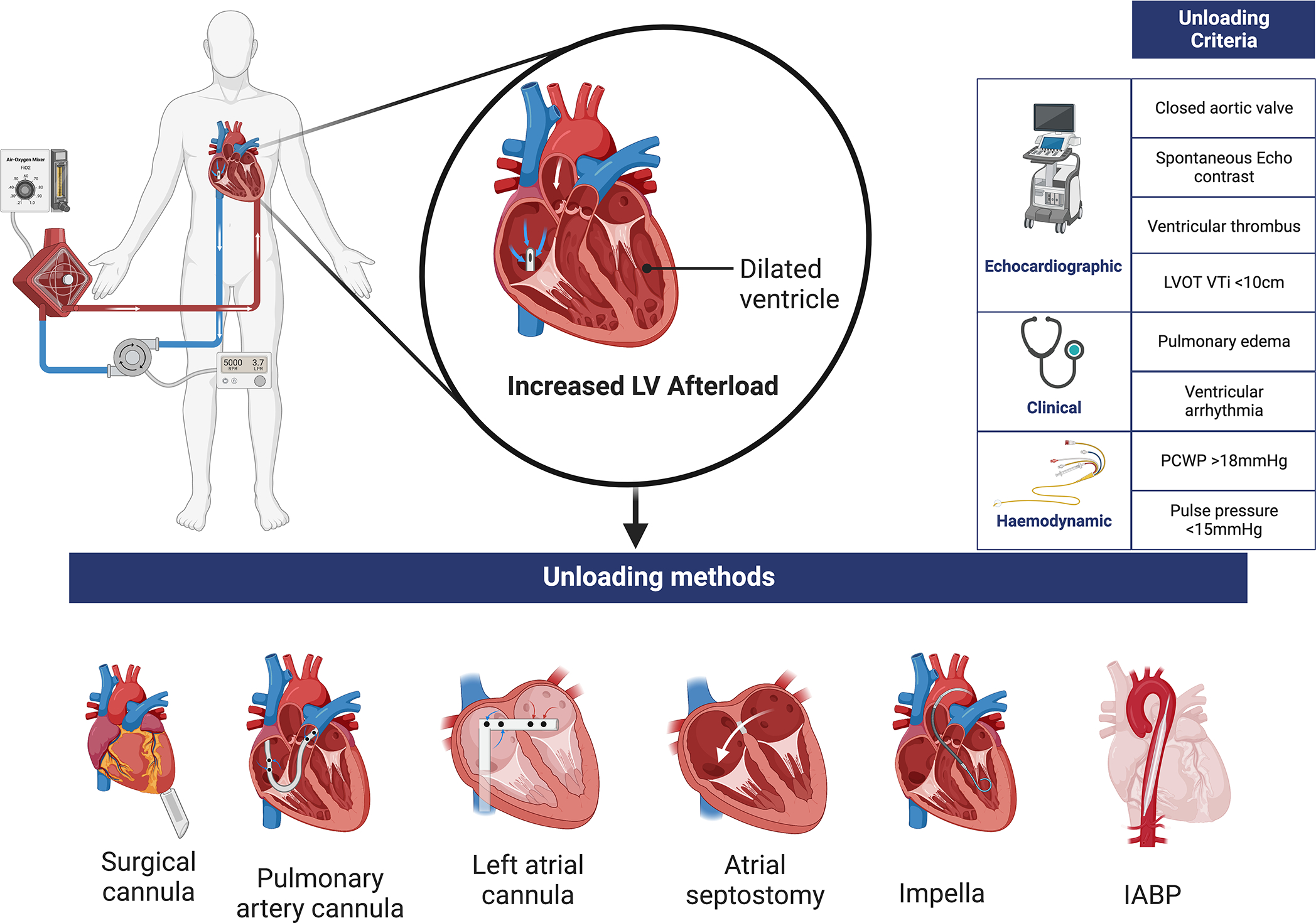
Venoarterial extracorporeal membrane oxygenation provides cardiorespiratory support to patients in cardiogenic shock. This comes at the cost of increased left ventricle (LV) afterload that can be partly ascribed to retrograde aortic flow, causing LV distension, and leads to complications including cardiac thrombi, arrhythmias, and pulmonary edema. LV unloading can be achieved by using an additional circulatory support device to mitigate the adverse effects of mechanical overload that may increase the likelihood of myocardial recovery. Observational data suggest that these strategies may improve outcomes, but in whom, when, and how LV unloading should be employed is unclear; all techniques require balancing presumed benefits against known risks of device-related complications. This review summarizes the current evidence related to LV unloading with venoarterial extracorporeal membrane oxygenation.
脉动脉体外膜肺氧合为心源性休克患者提供心肺支持。这会增加左心室(LV)后负荷,部分原因是逆行主动脉血流导致 LV 扩张,并导致包括心脏血栓形成、心律失常和肺水肿在内的并发症。LV 卸载可以通过使用额外的循环支持装置来减轻机械过载的不利影响,从而增加心肌恢复的可能性。观察性数据表明,这些策略可能改善预后,但在哪些患者、何时以及如何使用 LV 卸载尚不清楚;所有技术都需要权衡设备相关并发症的已知风险与预期收益。本综述总结了与脉动脉体外膜肺氧合相关的 LV 卸载的现有证据。