Department of Environmental and Occupational Health, Texas A&M University, 212 Adriance Lab Rd, 1266 TAMU, College Station, TX, 77843, USA.
Department of Nutrition, Texas A&M University, College Station, TX, 77843, USA.
Part Fibre Toxicol. 2023 Apr 17;20(1):11. doi: 10.1186/s12989-023-00521-1.
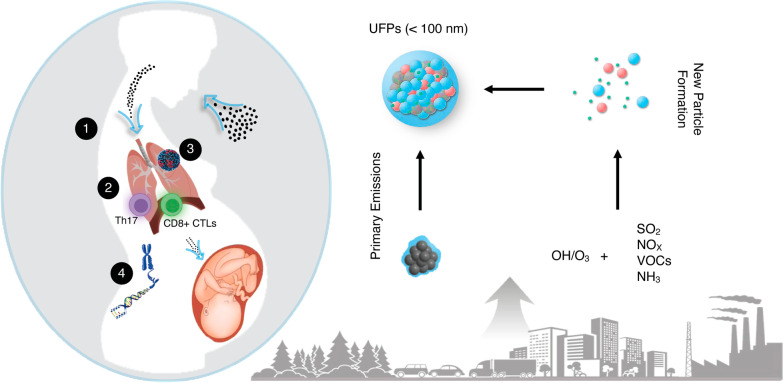
Interactions between air pollution and infectious agents are increasingly recognized and critical to identify, especially to protect vulnerable populations. Pregnancy represents a vulnerable period for influenza infection and air pollution exposure, yet interactions during pregnancy remain unclear. Maternal exposure to ultrafine particles (UFPs, [Formula: see text] 100 nm diameter), a class of particulate matter ubiquitous in urban environments, elicits unique pulmonary immune responses. We hypothesized that UFP exposure during pregnancy would lead to aberrant immune responses to influenza enhancing infection severity.
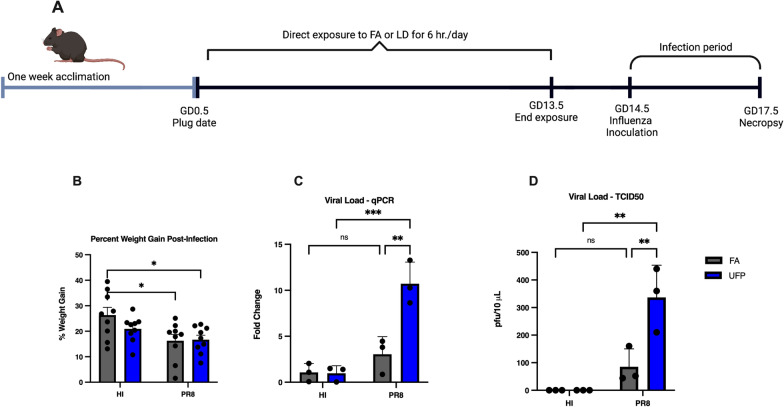
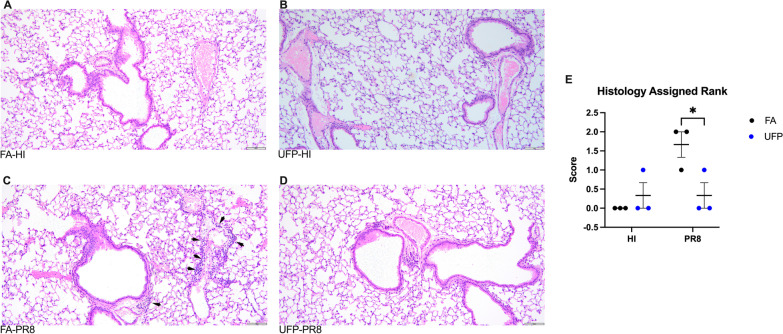
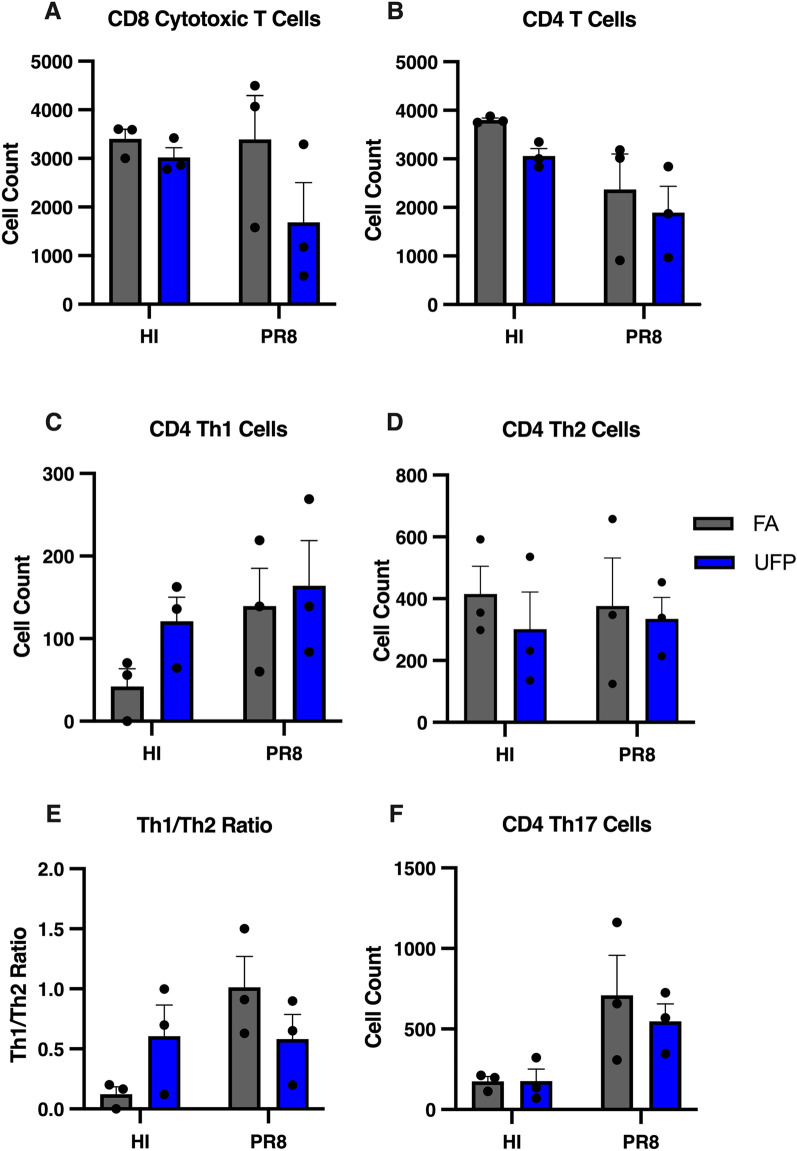
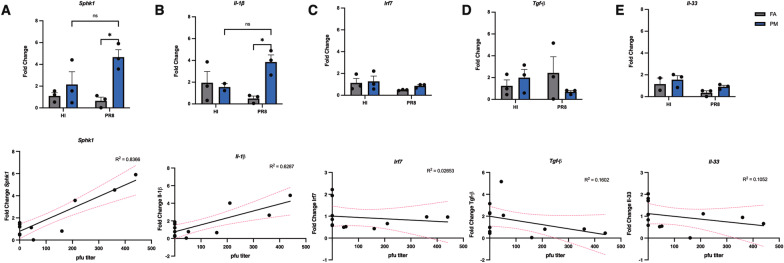
Building from our well-characterized C57Bl/6N mouse model employing daily gestational UFP exposure from gestational day (GD) 0.5-13.5, we carried out a pilot study wherein pregnant dams were subsequently infected with Influenza A/Puerto Rico/8/1934 (PR8) on GD14.5. Findings indicate that PR8 infection caused decreased weight gain in filtered air (FA) and UFP-exposed groups. Co-exposure to UFPs and viral infection led to pronounced elevation in PR8 viral titer and reduced pulmonary inflammation, signifying potential suppression of innate and adaptive immune defenses. Pulmonary expression of the pro-viral factor sphingosine kinase 1 (Sphk1) and pro-inflammatory cytokine interleukin-1β (IL-1 [Formula: see text]) was significantly increased in pregnant mice exposed to UFPs and infected with PR8; expression correlated with higher viral titer.
Results from our model provide initial insight into how maternal UFP exposure during pregnancy enhances respiratory viral infection risk. This model is an important first step in establishing future regulatory and clinical strategies for protecting pregnant women exposed to UFPs.
空气污染和感染因子之间的相互作用越来越受到重视,尤其是在保护易感人群方面。妊娠期间流感感染和空气污染暴露的风险较高,而目前对两者之间的相互作用仍不清楚。母体暴露于超细颗粒(UFPs,[Formula: see text]100nm 直径),这是城市环境中普遍存在的一类颗粒物,会引起独特的肺部免疫反应。我们假设妊娠期间 UFPs 暴露会导致对流感的异常免疫反应,从而增强感染的严重程度。
在我们充分表征的 C57Bl/6N 小鼠模型中,从妊娠第 0.5-13.5 天每天进行妊娠 UFPs 暴露,我们进行了一项初步研究,其中妊娠母鼠随后在妊娠第 14.5 天感染流感 A/Puerto Rico/8/1934(PR8)。研究结果表明,PR8 感染导致过滤空气(FA)和 UFPs 暴露组的体重增加减少。UFPs 与病毒感染的共同暴露导致 PR8 病毒滴度显著升高,并减少肺部炎症,表明先天和适应性免疫防御可能受到抑制。在感染 PR8 的 UFPs 暴露的妊娠小鼠中,促病毒因子鞘氨醇激酶 1(Sphk1)和促炎细胞因子白细胞介素-1β(IL-1 [Formula: see text])的肺部表达显著增加;表达与更高的病毒滴度相关。
我们模型的结果提供了妊娠期间母体 UFPs 暴露增强呼吸道病毒感染风险的初步见解。该模型是为保护暴露于 UFPs 的孕妇制定未来监管和临床策略的重要第一步。