Host Parasite Interaction Program, Texas Biomedical Research Institute, P.O. Box 760549, San Antonio, TX, 78245, USA.
UT Health, Microbiology, Immunology and Molecular Genetics, San Antonio, TX, 78229, USA.
Parasit Vectors. 2023 Apr 17;16(1):132. doi: 10.1186/s13071-023-05730-3.
The trematode parasite Schistosoma mansoni uses an aquatic snail intermediate and a vertebrate definitive host to complete its life cycle. We previously showed that a key transmission trait-the number of cercariae larvae shed from infected Biomphalaria spp. snails-varies significantly within and between different parasite populations and is genetically controlled by five loci. We investigated the hypothesis that the success of parasite genotypes showing high propagative fitness in the intermediate snail host may be offset by lower reproductive fitness in the definitive vertebrate host.
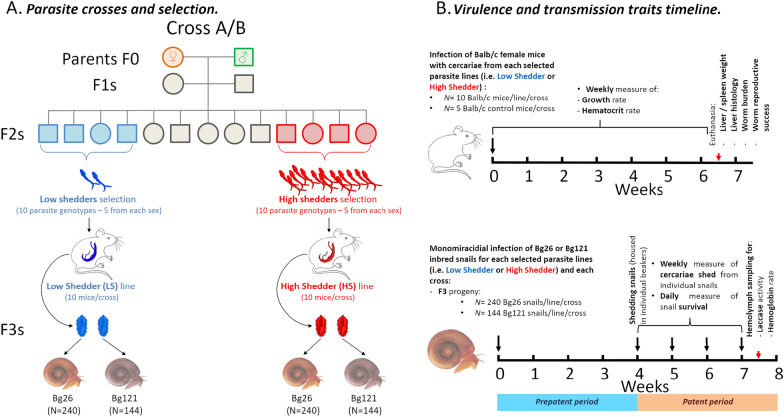
We investigated this trade-off hypothesis by selecting parasite progeny producing high or low number of larvae in the snail and then comparing fitness parameters and virulence in the rodent host. We infected inbred BALB/c mice using two Schistosoma mansoni parasite lines [high shedder (HS) and low shedder (LS) lines] isolated from F2 progeny generated by genetic crosses between SmLE (HS parent) and SmBRE (LS parent) parasites. We used the F3 progeny to infect two populations of inbred Biomphalaria glabrata snails. We then compared life history traits and virulence of these two selected parasite lines in the rodent host to understand pleiotropic effects of genes determining cercarial shedding in parasites infecting the definitive host.
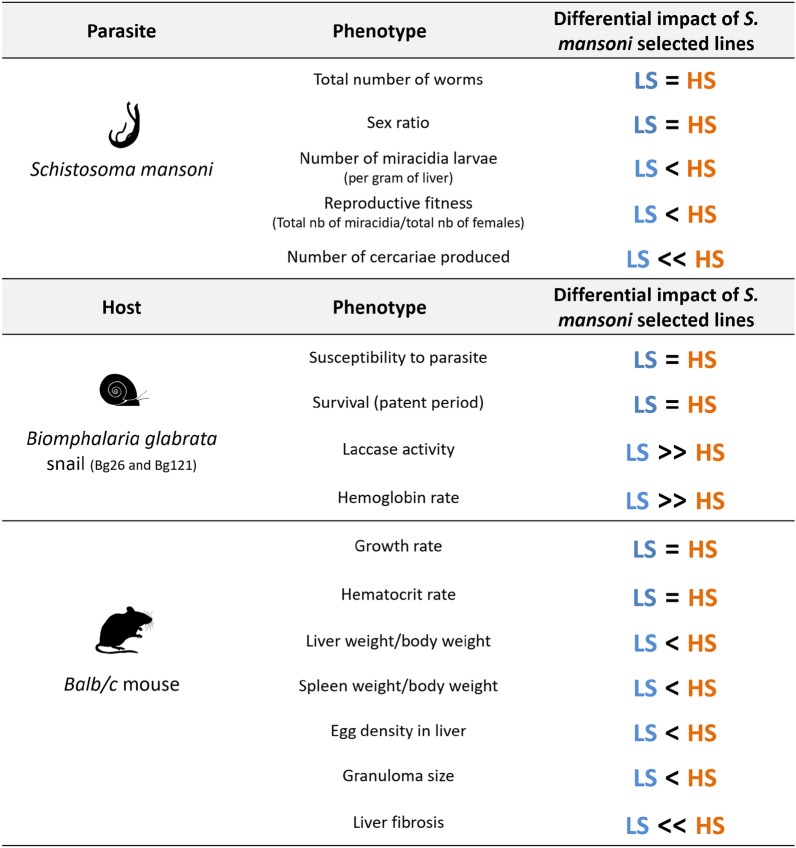
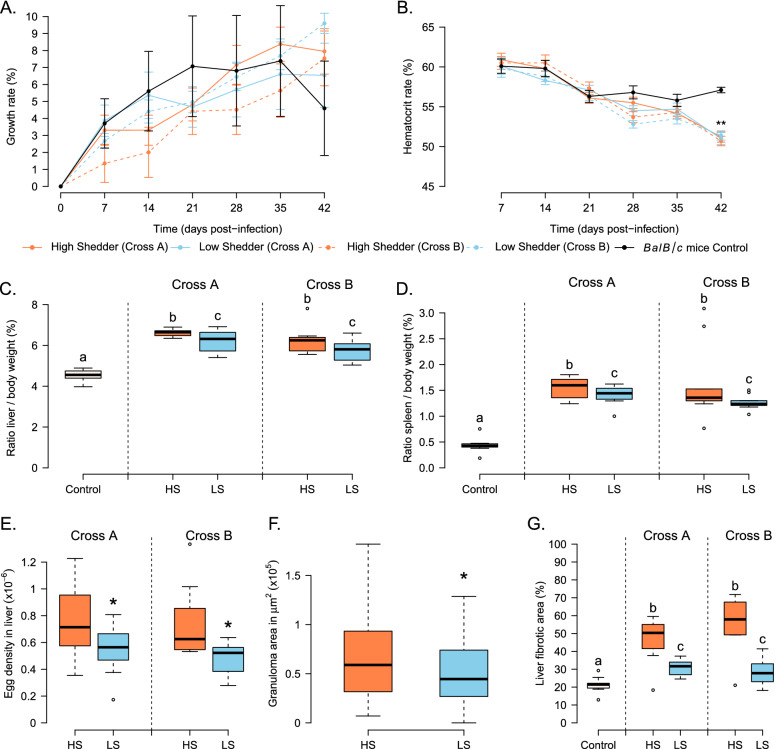
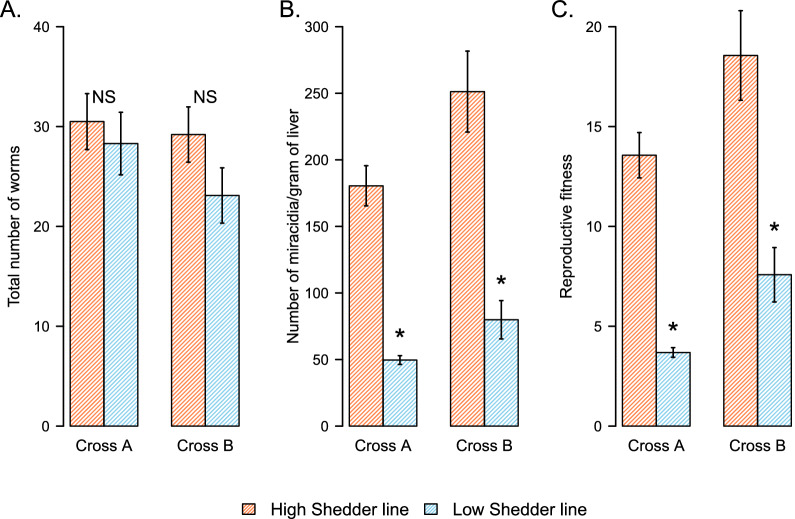
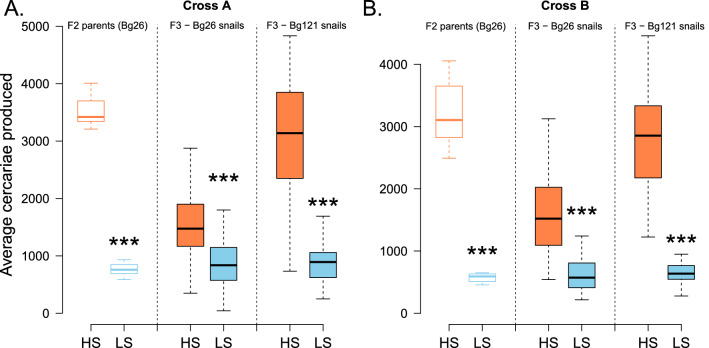
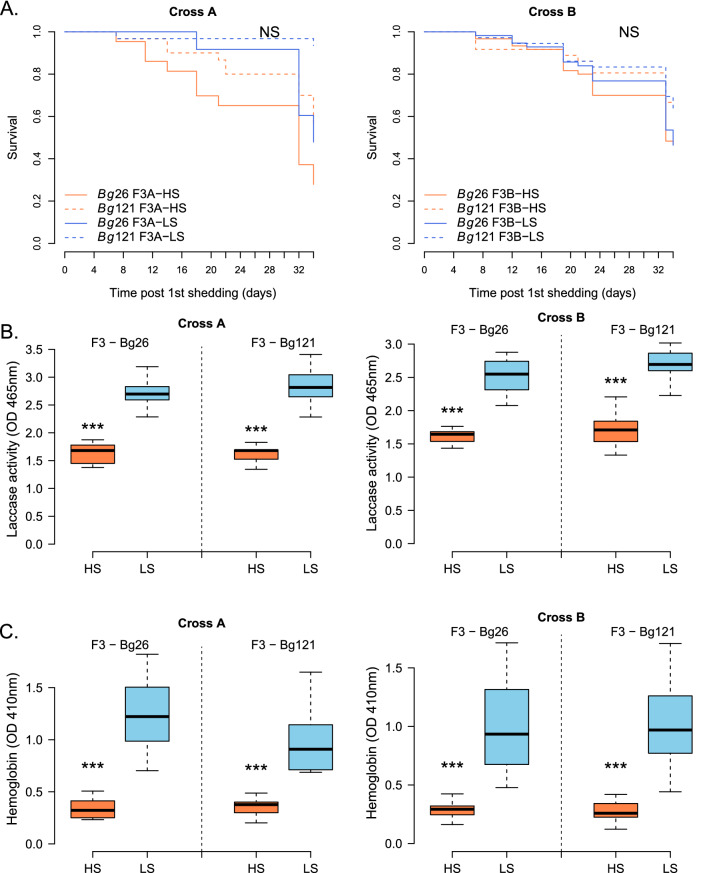
HS parasites shed high numbers of cercariae, which had a detrimental impact on snail physiology (measured by laccase-like activity and hemoglobin rate), regardless of the snail genetic background. In contrast, selected LS parasites shed fewer cercariae and had a lower impact on snail physiology. Similarly, HS worms have a higher reproductive fitness and produced more viable F3 miracidia larvae than LS parasites. This increase in transmission is correlated with an increase in virulence toward the rodent host, characterized by stronger hepato-splenomegaly and hepatic fibrosis.
These experiments revealed that schistosome parasite propagative and reproductive fitness was positively correlated in intermediate and definitive host (positive pleiotropy). Therefore, we rejected our trade-off hypothesis. We also showed that our selected schistosome lines exhibited low and high shedding phenotype regardless of the intermediate snail host genetic background. .
曼氏血吸虫寄生虫利用水生蜗牛中间宿主和脊椎动物终末宿主来完成其生命周期。我们之前表明,一个关键的传播特征——从受感染的双脐螺属蜗牛中释放的尾蚴幼虫数量——在不同的寄生虫种群内和种群间有显著差异,并且由五个基因座控制。我们研究了这样一个假设,即在中间宿主蜗牛中具有高繁殖适应性的寄生虫基因型的成功可能会被终末脊椎动物宿主中较低的生殖适应性所抵消。
我们通过选择在蜗牛中产生高或低幼虫数量的寄生虫后代,然后比较在啮齿动物宿主中的适应度参数和毒力来检验这种权衡假说。我们使用来自 SmLE(高释放亲本)和 SmBRE(低释放亲本)寄生虫之间遗传杂交产生的 F2 后代的两种曼氏血吸虫寄生虫株[高释放(HS)和低释放(LS)株]感染近交 BALB/c 小鼠。我们使用 F3 后代感染两个近交双脐螺属蜗牛种群。然后,我们比较了这两种选择的寄生虫株在啮齿动物宿主中的生活史特征和毒力,以了解决定感染终末宿主的寄生虫尾蚴释放的基因的多效性效应。
HS 寄生虫释放大量的尾蚴,这对蜗牛的生理产生了不利影响(通过漆酶样活性和血红蛋白率来衡量),而与蜗牛的遗传背景无关。相比之下,选择的 LS 寄生虫释放较少的尾蚴,对蜗牛的生理影响较小。同样,HS 蠕虫具有更高的生殖适应性,并产生比 LS 寄生虫更多的有活力的 F3 毛蚴幼虫。这种传播的增加与对啮齿动物宿主的毒力增加有关,表现为更强的肝脾肿大和肝纤维化。
这些实验表明,曼氏血吸虫寄生虫在中间宿主和终末宿主中的繁殖适应性和生殖适应性呈正相关(正多效性)。因此,我们否定了我们的权衡假说。我们还表明,无论中间蜗牛宿主的遗传背景如何,我们选择的血吸虫株都表现出低和高释放表型。