Jutzeler Kathrin S, Platt Roy N, Diaz Robbie, Morales Madison, LE Clec'h Winka, Chevalier Frédéric D, Anderson Timothy J C
Host parasite Interaction Program, Texas Biomedical Research Institute, P.O. Box 760549, 78245 San Antonio, Texas, USA.
UT Health, Microbiology, Immunology & Molecular Genetics, San Antonio, TX 78229.
bioRxiv. 2024 Oct 24:2024.10.21.619418. doi: 10.1101/2024.10.21.619418.
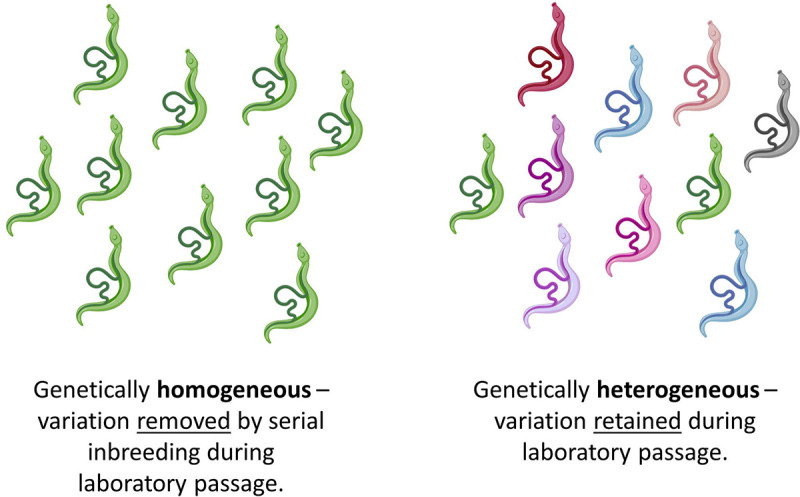
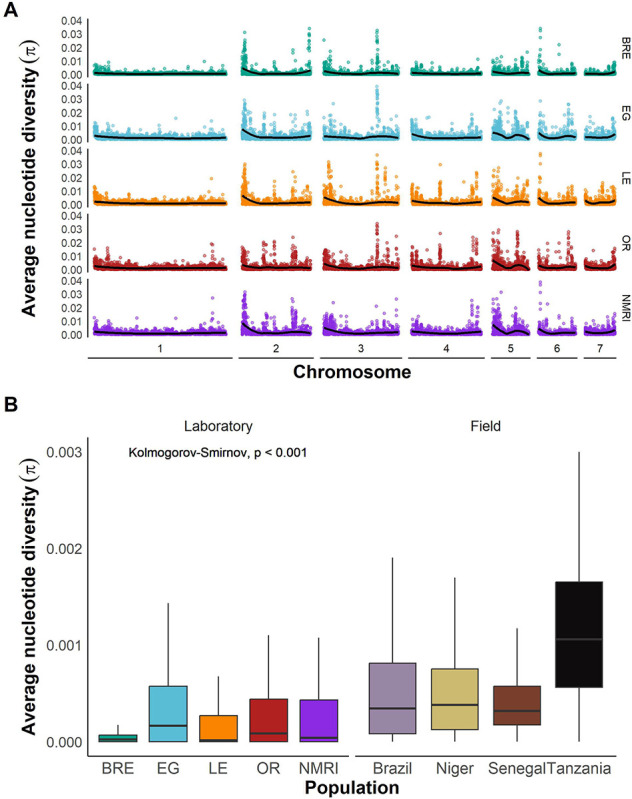
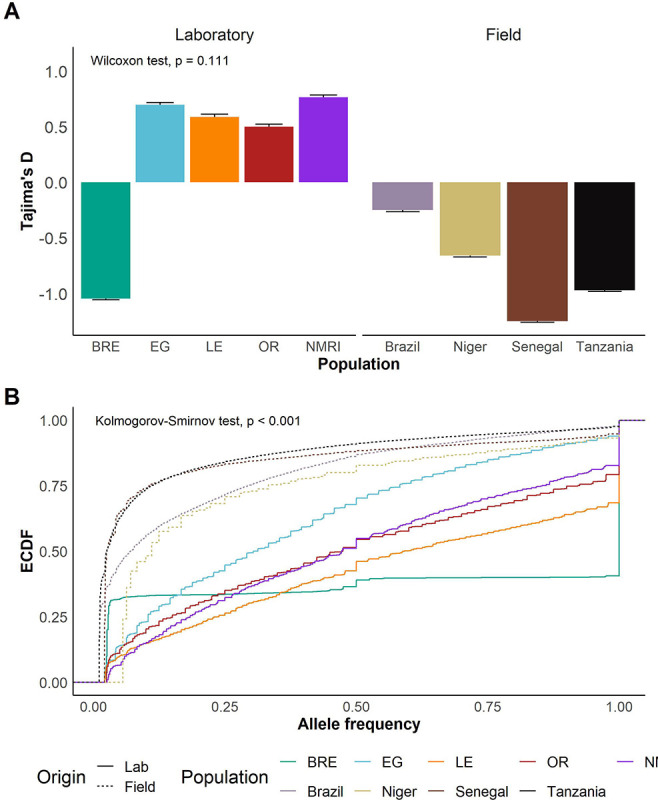
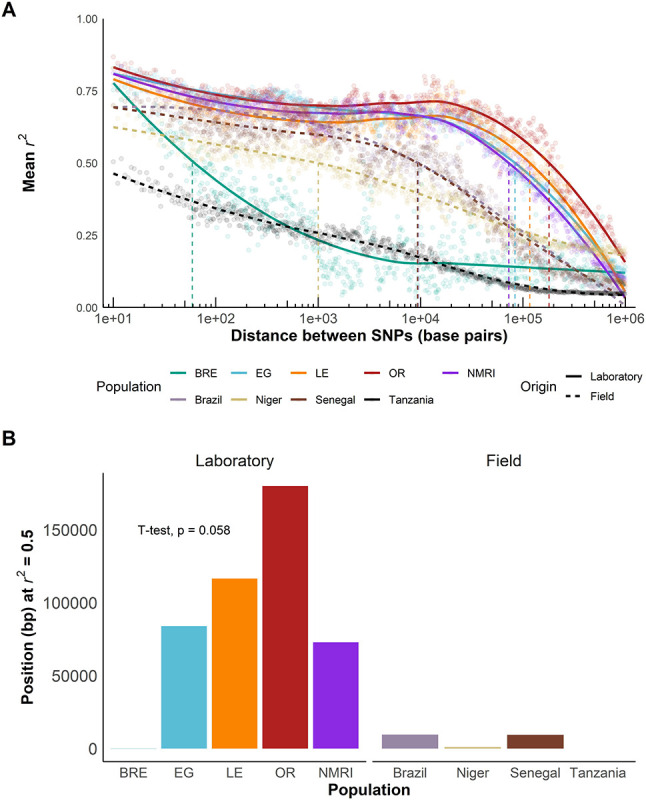
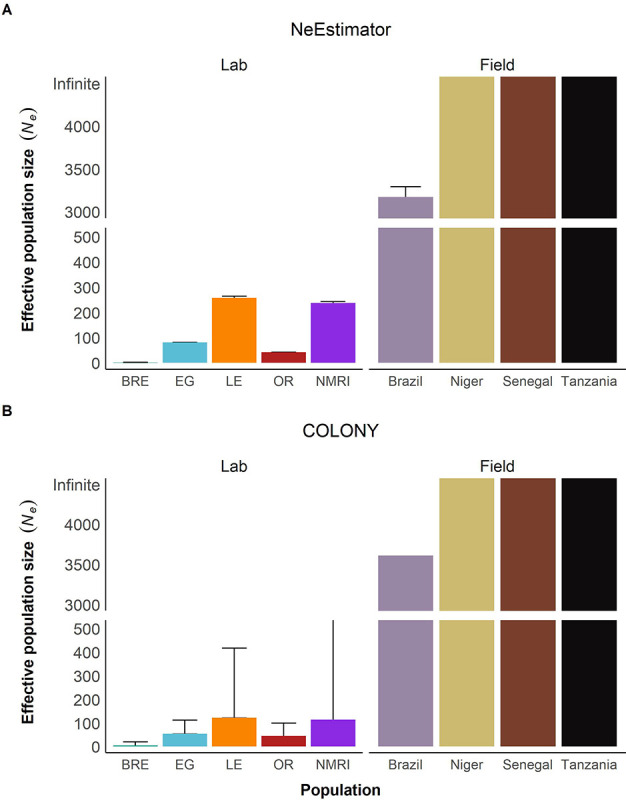
Schistosomes are obligately sexual blood flukes that can be maintained in the laboratory using freshwater snails as intermediate and rodents as definitive hosts. The genetic composition of laboratory schistosome populations is poorly understood: whether genetic variation has been purged due to serial inbreeding or retained is unclear. We sequenced 19 - 24 parasites from each of five laboratory populations and compared their genomes with published exome data from four field populations. We found abundant genomic variation (0.897 - 1.22 million variants) within laboratory populations: these retained on average 49% (π = 3.27e-04 - 8.94e-04) of the nucleotide diversity observed in the four field parasite populations (π = 1.08e-03 - 2.2e-03). However, the pattern of variation was very different in laboratory and field populations. Tajima's D was positive in all laboratory populations except SmBRE, indicative of recent population bottlenecks, but negative in all field populations. Current effective population size estimates of laboratory populations were lower (2 - 258) compared to field populations (3,174 - infinity). The distance between markers at which linkage disequilibrium (LD) decayed to 0.5 was longer in laboratory populations (59 bp - 180 kb) compared to field populations (9 bp - 9.5 kb). SmBRE was the least variable; this parasite also shows low fitness across the lifecycle, consistent with inbreeding depression. The abundant genetic variation present in most laboratory schistosome populations has several important implications: (i) measurement of parasite phenotypes, such as drug resistance, using laboratory parasite populations will determine average values and underestimate trait variation; (ii) genome-wide association studies (GWAS) can be conducted in laboratory schistosome populations by measuring phenotypes and genotypes of individual worms; (iii) genetic drift may lead to divergence in schistosome populations maintained in different laboratories. We conclude that the abundant genetic variation retained within many laboratory schistosome populations can provide valuable, untapped opportunities for schistosome research.
血吸虫是专性有性血液吸虫,可在实验室中以淡水蜗牛作为中间宿主、啮齿动物作为终宿主来维持种群。实验室血吸虫种群的遗传组成了解甚少:尚不清楚遗传变异是因连续近交而被清除还是得以保留。我们对五个实验室种群中的每个种群的19 - 24条寄生虫进行了测序,并将它们的基因组与来自四个野外种群已发表的外显子组数据进行了比较。我们发现实验室种群内存在丰富的基因组变异(897000 - 122万个变异):这些种群平均保留了四个野外寄生虫种群中观察到的核苷酸多样性的49%(π = 3.27×10⁻⁴ - 8.94×10⁻⁴),而野外寄生虫种群的核苷酸多样性为π = 1.08×10⁻³ - 2.2×10⁻³。然而,实验室种群和野外种群的变异模式非常不同。除了SmBRE之外,所有实验室种群的Tajima's D均为正值,表明近期种群瓶颈效应,但所有野外种群的Tajima's D均为负值。与野外种群(3174 - 无穷大)相比,目前实验室种群的有效种群大小估计值较低(2 - 258)。与野外种群(9 bp - 9.5 kb)相比,连锁不平衡(LD)衰减至0.5时的标记之间的距离在实验室种群中更长(59 bp - 180 kb)。SmBRE的变异性最小;这种寄生虫在整个生命周期中也表现出低适应性,这与近交衰退一致。大多数实验室血吸虫种群中存在的丰富遗传变异有几个重要意义:(i)使用实验室寄生虫种群测量寄生虫表型,如耐药性,将确定平均值并低估性状变异;(ii)通过测量单个虫体的表型和基因型,可以在实验室血吸虫种群中进行全基因组关联研究(GWAS);(iii)遗传漂变可能导致在不同实验室中维持的血吸虫种群出现分化。我们得出结论,许多实验室血吸虫种群中保留的丰富遗传变异可为血吸虫研究提供有价值的、尚未开发的机会。