Hendin Barry, Brook Richard A, Beren Ian A, Kleinman Nathan, Fink Cindy, Phillips Amy L, Lobo Carroline
University of Arizona, Tucson.
Better Health Worldwide, Inc, Newfoundland, New Jersey.
J Health Econ Outcomes Res. 2023 Apr 13;10(1):91-101. doi: 10.36469/001c.57593. eCollection 2023.
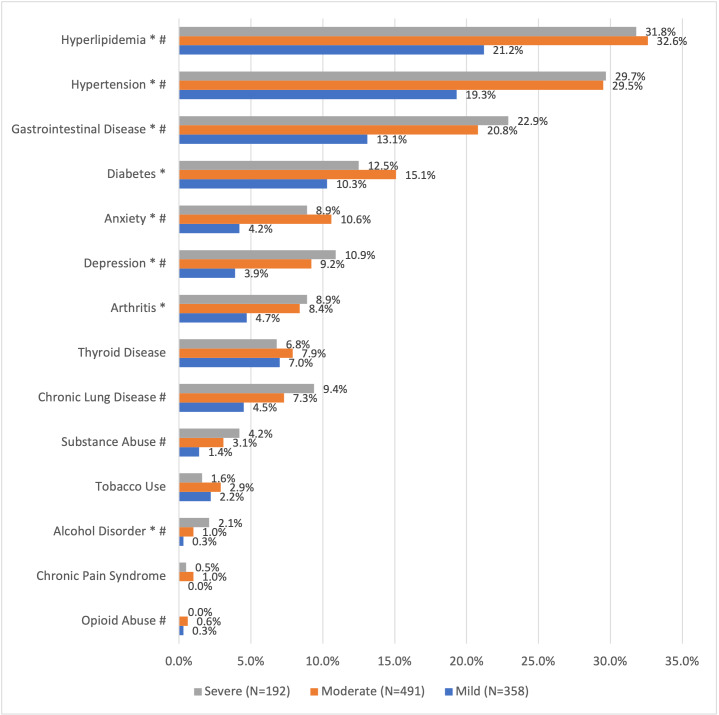
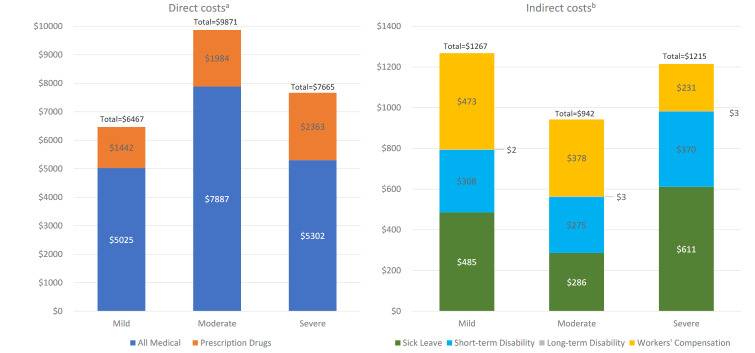
Research on employee care partners of patients with multiple sclerosis (MS) is limited. The clinical and economic impact on employee care partners was evaluated by MS disease severity. Employees with spouses/domestic partners with MS from the Workpartners database (Jan. 1, 2010-Dec. 31, 2019) were eligible if: spouse/partner had at least 3 MS-related (ICD-9-CM/ICD-10-CM:340.xx/G35) inpatient/outpatient/disease-modifying therapy claims within 1 year (latest claim = index date); 6-month pre-index/1-year post-index enrollment; and age 18 to 64 years. Employee care partners' demographic/clinical characteristics and direct/indirect costs were compared across predetermined MS severity categories. Logistic and generalized linear regression modeled the costs. Among 1041 employee care partners of patients with MS, 358 (34.4%) patients had mild MS, 491 (47.2%) moderate, and 192 (18.4%) severe. Mean (standard error [SE]) employee care partner age was 49.0 (0.5) for patients with mild disease, 50.5 (0.4) for moderate, 51.7 (0.6) for severe; percent female care partners was 24.6% [2.3%] mild, 19.8% [1.8%] moderate, 27.6% [3.2%] severe; and mean care partner Charlson Comorbidity Index scores 0.28 (0.05) mild, 0.30 (0.04) moderate, 0.27 (0.06) severe. More care partners of patients with moderate/severe vs mild MS had hyperlipidemia (32.6%/31.8% vs 21.2%), hypertension (29.5%/29.7% vs 19.3%), gastrointestinal disease (20.8%/22.9% vs 13.1%), depression (9.2%/10.9% vs 3.9%), and anxiety 10.6%/8.9% vs 4.2%). Adjusted mean medical costs were greater for employee care partners of patients with moderate vs mild/severe disease (<.001). Pharmacy costs (SE) were lower for employee care partners of mild vs severe/moderate patients (<.005). Sick leave costs (SE) were greater for employee care partners of mild/severe vs moderate patients (<.05). Employee care partners of patients with moderate/severe vs mild MS had more comorbidities (ie, hypertension, gastrointestinal disease, depression, and anxiety) and higher pharmacy costs. Employee care partners of patients with moderate vs mild/severe MS had higher medical and lower sick leave costs. Treatment strategies that improve patient outcomes may reduce employee care partner burden and lower costs for employers in some instances. Comorbidities and direct/indirect costs of employees whose spouses/partners have MS were considerable and varied with MS severity.
对多发性硬化症(MS)患者的员工护理伙伴的研究有限。通过MS疾病严重程度评估对员工护理伙伴的临床和经济影响。来自Workpartners数据库(2010年1月1日至2019年12月31日)中配偶/同居伴侣患有MS的员工符合以下条件则纳入研究:配偶/伴侣在1年内有至少3次与MS相关(ICD - 9 - CM/ICD - 10 - CM:340.xx/G35)的住院/门诊/疾病修正治疗索赔(最新索赔日期 = 索引日期);索引日期前6个月/索引日期后1年的登记;年龄在18至64岁之间。在预先确定的MS严重程度类别中比较员工护理伙伴的人口统计学/临床特征以及直接/间接成本。采用逻辑回归和广义线性回归对成本进行建模。在1041名MS患者的员工护理伙伴中,358名(34.4%)患者患有轻度MS,491名(47.2%)患有中度MS,192名(18.4%)患有重度MS。轻度疾病患者的员工护理伙伴平均(标准误[SE])年龄为49.0(0.5)岁,中度为50.5(0.4)岁,重度为51.7(0.6)岁;女性护理伙伴的比例分别为轻度24.6%[2.3%],中度19.8%[1.8%],重度27.6%[3.2%];护理伙伴的平均Charlson合并症指数得分分别为轻度0.28(0.05),中度0.30(0.04),重度0.27(0.06)。与轻度MS患者相比,中度/重度MS患者的护理伙伴患有高脂血症(32.6%/31.8% 对 21.2%)、高血压(29.5%/29.7% 对 19.3%)、胃肠道疾病(20.8%/22.9% 对 13.1%)、抑郁症(9.2%/10.9% 对 3.9%)和焦虑症(10.6%/8.9% 对 4.2%)的比例更高。与轻度/重度疾病患者相比,中度疾病患者的员工护理伙伴的调整后平均医疗成本更高(<.001)。与重度/中度患者相比,轻度患者的员工护理伙伴的药房成本(SE)更低(<.005)。与中度患者相比,轻度/重度患者的员工护理伙伴的病假成本(SE)更高(<.05)。与轻度MS患者相比,中度/重度MS患者的员工护理伙伴有更多合并症(即高血压、胃肠道疾病、抑郁症和焦虑症)且药房成本更高。与轻度/重度MS患者相比,中度MS患者的员工护理伙伴有更高的医疗成本和更低的病假成本。在某些情况下,改善患者预后的治疗策略可能会减轻员工护理伙伴的负担并降低雇主的成本。配偶/伴侣患有MS的员工的合并症以及直接/间接成本相当可观,且随MS严重程度而变化。