Department of Neuroscience and Cell Biology, Robert Wood Johnson Medical School, Rutgers University, Piscataway, NJ 08854.
Department of Neuroscience and Cell Biology, Robert Wood Johnson Medical School, Rutgers University, Piscataway, NJ 08854
eNeuro. 2023 May 5;10(5). doi: 10.1523/ENEURO.0426-22.2023. Print 2023 May.
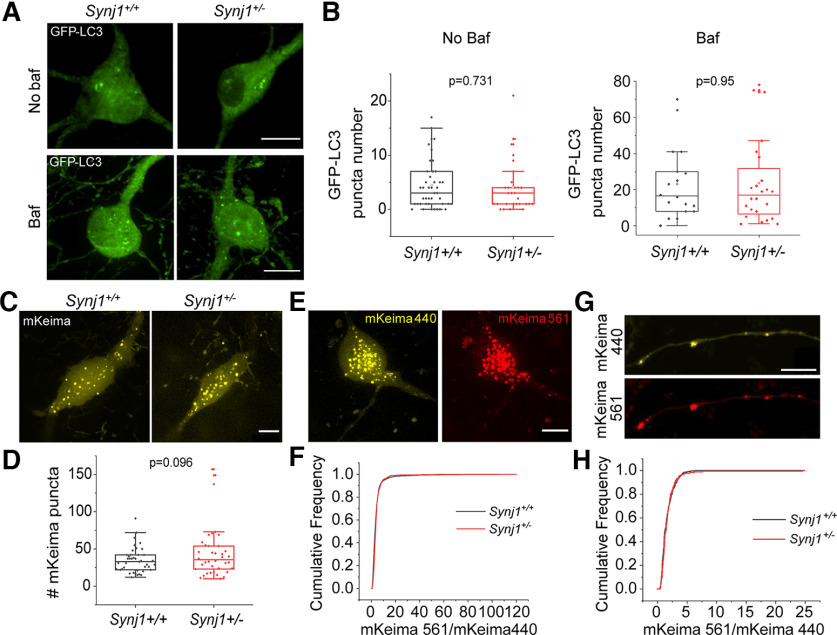
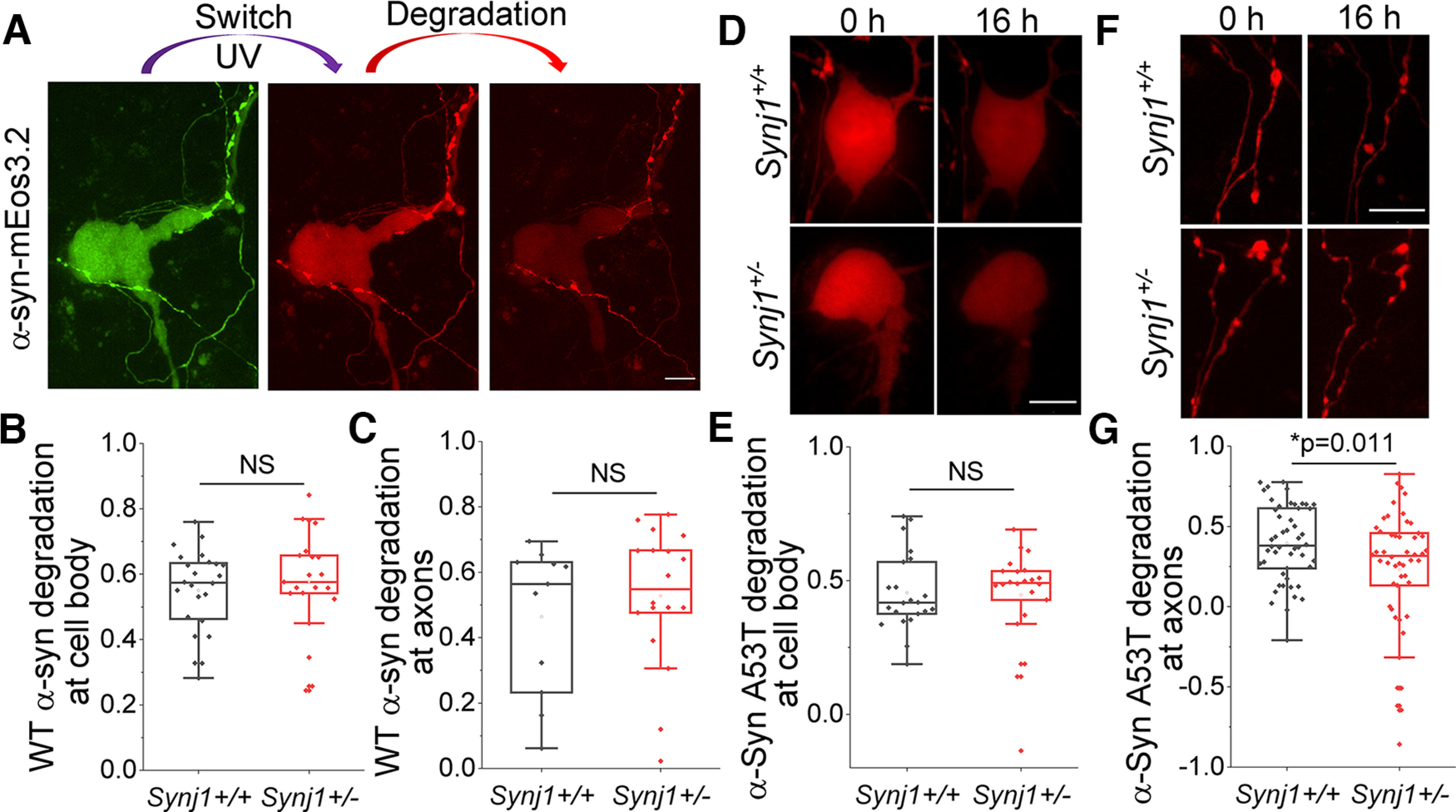
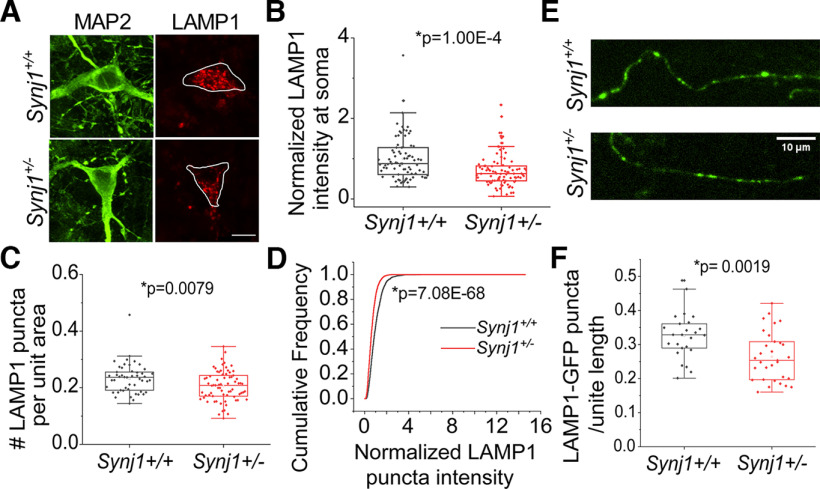
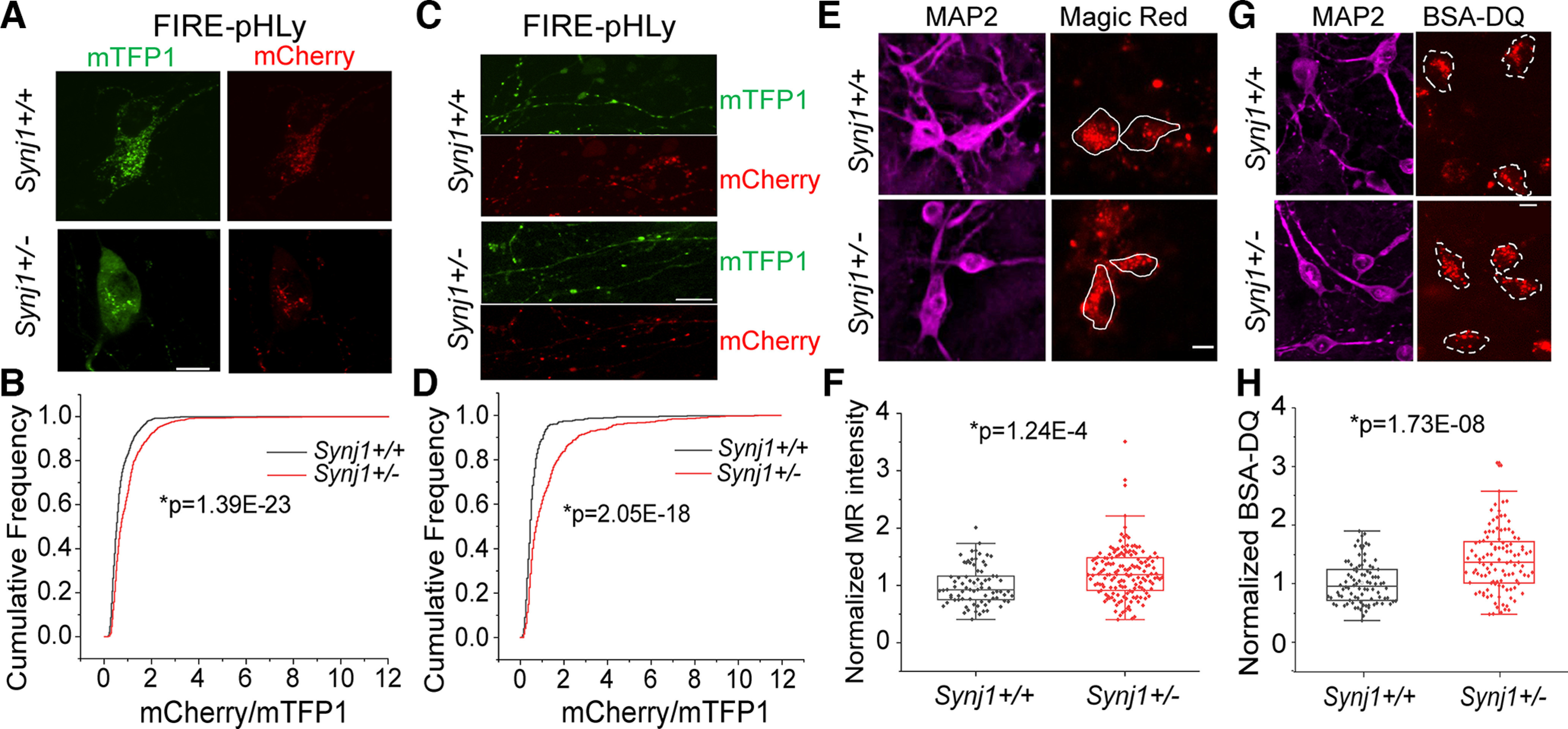
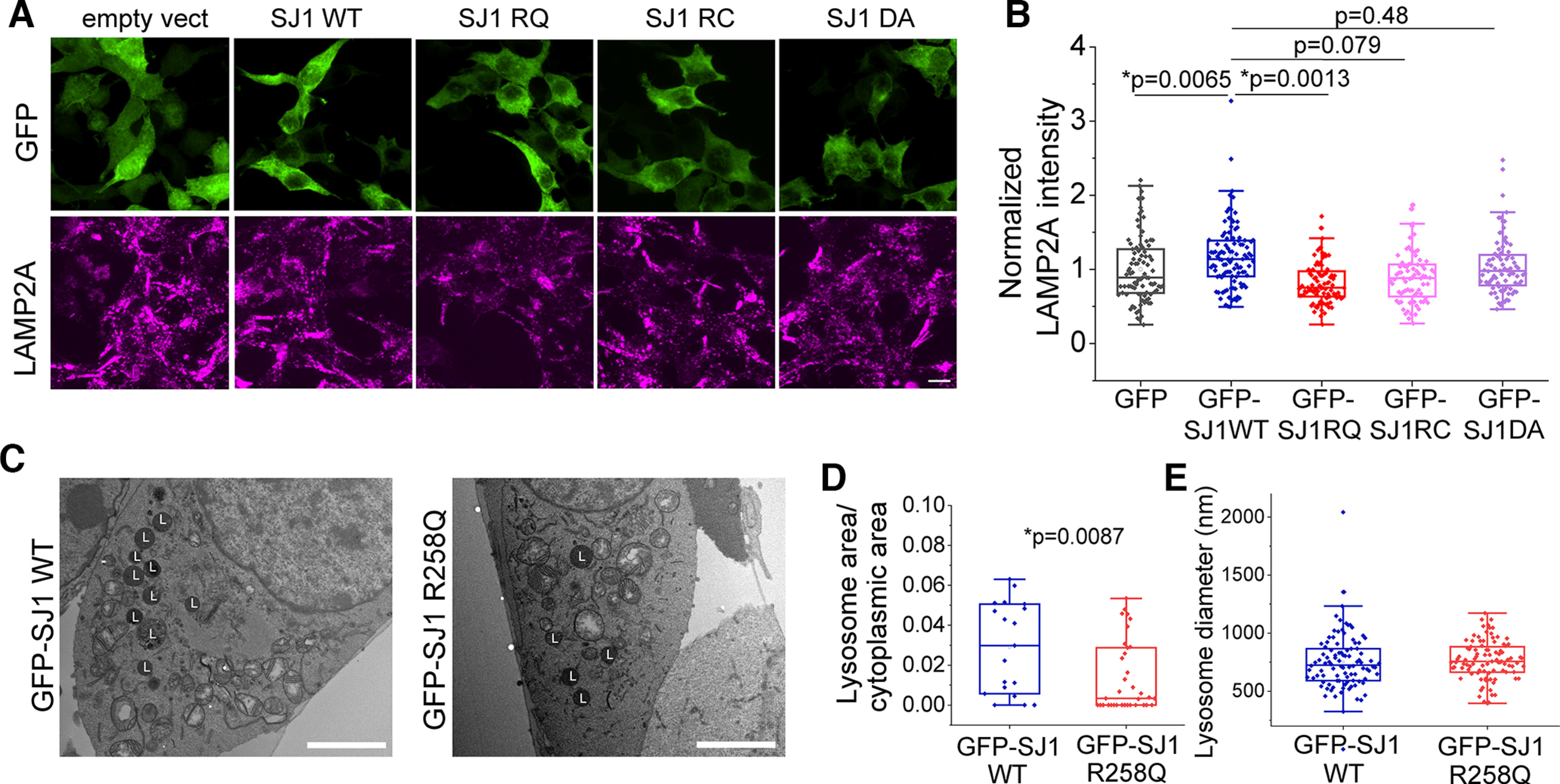
The accumulation of α-synuclein (α-syn)-enriched protein aggregates is thought to arise from dysfunction in degradation systems within the brain. Recently, missense mutations of encoding the SAC1 and 5'-phosphatase domains have been found in families with hereditary early-onset Parkinsonism. Previous studies showed that haploinsufficiency (+/-) leads to accumulation of the autophagy substrate p62 and pathologic α-syn proteins in the midbrain (MB) and striatum of aged mice. In this study, we aim to investigate the neuronal degradation pathway using the +/- MB culture from mouse pups of mixed sex as a model. Our data show that GFP-LC3 puncta formation and cumulative mKeima puncta formation are unaltered at baseline in +/- MB neurons. However, GFP-LAMP1 puncta is reduced with a similar decrease in endogenous proteins, including lysosomal-associated membrane protein (LAMP)1, LAMP2, and LAMP2A. The LAMP1 vesicles are hyperacidified with enhanced enzymatic activity in +/- MB neurons. Using a combination of light and electron microscopy (EM), we show that endolysosomal changes are primarily associated with a lack of SAC1 activity. Consistently, expressing the SYNJ1 R258Q mutant in N2a cells reduces the lysosome number. Interestingly, the endolysosomal defects in +/- neurons does not impact the clearance of exogenously expressed wild-type (WT) α-syn; however, the clearance of α-syn A53T was impaired in the axons of +/- MB neurons. Taken together, our results suggest axonal vulnerability to endolysosomal defects in Synj1-deficient MB neurons.
α-突触核蛋白(α-syn)蓄积的蛋白聚集体被认为是由于大脑内降解系统功能障碍而产生的。最近,在遗传性早发性帕金森病的家族中发现了编码 SAC1 和 5'-磷酸酶结构域的 基因突变。先前的研究表明,单倍不足(+/ -)导致自噬底物 p62 和病理性 α-syn 蛋白在衰老小鼠的中脑(MB)和纹状体中积累。在这项研究中,我们旨在使用 +/- MB 培养物作为模型,研究神经元降解途径。我们的数据表明,在 +/- MB 神经元中,GFP-LC3 斑点形成和累积的 mKeima 斑点形成在基线时没有改变。然而,GFP-LAMP1 斑点减少,同时包括溶酶体相关膜蛋白(LAMP)1、LAMP2 和 LAMP2A 在内的内源性蛋白也减少。 +/- MB 神经元中的 LAMP1 囊泡发生超酸化,酶活性增强。通过使用光和电子显微镜(EM)的组合,我们表明内溶酶体变化主要与 SAC1 活性缺乏有关。一致地,在 N2a 细胞中表达 SYNJ1 R258Q 突变体可减少溶酶体数量。有趣的是, +/- 神经元中的内溶酶体缺陷不会影响外源性表达的野生型(WT)α-syn 的清除;然而,在 +/- MB 神经元的轴突中,α-syn A53T 的清除受损。总之,我们的结果表明,Synj1 缺陷型 MB 神经元中的内溶酶体缺陷导致轴突易感性。