Marino Silvia, Akel Nisreen, Li Shenyang, Cregor Meloney, Jones Meghan, Perez Betiana, Troncoso Gaston, Meeks Jomeeka, Stewart Scott, Sato Amy Y, Nookaew Intawat, Bellido Teresita
Department of Physiology and Cell Biology, University of Arkansas for Medical Sciences, Little Rock, AR, USA.
Central Arkansas Veterans Healthcare System, John L. McClellan Little Rock, Little Rock, AR, USA.
Bone Res. 2023 Apr 19;11(1):19. doi: 10.1038/s41413-023-00261-0.
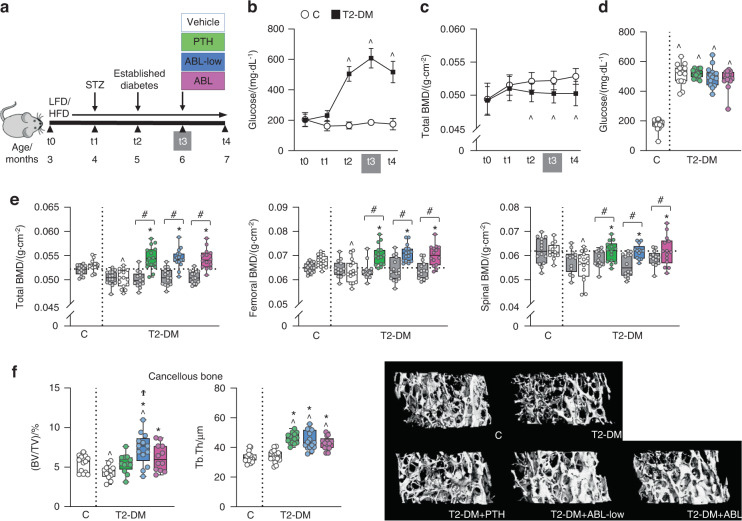
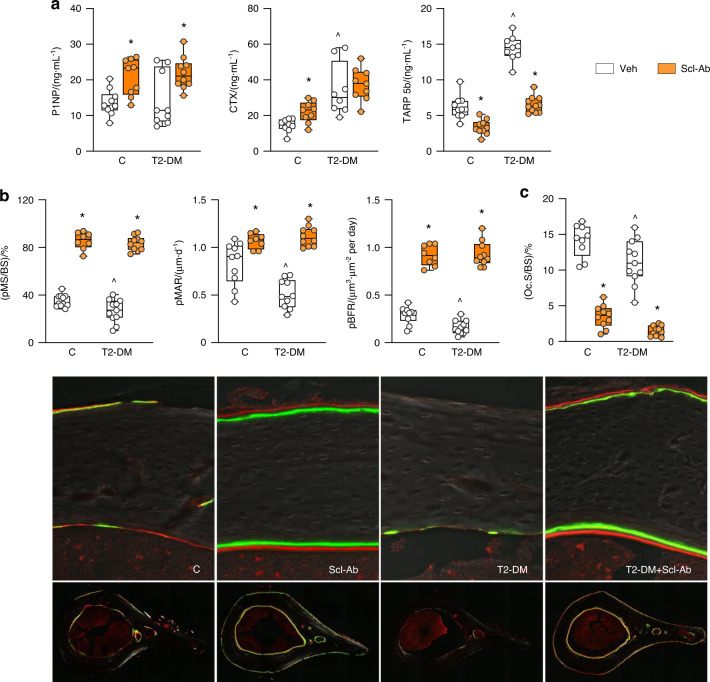
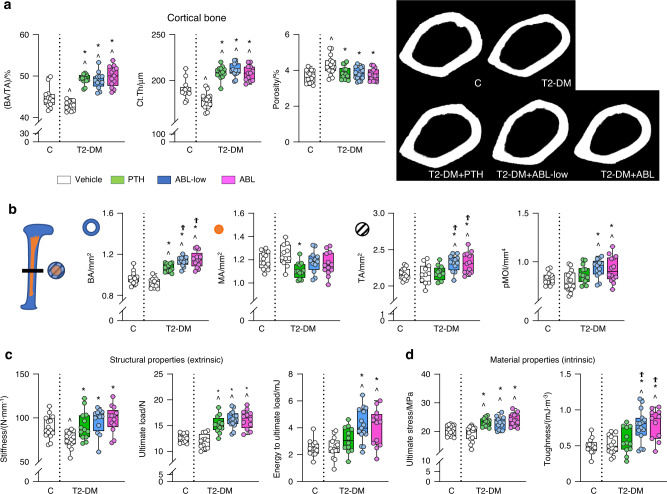
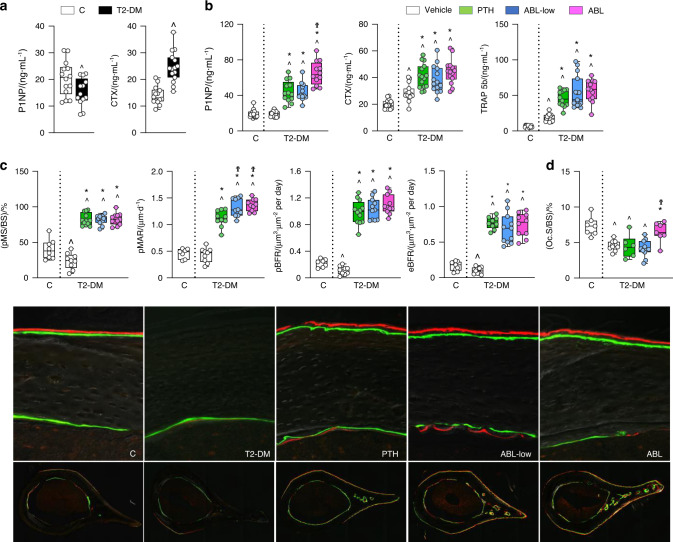
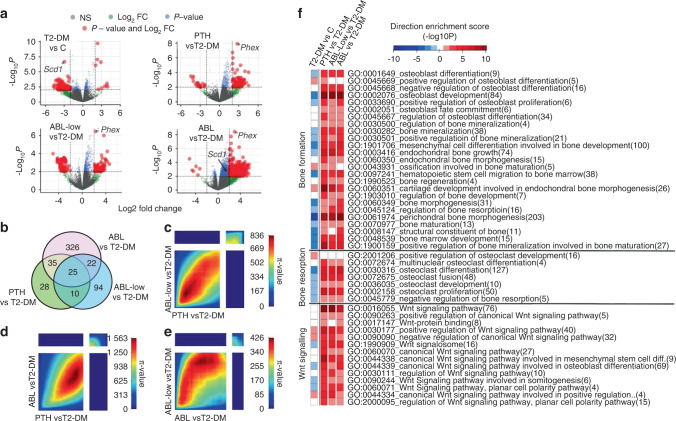
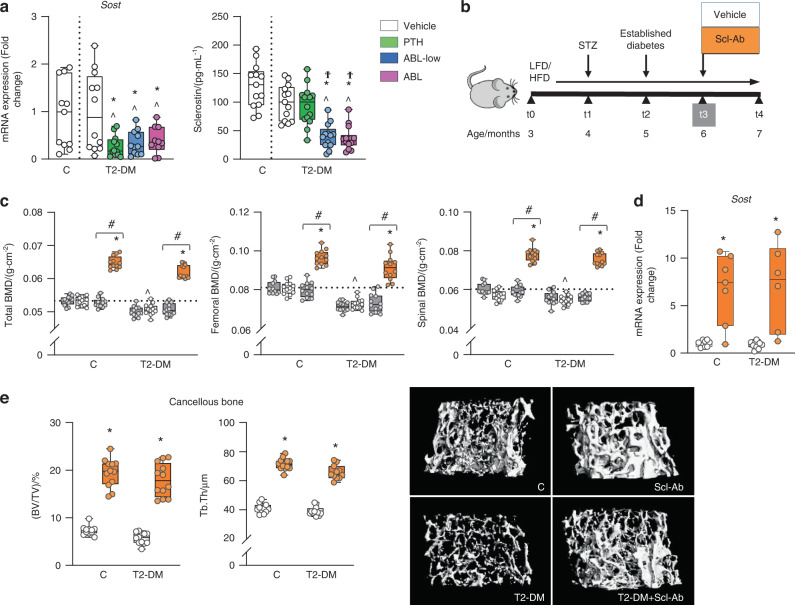
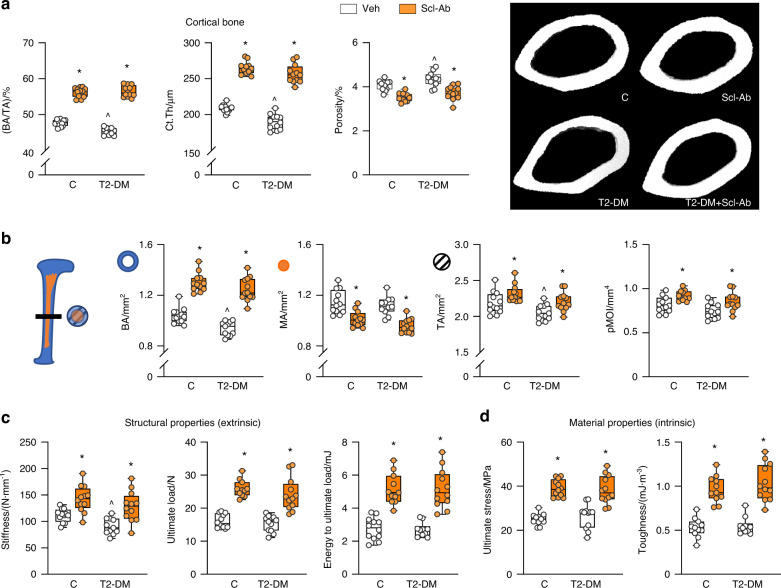
The mechanisms underlying the bone disease induced by diabetes are complex and not fully understood; and antiresorptive agents, the current standard of care, do not restore the weakened bone architecture. Herein, we reveal the diabetic bone signature in mice at the tissue, cell, and transcriptome levels and demonstrate that three FDA-approved bone-anabolic agents correct it. Diabetes decreased bone mineral density (BMD) and bone formation, damaged microarchitecture, increased porosity of cortical bone, and compromised bone strength. Teriparatide (PTH), abaloparatide (ABL), and romosozumab/anti-sclerostin antibody (Scl-Ab) all restored BMD and corrected the deteriorated bone architecture. Mechanistically, PTH and more potently ABL induced similar responses at the tissue and gene signature levels, increasing both formation and resorption with positive balance towards bone gain. In contrast, Scl-Ab increased formation but decreased resorption. All agents restored bone architecture, corrected cortical porosity, and improved mechanical properties of diabetic bone; and ABL and Scl-Ab increased toughness, a fracture resistance index. Remarkably, all agents increased bone strength over the healthy controls even in the presence of severe hyperglycemia. These findings demonstrate the therapeutic value of bone anabolic agents to treat diabetes-induced bone disease and suggest the need for revisiting the approaches for the treatment of bone fragility in diabetes.
糖尿病所致骨病的潜在机制复杂且尚未完全明确;而目前的标准治疗药物抗吸收剂并不能恢复已变脆弱的骨结构。在此,我们在组织、细胞和转录组水平揭示了小鼠的糖尿病骨特征,并证明三种经美国食品药品监督管理局(FDA)批准的促骨生成药物可纠正这一特征。糖尿病会降低骨矿物质密度(BMD)和骨形成,破坏微结构,增加皮质骨孔隙率,并损害骨强度。特立帕肽(PTH)、阿巴洛帕肽(ABL)和罗莫单抗/抗硬化蛋白抗体(Scl-Ab)均可恢复BMD并纠正恶化的骨结构。从机制上讲,PTH以及更有效的ABL在组织和基因特征水平诱导了相似的反应,增加了形成和吸收,且对骨量增加呈正平衡。相比之下,Scl-Ab增加形成但减少吸收。所有药物均可恢复骨结构,纠正皮质骨孔隙率,并改善糖尿病骨的力学性能;ABL和Scl-Ab还增加了韧性,即抗骨折指数。值得注意的是,即使在存在严重高血糖的情况下,所有药物仍使骨强度高于健康对照组。这些发现证明了促骨生成药物治疗糖尿病所致骨病的治疗价值,并表明有必要重新审视糖尿病患者骨脆性的治疗方法。