Department of Biochemistry and Molecular Genetics, University of Virginia School of Medicine, Charlottesville, Virginia.
Center for Public Health Genomics, University of Virginia School of Medicine, Charlottesville, Virginia.
Cancer Res Commun. 2023 Apr 17;3(4):592-606. doi: 10.1158/2767-9764.CRC-23-0086. eCollection 2023 Apr.
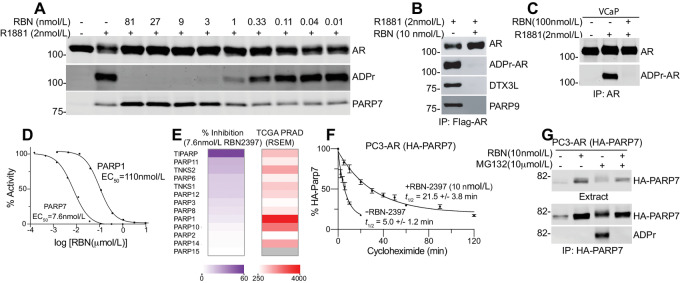
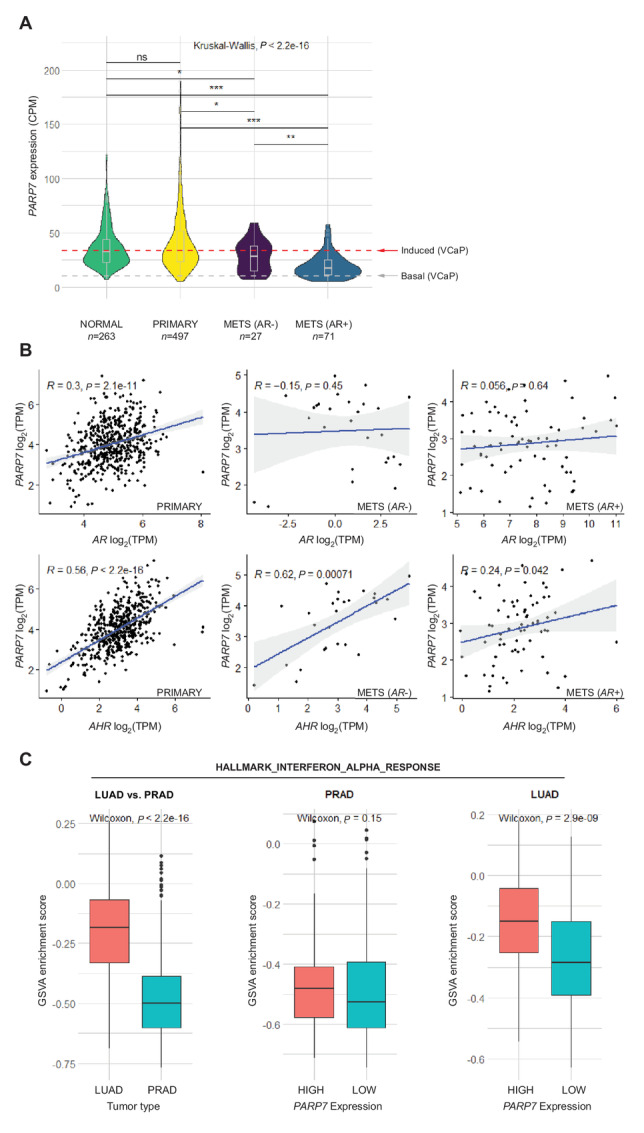
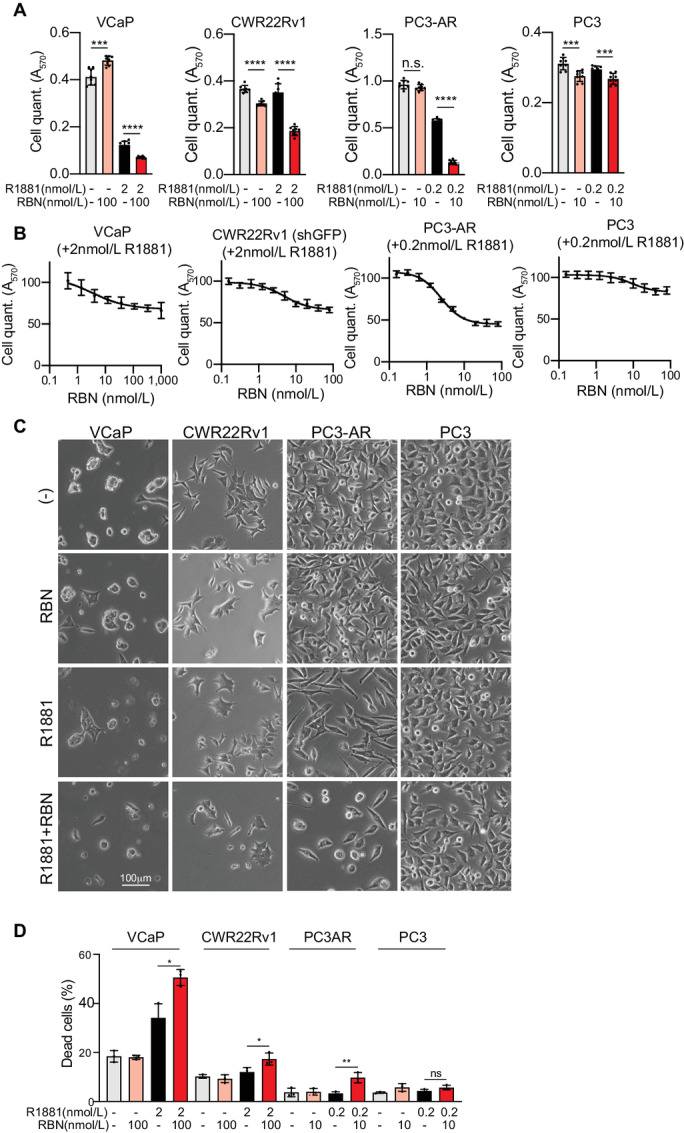
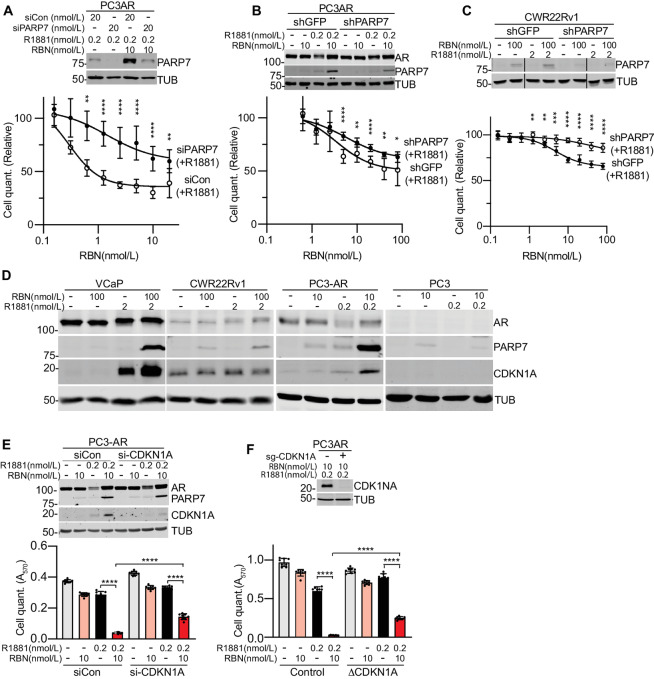
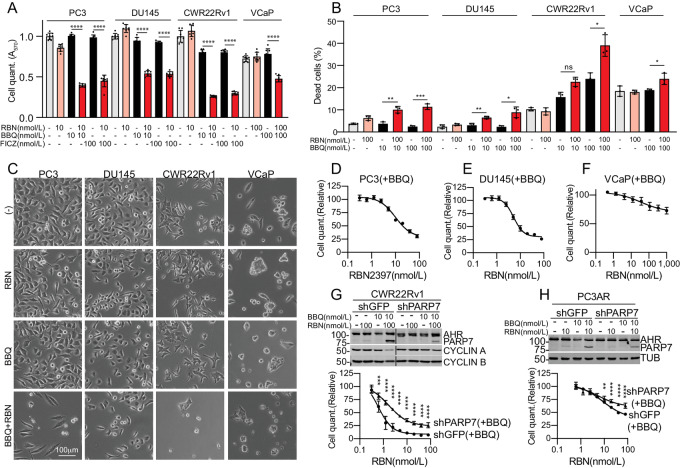
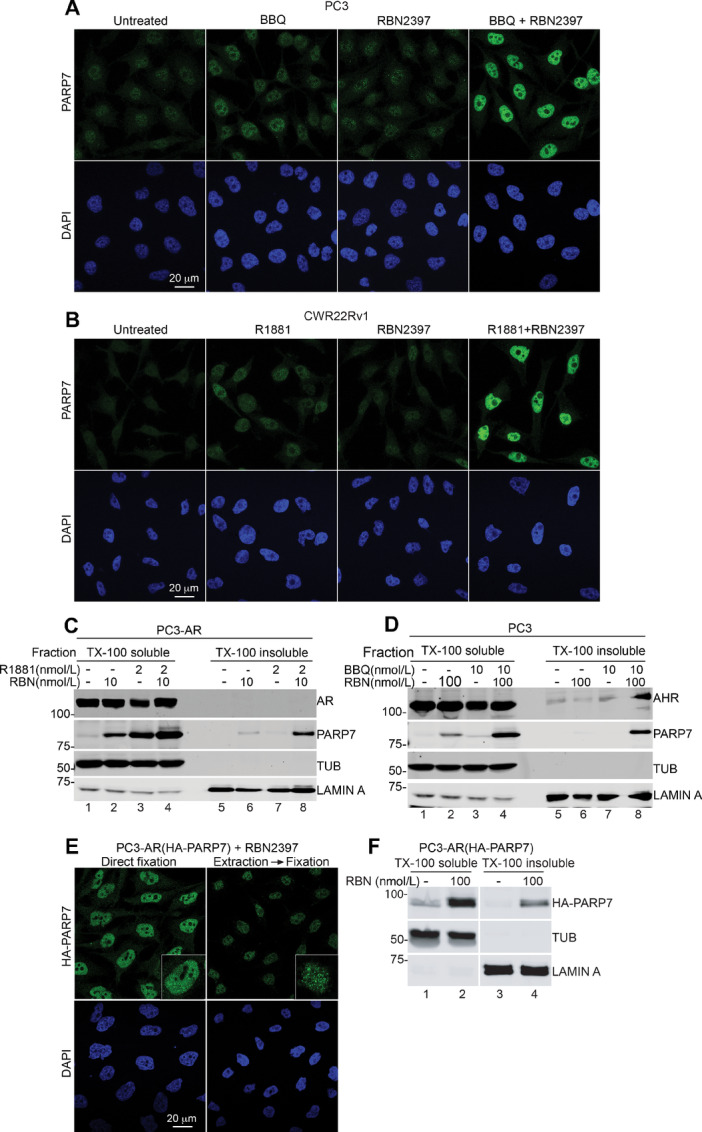
The ADP-ribosyltransferase PARP7 modulates protein function by conjugating ADP-ribose to the side chains of acceptor amino acids. PARP7 has been shown to affect gene expression in prostate cancer cells and certain other cell types by mechanisms that include transcription factor ADP-ribosylation. Here, we use a recently developed catalytic inhibitor to PARP7, RBN2397, to study the effects of PARP7 inhibition in androgen receptor (AR)-positive and AR-negative prostate cancer cells. We find that RBN2397 has nanomolar potency for inhibiting androgen-induced ADP-ribosylation of the AR. RBN2397 inhibits the growth of prostate cancer cells in culture when cells are treated with ligands that activate the AR, or the aryl hydrocarbon receptor, and induce PARP7 expression. We show that the growth-inhibitory effects of RBN2397 are distinct from its enhancement of IFN signaling recently shown to promote tumor immunogenicity. RBN2397 treatment also induces trapping of PARP7 in a detergent-resistant fraction within the nucleus, which is reminiscent of how inhibitors such as talazoparib affect PARP1 compartmentalization. Because PARP7 is expressed in AR-negative metastatic tumors and RBN2397 can affect cancer cells through multiple mechanisms, PARP7 may be an actionable target in advanced prostate cancer.
RBN2397 is a potent and selective inhibitor of PARP7 that reduces the growth of prostate cancer cells, including a model for treatment-emergent neuroendocrine prostate cancer. RBN2397 induces PARP7 trapping on chromatin, suggesting its mechanism of action might be similar to clinically used PARP1 inhibitors.
ADP-核糖基转移酶 PARP7 通过将 ADP-核糖基连接到受体氨基酸的侧链上来调节蛋白质功能。已经表明,PARP7 通过包括转录因子 ADP-核糖基化在内的机制影响前列腺癌细胞和某些其他细胞类型的基因表达。在这里,我们使用最近开发的 PARP7 催化抑制剂 RBN2397 来研究 PARP7 抑制在雄激素受体 (AR) 阳性和 AR 阴性前列腺癌细胞中的作用。我们发现 RBN2397 对雄激素诱导的 AR ADP-核糖基化具有纳摩尔效力。当用激活 AR 或芳基烃受体并诱导 PARP7 表达的配体处理细胞时,RBN2397 抑制前列腺癌细胞在培养中的生长。我们表明,RBN2397 的生长抑制作用与其最近被证明可促进肿瘤免疫原性的 IFN 信号增强作用不同。RBN2397 处理还诱导 PARP7 在核内去污剂抗性部分的捕获,这类似于 talazoparib 等抑制剂如何影响 PARP1 区室化。由于 PARP7 在 AR 阴性转移性肿瘤中表达,并且 RBN2397 可以通过多种机制影响癌细胞,因此 PARP7 可能是晚期前列腺癌的可操作靶标。
RBN2397 是一种有效的 PARP7 选择性抑制剂,可降低前列腺癌细胞的生长速度,包括用于治疗新兴神经内分泌前列腺癌的模型。RBN2397 诱导 PARP7 在染色质上的捕获,这表明其作用机制可能与临床上使用的 PARP1 抑制剂相似。