Chen Qingling, Zhao Lili, Mei Ling, Zhao Xiaotong, Han Ping, Liu Jie, Meng Chao, Li Ruifang, Zhong Rui, Wang Kai, Li Jia
Clinical School of the Second People's Hospital, Tianjin Medical University, Tianjin, China.
Department of Gastroenterology and Hepatology, Tianjin Second People's Hospital, Tianjin, China.
Front Pharmacol. 2023 Apr 5;14:1163694. doi: 10.3389/fphar.2023.1163694. eCollection 2023.
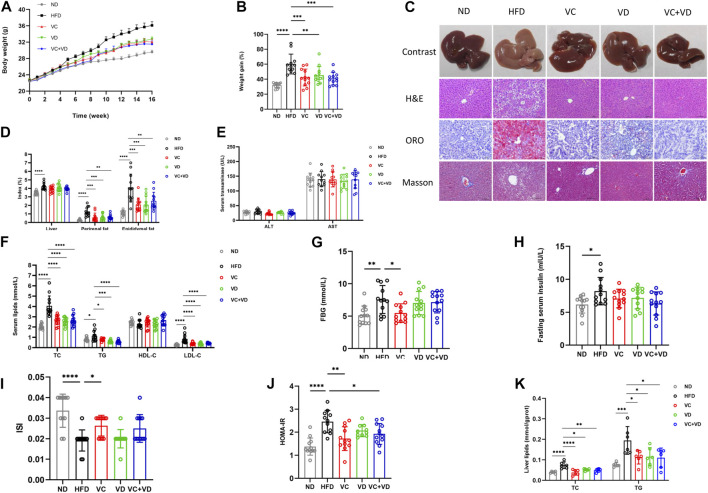
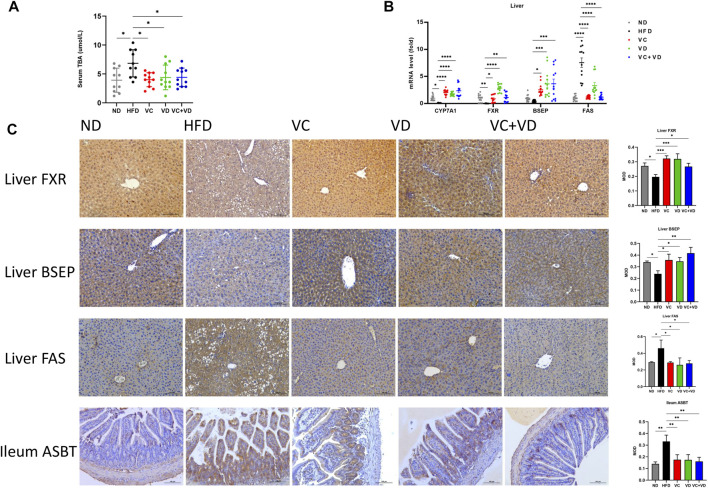
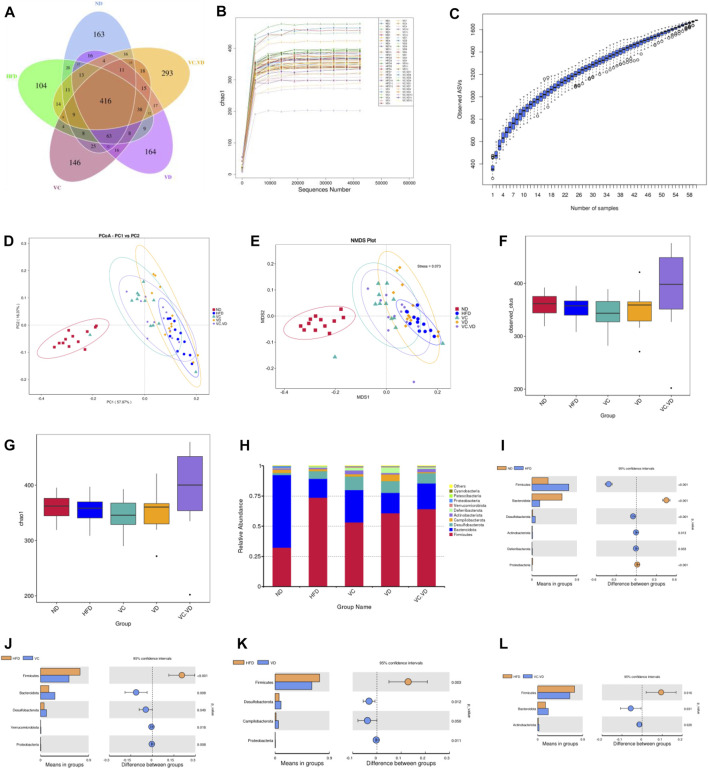
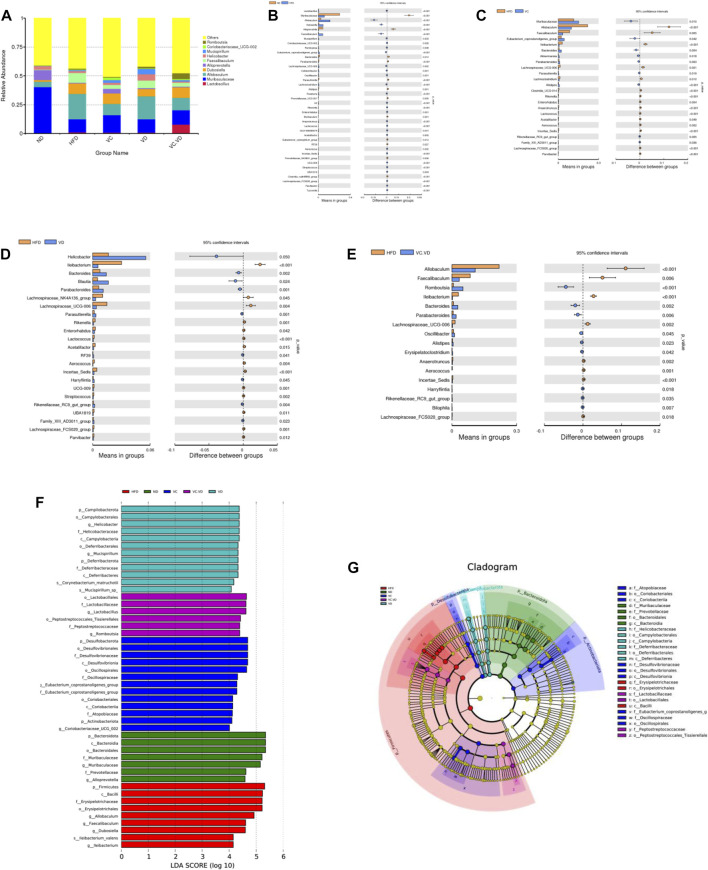
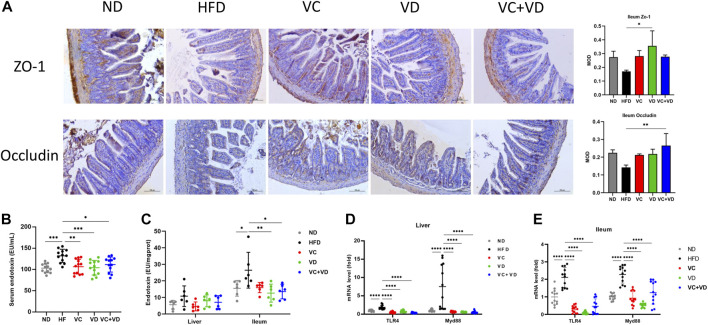
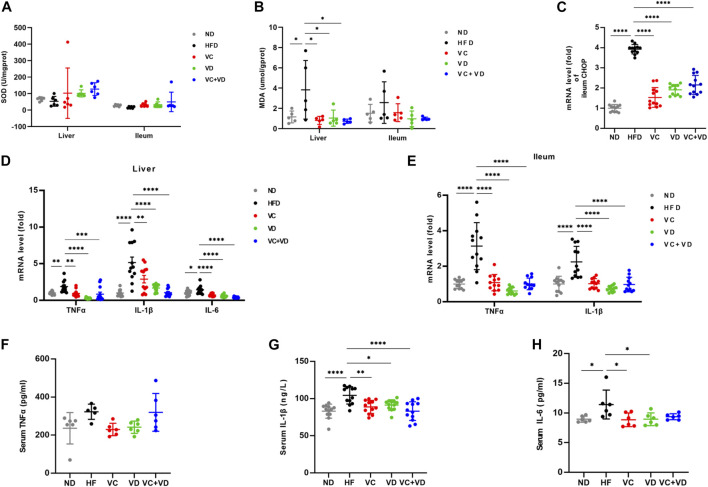
Previous studies have demonstrated that both vitamin C (VC) and vitamin D (VD have therapeutic potential against metabolic disorders, including obesity, diabetes, and metabolic-associated fatty liver disease (MAFLD). However, it is unclear whether VC supplementation is associated with improving the intestinal flora and regulating the metabolism of bile acids the gut-liver axis in MAFLD. There is still no direct comparison or combination study of these two vitamins on these effects. In this study, we employed biochemical, histological, 16S rDNA-based microbiological, non-targeted liver metabolomic, and quantitative real-time polymerase chain reaction analyses to explore the intervening effect and mechanism of VC and VD on MAFLD by using a high-fat diet (HFD)-induced obese mouse model. Treatment of mice with VC and VD efficiently reversed the characteristics of MAFLD, such as obesity, dyslipidemia, insulin resistance, hepatic steatosis, and inflammation. VC and VD showed similar beneficial effects as mentioned above in HFD-induced obese mice. Interestingly, VC and VD reshaped the gut microbiota composition; improved gut barrier integrity; ameliorated oxidative stress and inflammation in the gut-liver axis; inhibited bile acid salt reflux-related ASBT; activated bile acid synthesis-related CYP7A1, bile acid receptor FXR, and bile acid transportation-related BSEP in the gut-liver axis; and improved bile secretion, thus decreasing the expression of FAS in the liver and efficiently ameliorating MAFLD in mice. Together, the results indicate that the anti-MAFLD activities of VC and VD are linked to improved gut-liver interactions regulation of the gut microbiota and bile acid metabolism, and they may therefore prove useful in treating MAFLD clinically.
先前的研究表明,维生素C(VC)和维生素D(VD)对包括肥胖症、糖尿病和代谢相关脂肪性肝病(MAFLD)在内的代谢紊乱均具有治疗潜力。然而,尚不清楚补充VC是否与改善肠道菌群以及调节MAFLD中肠-肝轴的胆汁酸代谢有关。关于这两种维生素对这些作用的直接比较或联合研究仍然缺乏。在本研究中,我们采用生化、组织学、基于16S rDNA的微生物学、非靶向肝脏代谢组学以及定量实时聚合酶链反应分析,通过高脂饮食(HFD)诱导的肥胖小鼠模型,探讨VC和VD对MAFLD的干预作用及机制。用VC和VD治疗小鼠可有效逆转MAFLD的特征,如肥胖、血脂异常、胰岛素抵抗、肝脂肪变性和炎症。在HFD诱导的肥胖小鼠中,VC和VD显示出上述相似的有益作用。有趣的是,VC和VD重塑了肠道微生物群组成;改善了肠道屏障完整性;减轻了肠-肝轴中的氧化应激和炎症;抑制了与胆盐反流相关的ASBT;激活了肠-肝轴中与胆汁酸合成相关的CYP7A1、胆汁酸受体FXR以及与胆汁酸转运相关的BSEP;并改善了胆汁分泌,从而降低了肝脏中FAS的表达,有效改善了小鼠的MAFLD。总之,结果表明VC和VD的抗MAFLD活性与改善肠-肝相互作用、调节肠道微生物群和胆汁酸代谢有关,因此它们可能在临床上对治疗MAFLD有用。