Prakash Anand, Das Purkayastha Biswa Pratim, Srivastava Shikha, Chaturvedi Sunanda, Ali Akhtar, Aggarwal Dau Dayal, Roy Jagat Kumar
Department of Zoology, Banaras Hindu University, Varanasi, India.
Department of Zoology, Sardar Vallabhbhai Patel College, Bhabua, Kaimur, India.
Int J Mol Cell Med. 2022;11(2):88-103. doi: 10.22088/IJMCM.BUMS.11.2.88. Epub 2023 Feb 28.
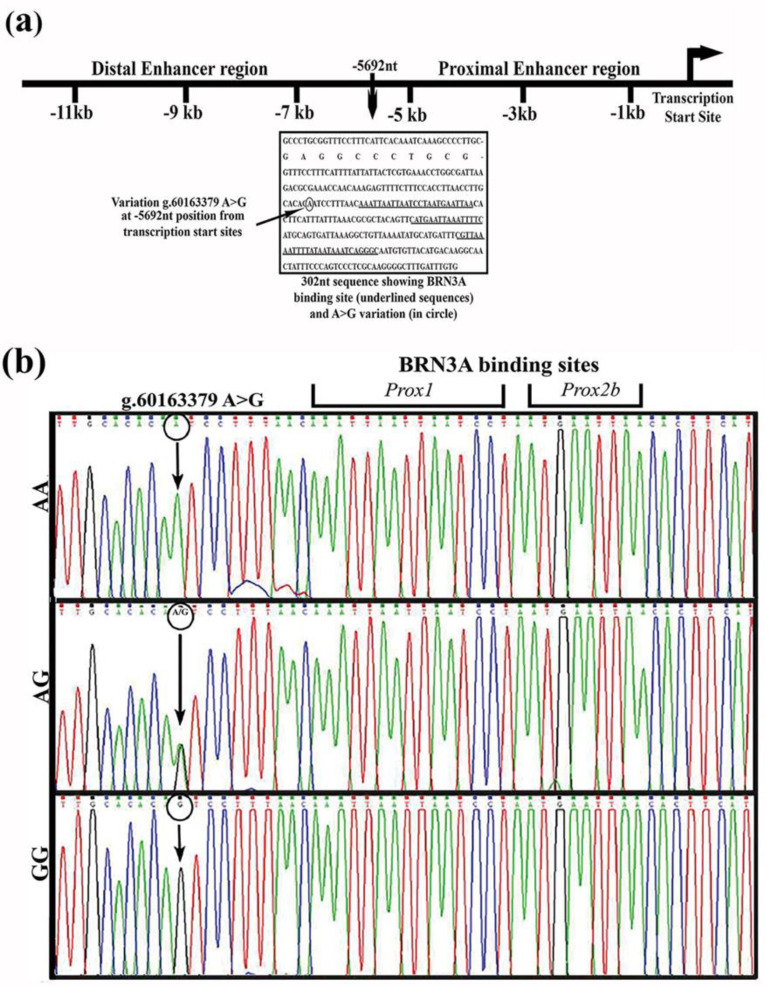
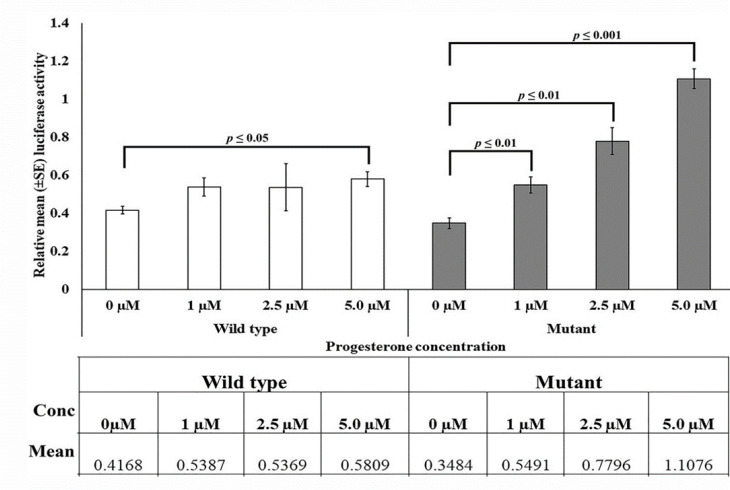
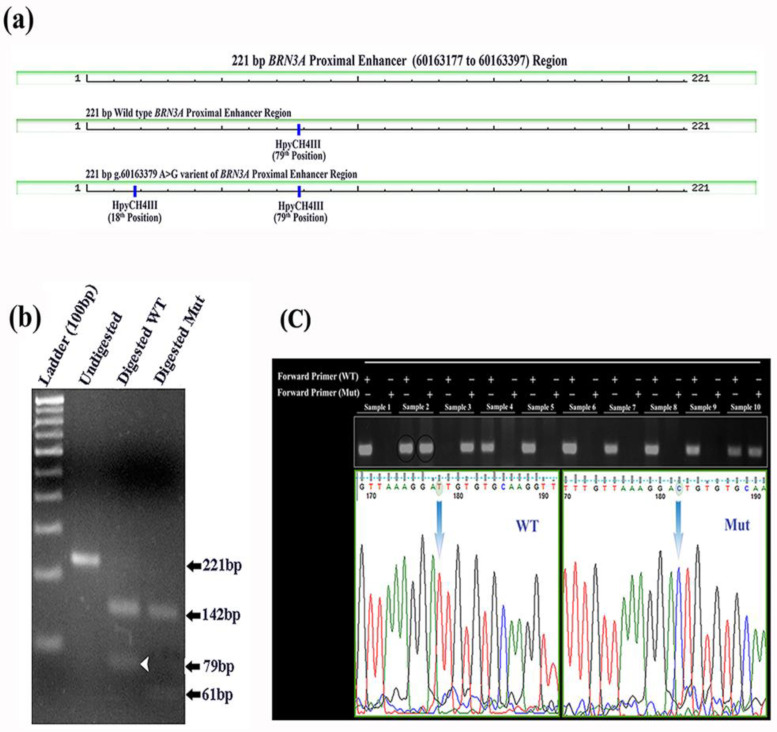
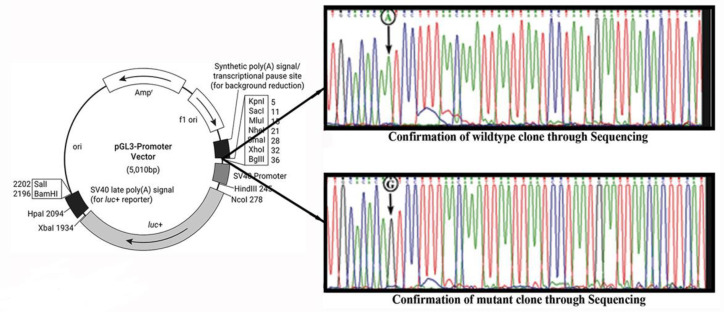
Among the HPV-mediated cervical cancers, cellular factor BRN3A has gained considerable attention due to its role in promoting an anti-apoptotic cellular environment and in facilitating epitheliotropic transformations of the host. The majority of previous studies looked at BRN3A's molecular characteristics; however, the possibility of genetic variations in BRN3A's auto-regulatory region in relation to cervical cancer risk has been underestimated until now. In a retrospective study in the Eastern UP population, India, we detected genetic variations in the cis-regulatory proximal enhancer region located around 5.6 kb upstream of transcription start site of . Our analysis of PCR and DNA sequencing confirmed this novel SNP ( g.60163379A>G) within the auto-regulatory region of . As compared to control subjects, cancer cases exhibited a 1.32-fold higher allele frequency (χ2 = 6.315, = 0.012). In homozygous (GG) but not in heterozygous conditions, odds ratio (OR) analysis suggests a significant association of cancer risk with the SNP (OR = 2.60, p ≤ 0.004). We further confirmed using the functional analysis that this SNP increased the luciferase gene activity in HPV-positive cervical cancer SiHa cells that were exposed to progesterone. As a result of the association of polymorphisms in a non-coding region of an oncogene with increased cancer risks, we are suggesting that this genetic variation in non-coding region can be used in prediction, diagnosis, or predicting the progression of the disease.
在人乳头瘤病毒(HPV)介导的宫颈癌中,细胞因子BRN3A因其在促进抗凋亡细胞环境以及推动宿主上皮嗜性转化中的作用而备受关注。此前的大多数研究着眼于BRN3A的分子特征;然而,直到现在,BRN3A自调控区域的基因变异与宫颈癌风险之间的关联可能性一直被低估。在印度东UP地区人群的一项回顾性研究中,我们在转录起始位点上游约5.6 kb处的顺式调控近端增强子区域检测到了基因变异。我们对聚合酶链反应(PCR)和DNA测序的分析证实了该基因自调控区域内存在这一新型单核苷酸多态性(SNP,g.60163379A>G)。与对照受试者相比,癌症病例的等位基因频率高出1.32倍(χ2 = 6.315,P = 0.012)。在纯合子(GG)而非杂合子状态下,优势比(OR)分析表明该SNP与癌症风险存在显著关联(OR = 2.60,p≤0.004)。我们通过功能分析进一步证实,该SNP增加了暴露于孕酮的HPV阳性宫颈癌SiHa细胞中的荧光素酶基因活性。由于一个癌基因非编码区的多态性与癌症风险增加相关,我们认为该非编码区的基因变异可用于疾病的预测、诊断或病情进展预测。