
使用基于稳健树的技术(Extra Tree、随机森林、GBoost和LightGBM)对CO-N气体混合物的粘度进行建模
Modeling Viscosity of CO-N Gaseous Mixtures Using Robust Tree-Based Techniques: Extra Tree, Random Forest, GBoost, and LightGBM.
作者信息
Zheng Haimin, Mahmoudzadeh Atena, Amiri-Ramsheh Behnam, Hemmati-Sarapardeh Abdolhossein
机构信息
Engn & Design Dept, Proc Sect, CNOOC Research Institute Co., Beijing 100027, P.R. China.
Department of Chemical and Petroleum Engineering, Sharif University of Technology, Tehran 1234567812, Iran.
出版信息
ACS Omega. 2023 Apr 6;8(15):13863-13875. doi: 10.1021/acsomega.3c00228. eCollection 2023 Apr 18.
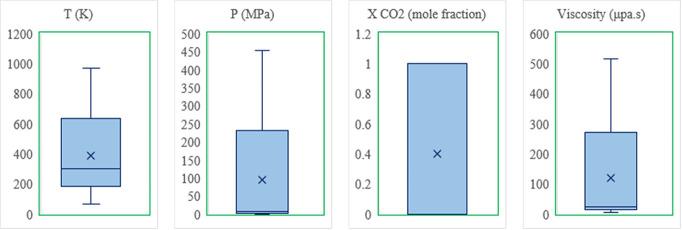
Carbon dioxide (CO) has an essential role in most enhanced oil recovery (EOR) methods in the oil industry. Oil swelling and viscosity reduction are the dominant mechanisms in an immiscible CO-EOR process. Besides numerous CO applications in EOR, most oil reservoirs do not have access to natural CO, and capturing it from flue gas and other sources is costly. Flue gases are available in huge quantities at a significantly lower price and can be considered economically viable agents for EOR operations. In this work, four powerful machine learning algorithms, namely, extra tree (ET), random forest (RF), gradient boosting (GBoost), and light gradient boosted machine (LightGBM) were utilized to accurately estimate the viscosity of CO-N mixtures. To this aim, a databank was employed, containing 3036 data points over wide ranges of pressures and temperatures. Temperature, pressure, and CO mole fraction were applied as input parameters, and the viscosity of the CO-N mixture was the output. The RF smart model had the highest precision with the lowest average absolute percent relative error (AAPRE) of 1.58%, root mean square error (RMSE) of 2.221, and determination coefficient ( ) of 0.9993. The trend analysis showed that the RF model could precisely predict the real physical behavior of the CO-N viscosity variation. Finally, the outlier detection was performed using the leverage approach to demonstrate the validity of the utilized databank and the applicability area of the developed RF model. Accordingly, nearly 96% of the data points seemed to be dependable and valid, and the rest of them were located in the suspected and out-of-leverage data zones.
二氧化碳(CO)在石油工业的大多数强化采油(EOR)方法中起着至关重要的作用。原油膨胀和粘度降低是不混溶CO-EOR过程中的主要机制。除了在EOR中有众多的CO应用外,大多数油藏无法获得天然CO,从烟道气和其他来源捕获它成本很高。烟道气数量巨大且价格低得多,可以被视为EOR作业的经济可行剂。在这项工作中,使用了四种强大的机器学习算法,即极端随机树(ET)、随机森林(RF)、梯度提升(GBoost)和轻量级梯度提升机(LightGBM)来准确估计CO-N混合物的粘度。为此,采用了一个数据库,其中包含在很宽的压力和温度范围内的3036个数据点。将温度、压力和CO摩尔分数作为输入参数,CO-N混合物的粘度作为输出。RF智能模型具有最高的精度,平均绝对相对误差(AAPRE)最低为1.58%,均方根误差(RMSE)为2.221,决定系数( )为0.9993。趋势分析表明,RF模型可以精确预测CO-N粘度变化的实际物理行为。最后,使用杠杆方法进行异常值检测,以证明所使用数据库的有效性和所开发RF模型适用范围。因此,近96%的数据点似乎是可靠有效的,其余的数据点位于可疑和非杠杆数据区域。




 Zotero 插件