Bioinformatics Center of AMMS, Beijing Key Laboratory of New Molecular Diagnosis Technologies for Infectious Diseases, Beijing Institute of Microbiology and Epidemiology, Beijing, People's Republic of China.
School of Life Sciences, Hebei University, Baoding, People's Republic of China.
Microbiol Spectr. 2023 Jun 15;11(3):e0491222. doi: 10.1128/spectrum.04912-22. Epub 2023 Apr 26.
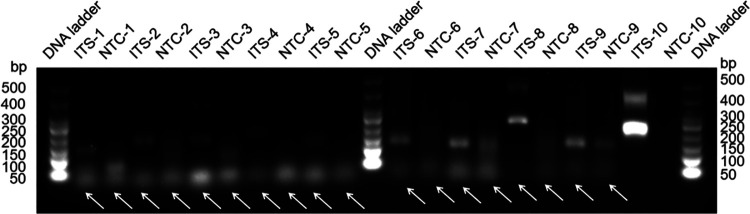
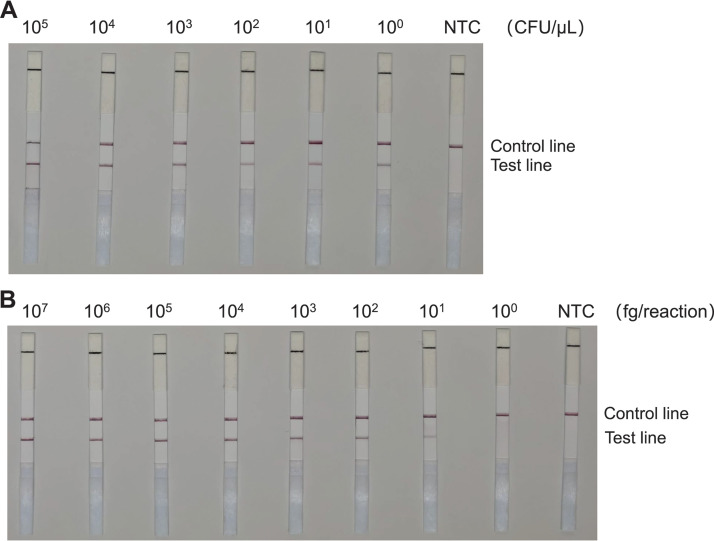
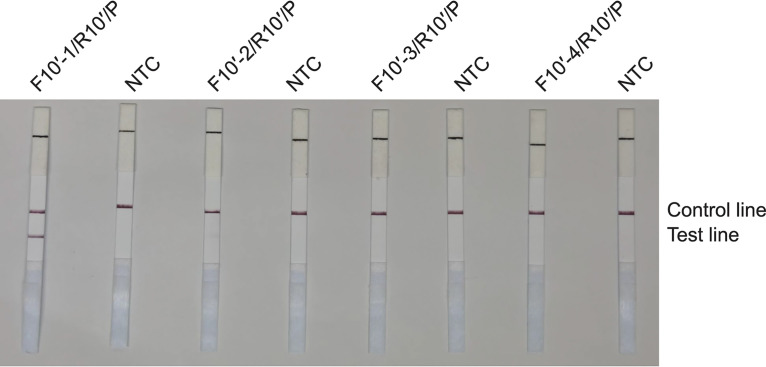
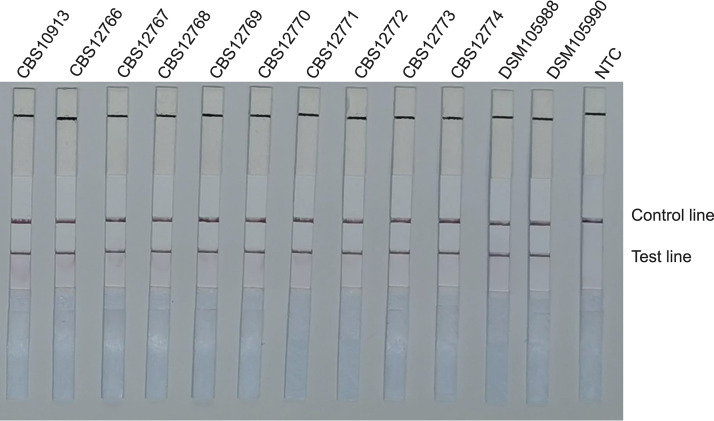
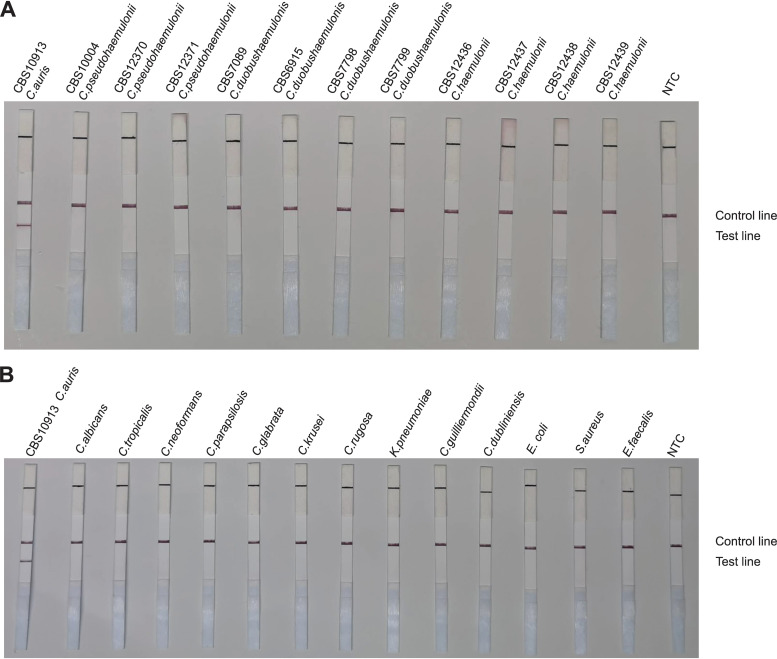
Outbreaks of multidrug-resistant Candida auris infections, associated with a mortality rate of 30% to 60%, are of serious global concern. Candida auris demonstrates high transmission rates in hospital settings; however, its rapid and accurate identification using currently available clinical identification techniques is challenging. In this study, we developed a rapid and effective method for detecting C. auris based on recombinase-aided amplification combined with lateral flow strips (RAA-LFS). We also screened the appropriate reaction conditions. Furthermore, we investigated the specificity and sensitivity of the detection system and its ability to distinguish other fungal strains. Candida auris was accurately identified and differentiated from related species at 37°C within 15 min. The minimum detection limit was 1 CFU (or 10 fg/reaction) and was not affected by high concentrations of related species or host DNA. The simple and cost-efficient detection method established in this study exhibited high specificity and sensitivity and successfully detected C. auris in simulated clinical samples. Compared with other traditional detection methods, this method greatly reduces the time and cost of testing and is thus suitable for hospitals or clinics in remote underfunded areas for screening C. auris infection and colonization. Candida auris is a highly lethal, multidrug-resistant, invasive fungus. However, conventional methods of C. auris identification are time-consuming and laborious and have low sensitivity and high error rates. In this study, a new molecular diagnostic method based on recombinase-aided amplification combined with lateral flow strips (RAA-LFS) was developed, and accurate results could be obtained by catalyzing the reaction at body temperature for 15 min. This method can be used for rapid clinical detection of C. auris, consequently saving valuable treatment time for patients.
耐多药耳念珠菌感染的爆发引起了严重的全球关注,死亡率为 30%至 60%。耳念珠菌在医院环境中具有很高的传播率;然而,使用当前可用的临床鉴定技术准确快速地识别它具有挑战性。在这项研究中,我们开发了一种基于重组酶辅助扩增结合侧流条(RAA-LFS)的快速有效的耳念珠菌检测方法。我们还筛选了合适的反应条件。此外,我们研究了检测系统的特异性和敏感性及其区分其他真菌菌株的能力。在 37°C 下,耳念珠菌在 15 分钟内被准确识别和区分,相关物种。最低检测限为 1 CFU(或 10 fg/反应),不受高浓度相关物种或宿主 DNA 的影响。本研究建立的简单且经济高效的检测方法表现出高度的特异性和敏感性,并成功检测到模拟临床样本中的耳念珠菌。与其他传统检测方法相比,该方法大大缩短了检测时间和成本,因此适用于资源匮乏的偏远地区的医院或诊所,用于筛查耳念珠菌感染和定植。耳念珠菌是一种高致死性、耐多药、侵袭性真菌。然而,传统的耳念珠菌鉴定方法既费时又费力,且灵敏度低、误差率高。在这项研究中,开发了一种基于重组酶辅助扩增结合侧流条(RAA-LFS)的新型分子诊断方法,通过在体温下催化反应 15 分钟即可获得准确结果。该方法可用于快速临床检测耳念珠菌,从而为患者节省宝贵的治疗时间。