Losurdo Giuseppe, Caccavo Natale Lino Bruno, Indellicati Giuseppe, Celiberto Francesca, Ierardi Enzo, Barone Michele, Di Leo Alfredo
Section of Gastroenterology, Department of Precision Medicine and Jonic Area, University "Aldo Moro" of Bari, 70124 Bari, Italy.
Ph.D. Course in Organs and Tissues Transplantation and Cellular Therapies, Department of Precision Medicine Jonic Area, University "Aldo Moro" of Bari, 70124 Bari, Italy.
J Clin Med. 2023 Apr 17;12(8):2910. doi: 10.3390/jcm12082910.
Long-term proton pump inhibitor (PPI) use is frequently encountered in primary care. Its effect on micronutrient absorption is known, as vitamin B12, calcium or vitamin D insufficiency may occur in such patients.
We recruited patients using a PPI (pantoprazole) for >12 months. The control group was represented by subjects attending the general practitioner not taking any PPI in the last 12 months. We excluded subjects using nutritional supplements or with diseases interfering with micronutrient blood levels. All subjects underwent blood sampling with full blood count, iron, ferritin, vitamin D, calcium, sodium, potassium, phosphate, zinc and folate.
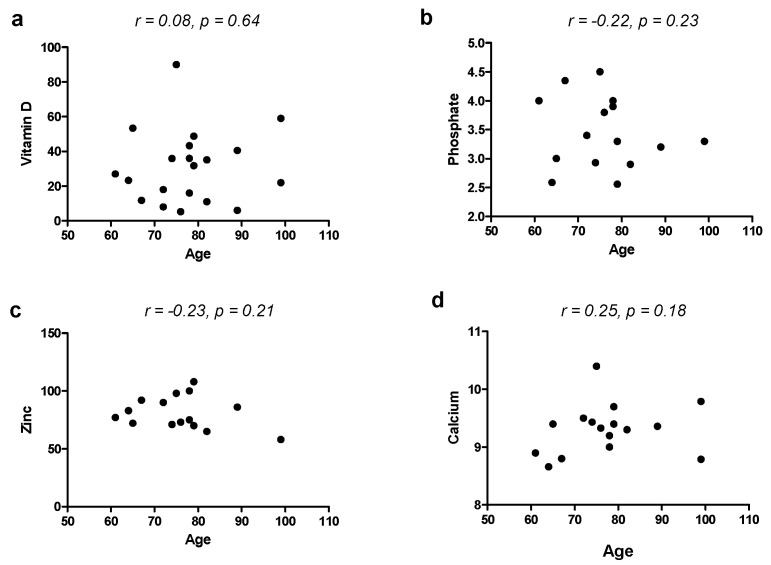
We recruited 66 subjects: 30 in the PPI group and 36 in the control group. Long-term pantoprazole users had lower red blood cell count but similar hemoglobin. We did not find any significant difference in blood iron, ferritin, vitamin B12 and folate. Vitamin D deficit was observed more frequently in the PPI group (100%) than in controls (30%, < 0.001), with blood levels lower in pantoprazole consumers. No differences in calcium, sodium and magnesium were observed. Pantoprazole users had lower phosphate levels than controls. Finally, a non-significant trend for zinc deficiency was found in PPI users.
Our study confirms that chronic PPI users may encounter alterations in some micronutrients involved in bone mineral homeostasis. The effect on zinc levels deserves further investigation.
在基层医疗中,长期使用质子泵抑制剂(PPI)的情况屡见不鲜。其对微量营养素吸收的影响已为人所知,因为此类患者可能会出现维生素B12、钙或维生素D缺乏。
我们招募了使用泮托拉唑PPI超过12个月的患者。对照组为过去12个月内未服用任何PPI的全科医生就诊患者。我们排除了使用营养补充剂或患有影响微量营养素血液水平疾病的受试者。所有受试者均进行了血常规、铁、铁蛋白、维生素D、钙、钠、钾、磷酸盐、锌和叶酸的血液采样。
我们招募了66名受试者:PPI组30名,对照组36名。长期使用泮托拉唑的患者红细胞计数较低,但血红蛋白水平相似。我们未发现血液中铁、铁蛋白、维生素B12和叶酸有任何显著差异。PPI组维生素D缺乏的发生率(100%)高于对照组(30%,P<0.001),泮托拉唑使用者的血液水平较低。钙、钠和镁未观察到差异。泮托拉唑使用者的磷酸盐水平低于对照组。最后,在PPI使用者中发现了锌缺乏的非显著趋势。
我们的研究证实,长期使用PPI的患者可能会出现一些参与骨矿物质稳态的微量营养素的改变。对锌水平的影响值得进一步研究。