Li Junqi, Zillner Johannes, Balle Frank
Walter-and-Ingeborg-Herrmann Chair for Power Ultrasonics and Engineering of Functional Materials, Department of Sustainable Systems Engineering (INATECH), Faculty of Engineering, University of Freiburg, 79110 Freiburg, Germany.
Freiburg Materials Research Center (FMF), 79104 Freiburg, Germany.
Materials (Basel). 2023 Apr 12;16(8):3033. doi: 10.3390/ma16083033.
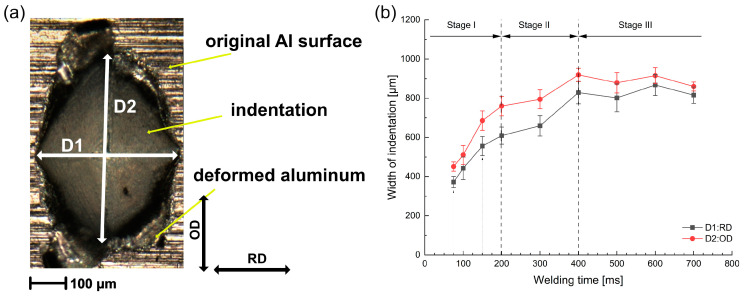
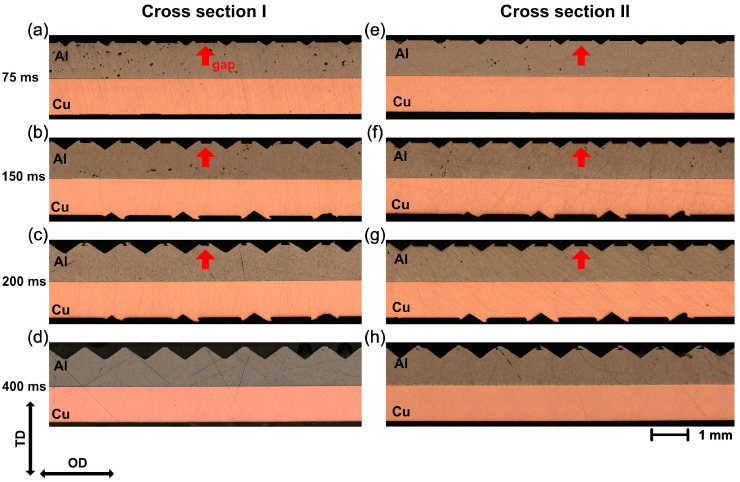
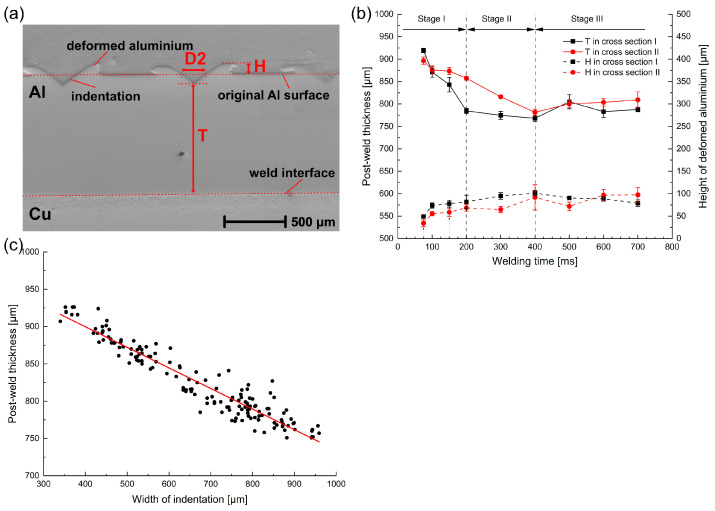
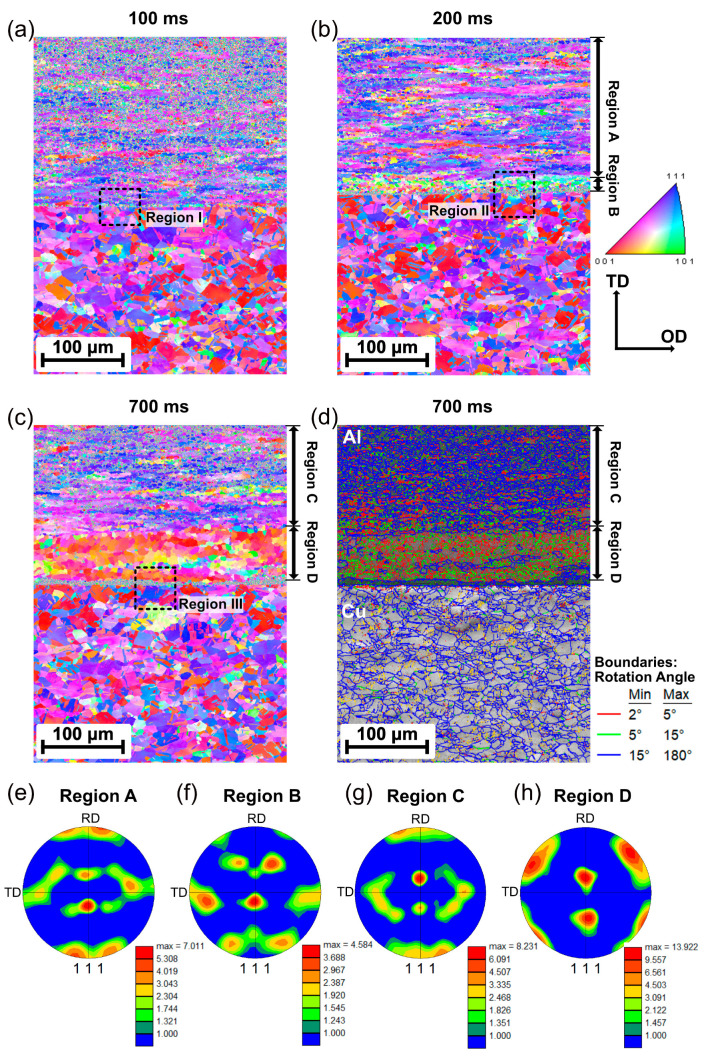
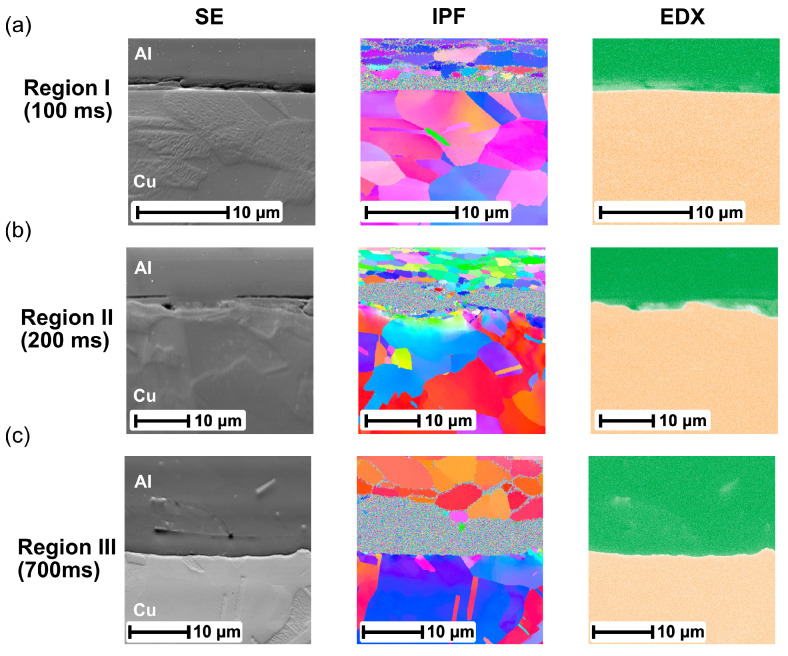
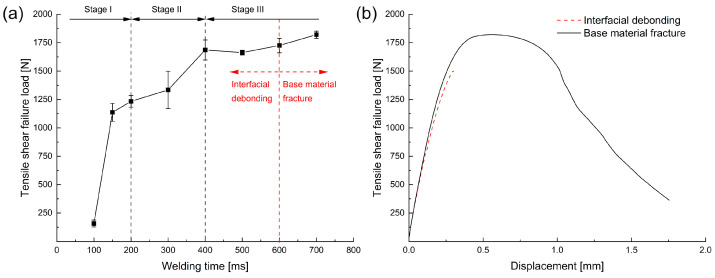
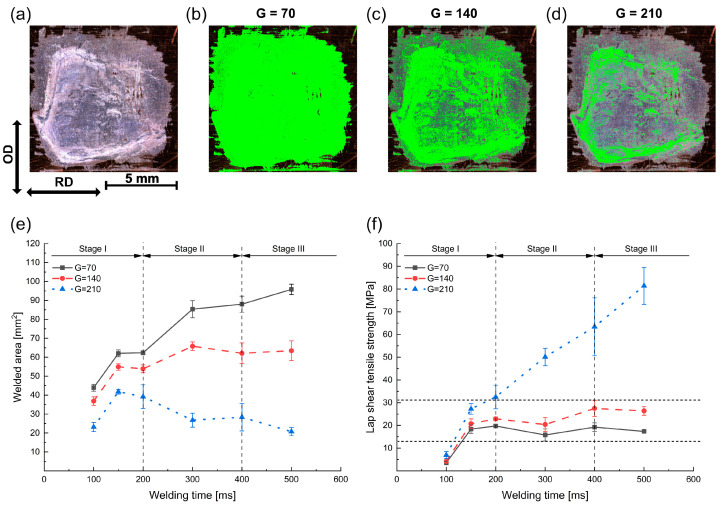
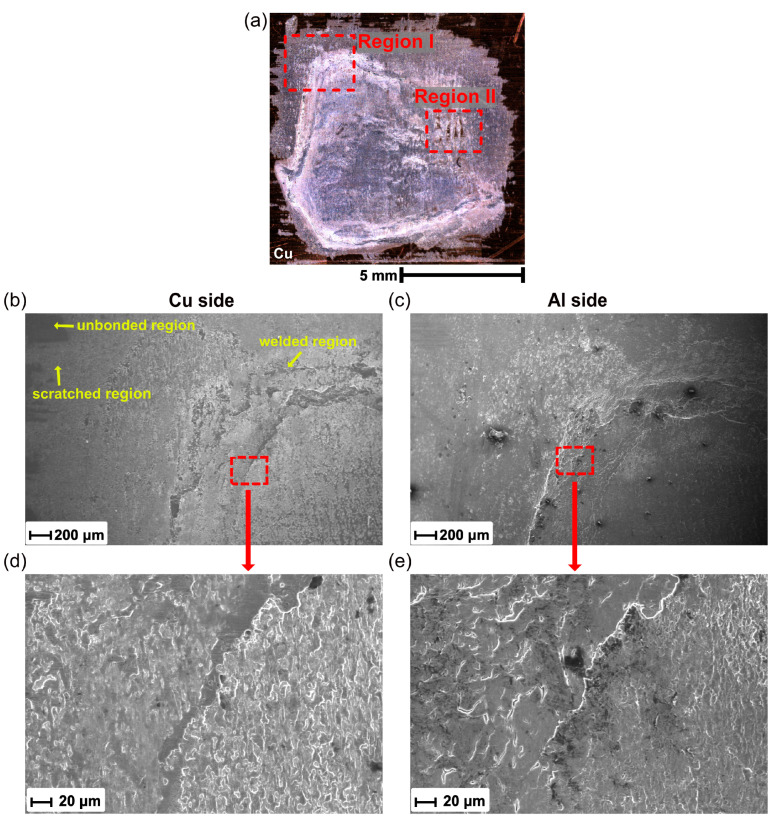
Ultrasonic metal welding (USMW) is widely used in assembling lithium-ion (Li-ion) battery packs due to its advantages in joining dissimilar and conductive materials in the solid state. However, the welding process and mechanisms are not yet clearly understood. In this study, dissimilar joints of aluminum alloy EN AW 1050 to copper alloy EN CW 008A were welded by USMW to simulate the tab-to-bus bar interconnects for Li-ion battery assembly. Qualitative and quantitative investigations were carried out on plastic deformation, microstructural evolution, and the correlated mechanical properties. During USMW, the plastic deformation concentrated on the Al side. The thickness of Al was reduced by more than 30%; complex dynamic recrystallization and grain growth occurred near the weld interface. The mechanical performance of the Al/Cu joint was evaluated with the tensile shear test. The failure load gradually increased until a welding duration of 400 ms, and then remained almost constant. The obtained results showed that the mechanical properties were greatly influenced by plastic deformation and microstructure evolution, which provides guidance for improving the weld quality and the process in general.
超声金属焊接(USMW)因其在固态下连接异种导电材料方面的优势,在锂离子(Li-ion)电池组组装中得到广泛应用。然而,其焊接工艺和机理尚未完全明晰。在本研究中,采用超声金属焊接将铝合金EN AW 1050与铜合金EN CW 008A进行异种连接,以模拟锂离子电池组装中的极耳与汇流条互连。对塑性变形、微观结构演变及相关力学性能进行了定性和定量研究。在超声金属焊接过程中,塑性变形集中在铝侧。铝的厚度减少了30%以上;在焊缝界面附近发生了复杂的动态再结晶和晶粒长大。通过拉伸剪切试验评估了铝/铜接头的力学性能。失效载荷在焊接持续时间达到400毫秒之前逐渐增加,之后几乎保持不变。所得结果表明,力学性能受塑性变形和微观结构演变的影响很大,这为提高焊接质量及总体工艺提供了指导。