Herbert C. Brown Center for Borane Research, Department of Chemistry, Purdue University, 560 Oval Drive, West Lafayette, IN 47907, USA.
Molecules. 2023 Apr 13;28(8):3433. doi: 10.3390/molecules28083433.
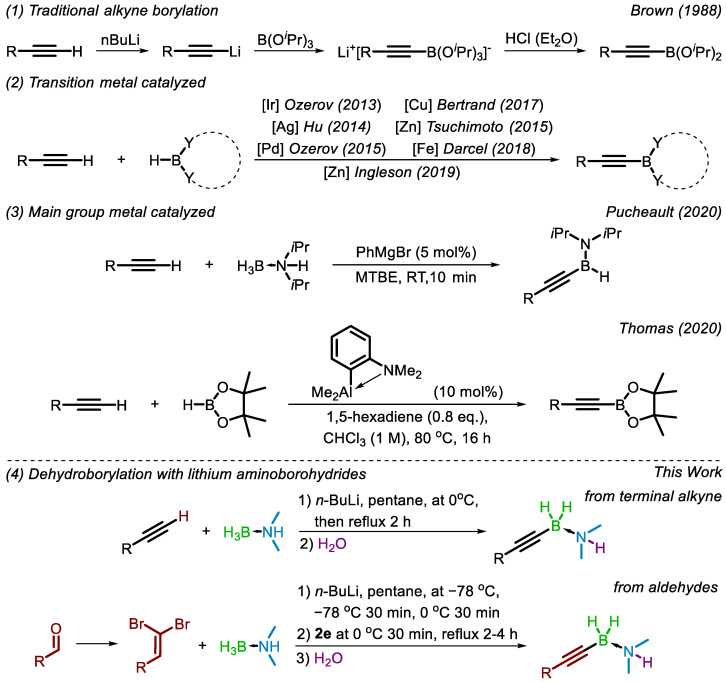
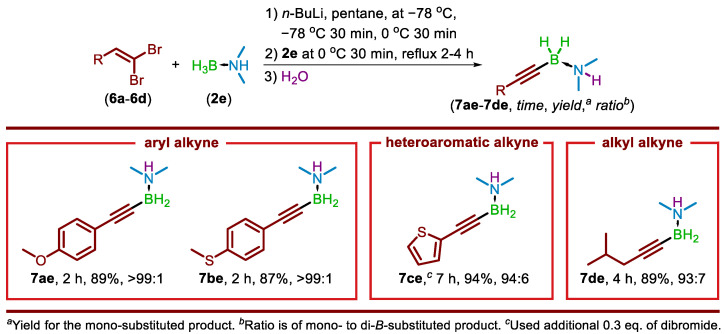
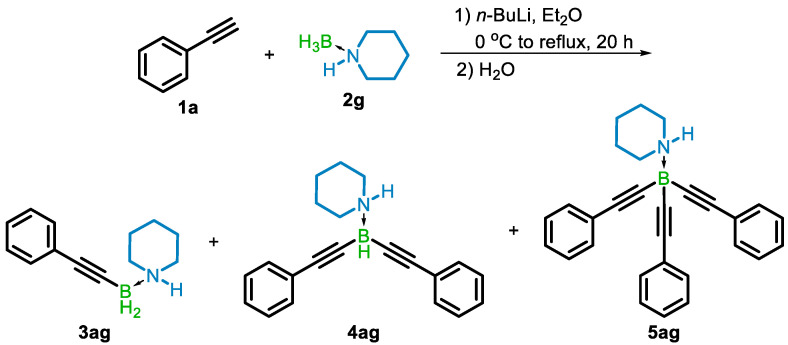
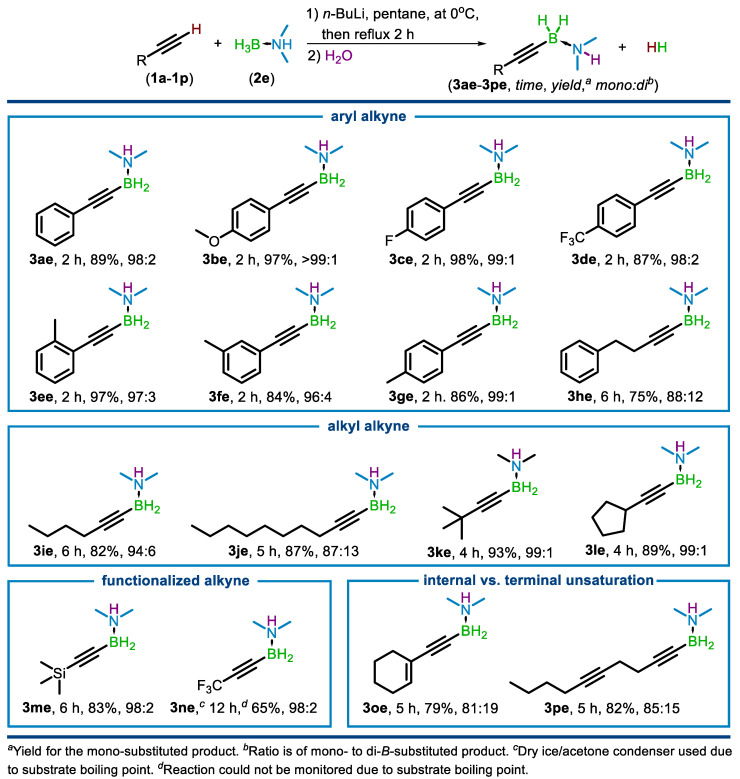
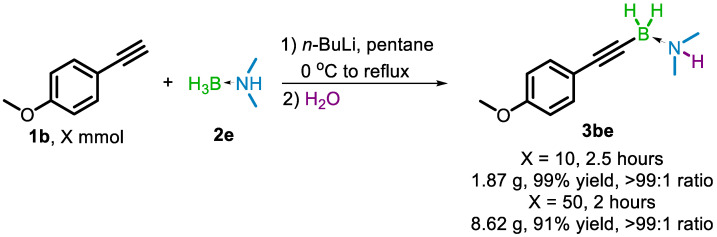
Dehydrogenative borylation of terminal alkynes has recently emerged as an atom-economical one-step alternative to traditional alkyne borylation methodologies. Using lithium aminoborohydrides, formed in situ from the corresponding amine-boranes and -butyllithium, a variety of aromatic and aliphatic terminal alkyne substrates were successfully borylated in high yield. The potential to form mono-, di-, and tri--alkynylated products has been shown, though the mono-product is primarily generated using the presented condition. The reaction has been demonstrated at large (up to 50 mmol) scale, and the products are stable to column chromatography as well as acidic and basic aqueous conditions. Alternately, the dehydroborylation can be achieved by treating alkynyllithiums with amine-boranes. In that respect, aldehydes can act as starting materials by conversion to the 1,1-dibromoolefin and in situ rearrangement to the lithium acetylide.
末端炔烃的脱氢硼化反应最近作为一种原子经济性的一步法替代传统的炔烃硼化方法而出现。使用锂氨硼氢化物,由相应的胺-硼烷和正丁基锂原位形成,各种芳基和脂肪族末端炔烃底物以高产率成功地进行了硼化。已经证明了形成单、二和三炔基化产物的可能性,尽管使用所提出的条件主要生成单产物。该反应已经在较大规模(高达 50mmol)上进行了演示,并且产物在柱色谱以及酸性和碱性水性条件下稳定。或者,通过用胺-硼烷处理炔基锂可以实现脱氢硼化。在这方面,醛可以通过转化为 1,1-二溴烯烃并原位重排为锂乙炔来作为起始材料。