Zarges Jan-Christoph, Schlink André, Lins Fabian, Essinger Jörg, Sommer Stefan, Heim Hans-Peter
Institute of Material Engineering, Polymer Engineering, University of Kassel, 34125 Kassel, Germany.
Günther Heisskanaltechnik GmbH, 35066 Frankenberg (Eder), Germany.
Polymers (Basel). 2023 Apr 18;15(8):1924. doi: 10.3390/polym15081924.
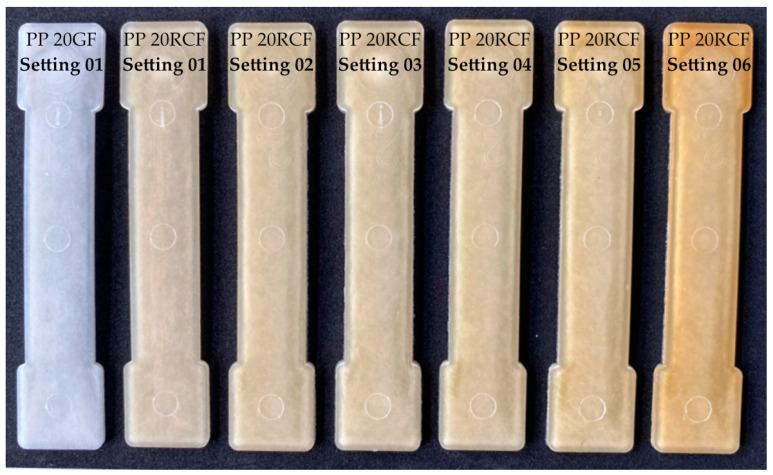
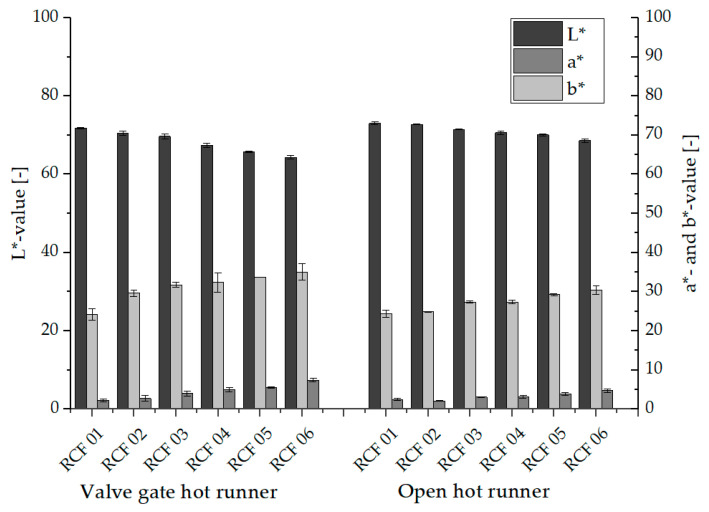
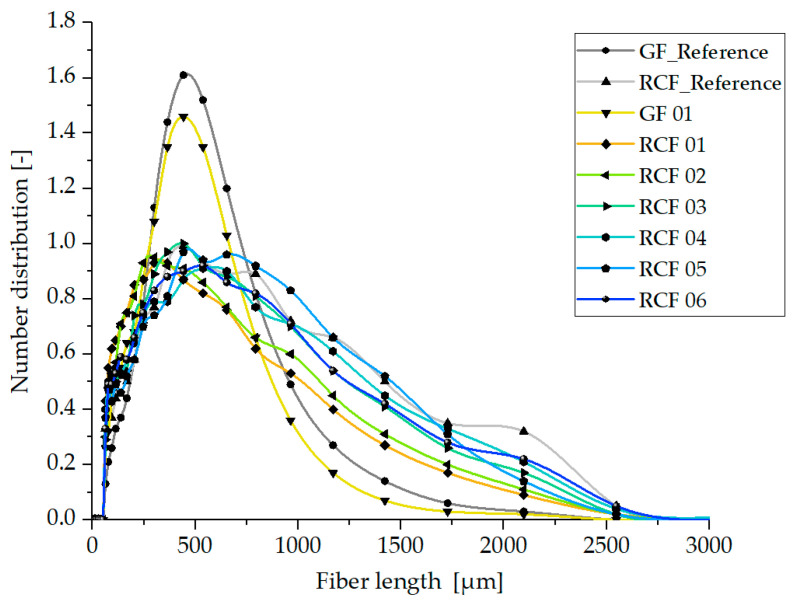
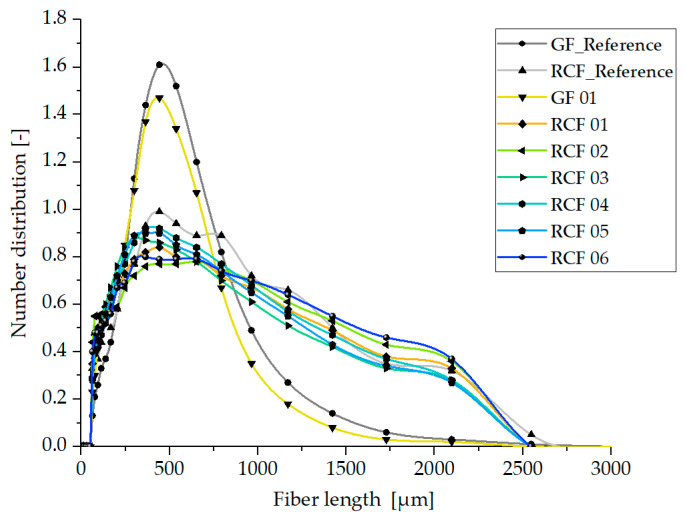
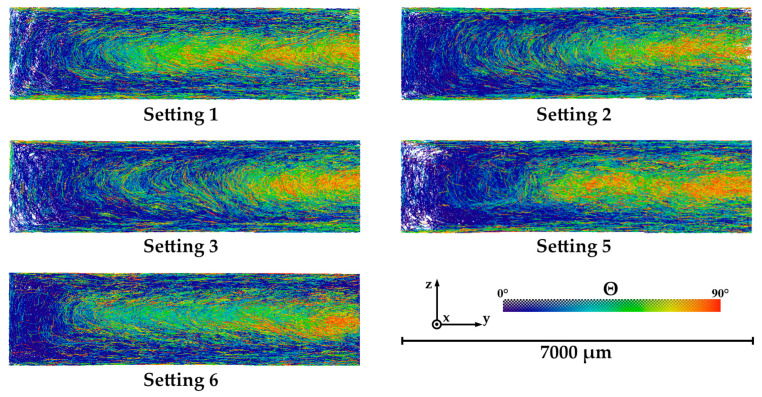
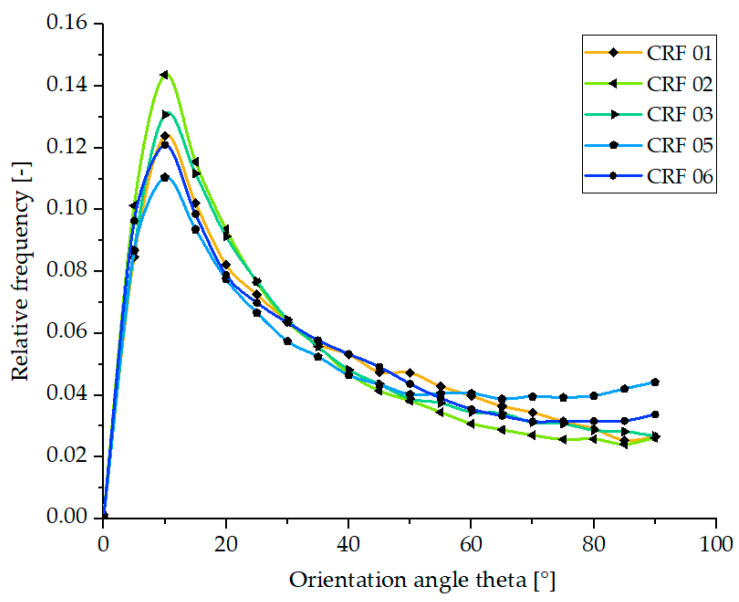
The increasing demand for renewable raw materials and lightweight composites leads to an increasing request for natural fiber composites (NFC) in series production. In order to be able to use NFC competitively, they must also be processable with hot runner systems in injection molding series production. For this reason, the influences of two hot runner systems on the structural and mechanical properties of Polypropylene with 20 wt.% regenerated cellulose fibers (RCF) were investigated. Therefore, the material was processed into test specimens using two different hot runner systems (open and valve gate) and six different process settings. The tensile tests carried out showed very good strength for both hot runner systems, which were max. 20% below the reference specimen processed with a cold runner and, however, significantly influenced by the different parameter settings. Fiber length measurements with the dynamic image analysis showed approx. 20% lower median values of GF and 5% lower of RCF through the processing with both hot runner systems compared to the reference, although the influence of the parameter settings was small. The X-ray microtomography performed on the open hot runner samples showed the influences of the parameter settings on the fiber orientation. In summary, it was shown that RCF composites can be processed with different hot runner systems in a wide process window. Nevertheless, the specimens of the setting with the lowest applied thermal load showed the best mechanical properties for both hot runner systems. It was furthermore shown that the resulting mechanical properties of the composites are not only due to one structural property (fiber length, orientation, or thermally induced changes in fiber properties) but are based on a combination of several material- and process-related properties.
对可再生原材料和轻质复合材料的需求不断增加,导致对天然纤维复合材料(NFC)在批量生产中的需求也日益增长。为了能够使NFC具有竞争力,它们还必须能够在注塑批量生产中使用热流道系统进行加工。因此,研究了两种热流道系统对含有20 wt.%再生纤维素纤维(RCF)的聚丙烯的结构和力学性能的影响。为此,使用两种不同的热流道系统(开放式和针阀式)以及六种不同的工艺设置将该材料加工成测试样品。进行的拉伸试验表明,两种热流道系统的强度都非常好,最高比用冷流道加工的参考样品低20%,然而,受不同参数设置的影响很大。通过动态图像分析进行的纤维长度测量表明,与参考样品相比,使用两种热流道系统加工后,玻璃纤维(GF)的中位值大约低20%,再生纤维素纤维(RCF)的中位值低5%,尽管参数设置的影响很小。对开放式热流道样品进行的X射线显微断层扫描显示了参数设置对纤维取向的影响。总之,结果表明RCF复合材料可以在很宽的工艺窗口内用不同的热流道系统进行加工。尽管如此,对于两种热流道系统,施加热负荷最低的设置的样品显示出最佳的力学性能。此外还表明,复合材料的最终力学性能不仅归因于一种结构性能(纤维长度、取向或纤维性能的热诱导变化),而是基于几种与材料和工艺相关的性能的组合。