Koldehoff Michael, Eiz-Vesper Britta, Maecker-Kolhoff Britta, Steckel Nina K, Dittmer Ulf, Horn Peter A, Lindemann Monika
Zotz Klimas, MVZ Düsseldorf, 40210 Düsseldorf, Germany.
Department of Hematology and Stem Cell Transplantation, University Hospital Essen, University Duisburg-Essen, 45147 Essen, Germany.
Vaccines (Basel). 2023 Apr 14;11(4):845. doi: 10.3390/vaccines11040845.
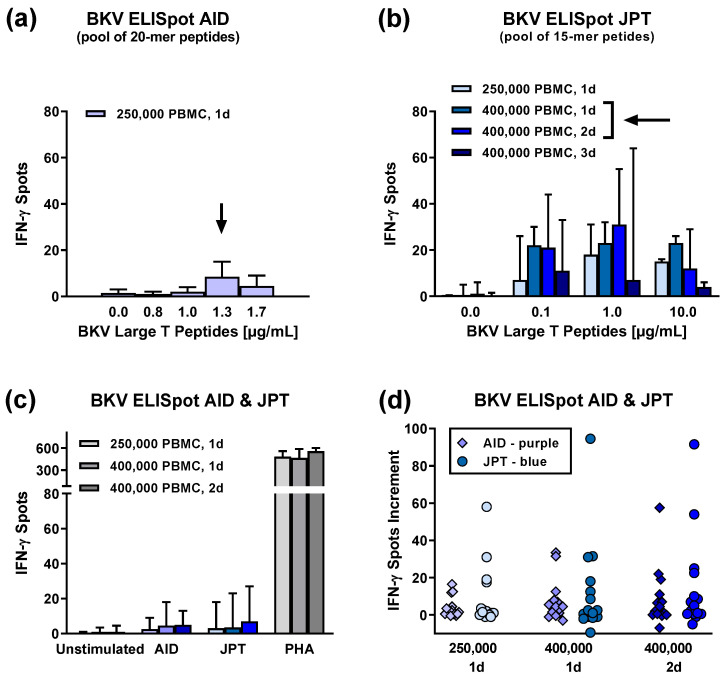
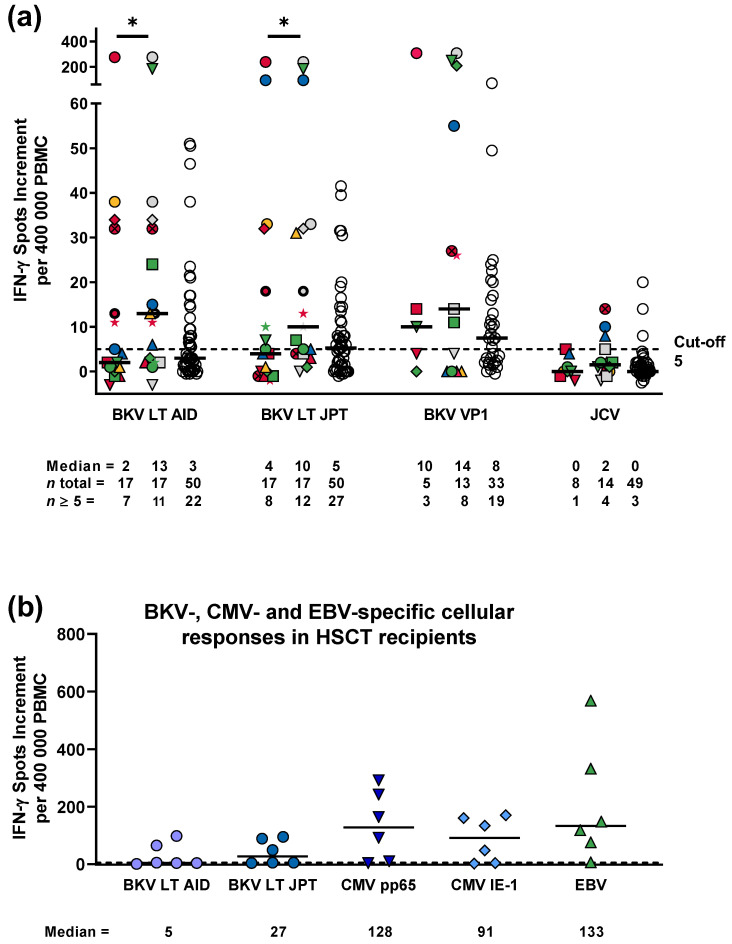
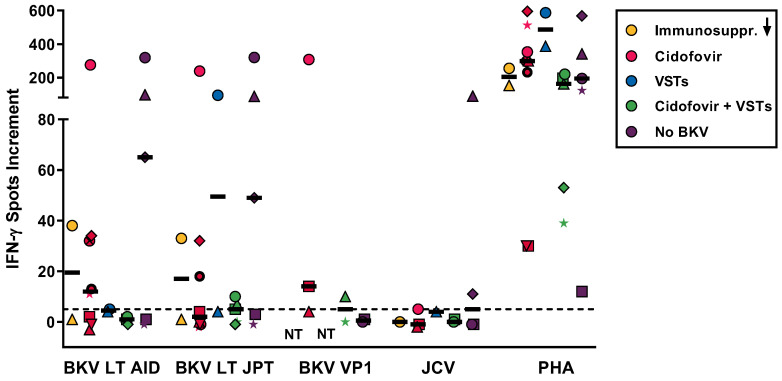
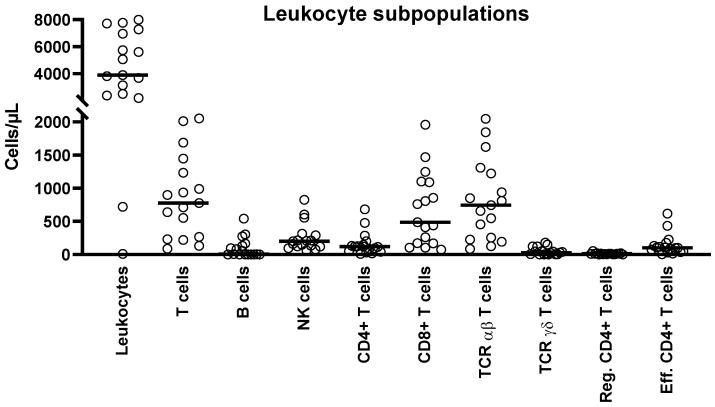
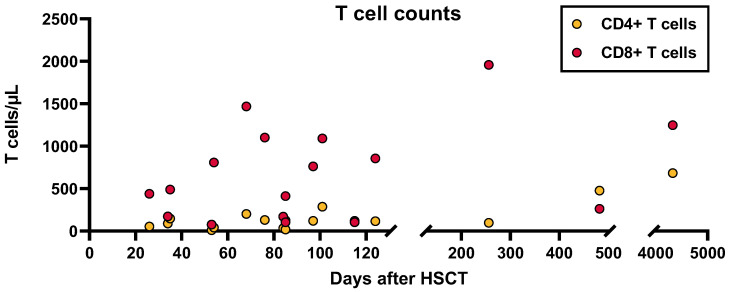
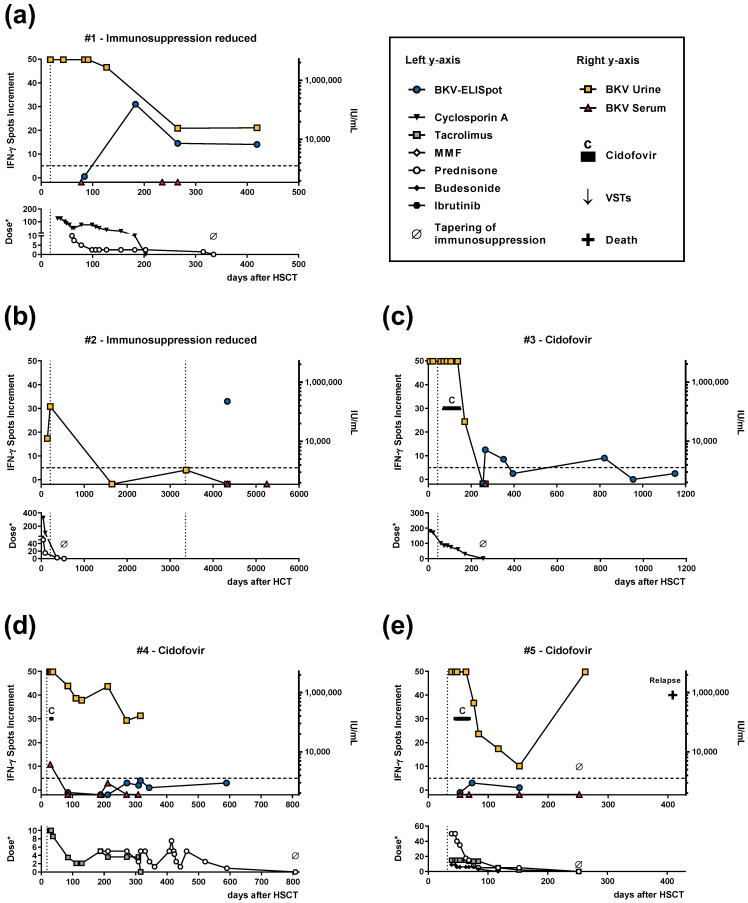
The BK virus (BKV) causes severe hemorrhagic cystitis in hematopoietic stem cell transplant (HSCT) recipients. To eliminate reactivated BKV, symptomatic patients can be treated with a reduction of the immunosuppressive therapy, with the antiviral drug cidofovir, or with virus-specific T cells (VSTs). In the current study, we compared the effect of VSTs to other treatment options, following up specific T cells using interferon-gamma ELISpot assay. We observed BKV large T-specific cellular responses in 12 out of 17 HSCT recipients with BKV-related cystitis (71%). In recipients treated with VSTs, 6 out of 7 showed specific T-cell responses, and that number in those without VSTs was 6 out of 10. In comparison, 27 out of 50 healthy controls (54%) responded. In HSCT recipients treated for BKV-related cystitis, absolute CD4+ T-cell numbers and renal function correlated with BKV-specific cellular responses ( = 0.03 and 0.01, respectively). In one patient, BKV-specific cellular immunity could already be detected at baseline, on day 35 after HSCT and prior to VSTs, and remained increased until day 226 after VSTs (78 vs. 7 spots increment). In conclusion, the ELISpot appears to be suitable to sensitively monitor BKV-specific cellular immunity in HSCT recipients, even early after transplantation or in the long term after VSTs.
BK病毒(BKV)可导致造血干细胞移植(HSCT)受者发生严重出血性膀胱炎。为清除重新激活的BKV,有症状的患者可通过减少免疫抑制治疗、使用抗病毒药物西多福韦或病毒特异性T细胞(VST)进行治疗。在本研究中,我们比较了VST与其他治疗方案的效果,并使用干扰素-γ酶联免疫斑点试验对特定T细胞进行随访。我们在17例患有BKV相关膀胱炎的HSCT受者中的12例(71%)中观察到了BKV大T特异性细胞反应。在接受VST治疗的受者中,7例中有6例表现出特异性T细胞反应,未接受VST治疗的受者中这一数字为10例中的6例。相比之下,50名健康对照者中有27例(54%)有反应。在接受BKV相关膀胱炎治疗的HSCT受者中,绝对CD4+T细胞数量和肾功能与BKV特异性细胞反应相关(分别为 = 0.03和0.01)。在1例患者中,在HSCT后第35天、VST治疗前的基线时就已检测到BKV特异性细胞免疫,并且在VST治疗后第226天之前一直保持升高(增加78个斑点对7个斑点)。总之,酶联免疫斑点试验似乎适合灵敏地监测HSCT受者中的BKV特异性细胞免疫情况,即使在移植后早期或VST治疗后的长期内也是如此。