Bohlmeijer E T, Frielingsdorf L, Kraiss J T, de Jager-Meezenbroek E, Visser A, Ten Klooster P M
Department Technology of Human and Institutional Behavior, University of Twente, Drienerlolaan 5, 7522 NB Enschede, The Netherlands.
ACT Therapie Utrecht, Utrecht, The Netherlands.
J Happiness Stud. 2023;24(3):1169-1190. doi: 10.1007/s10902-023-00640-8. Epub 2023 Mar 5.
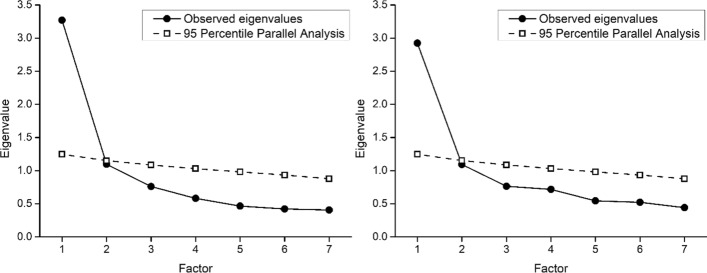
There is growing evidence that spiritual well-being is positively associated with adaptive coping and health. The Spiritual Attitude and Involvement List (SAIL) was developed to measure a sense of connectedness to oneself, the environment and the transcendent as a universal experience. The aim of the current study was to develop a short form of the SAIL (SAIL-SF). A factor analytic approach was adopted to select the items for the SAIL-SF based on earlier studies among nurses (n = 458) and cancer patients (n = 445). The dimensionality, factor-loadings, internal consistency, construct validity and incremental validity of the final SAIL-SF were then evaluated in a new sample of adults (n = 225) participating in a trial assessing a positive psychology intervention. The first study yielded seven items, each representing one of the dimensions of the original SAIL: meaningfulness, trust, acceptance, caring for others, connectedness with nature, transcendent experiences, and spiritual activities. The seven items represented a single meaningful factor in both samples and the factor loadings of the items were adequately high. In the second study, a good fit across the various model indices was found and all items had adequately high factor loadings in a strict unidimensional confirmatory factor model and demonstrated good internal consistency. The SAIL-SF explained 7% of variance in ability to adapt above and beyond emotional, psychological, and social well-being. The current study shows that the SAIL-SF has good psychometric properties, and that spiritual well-being has a unique contribution to the ability to adapt in comparison with other types of well-being.
越来越多的证据表明,精神健康与适应性应对和健康呈正相关。精神态度与参与度量表(SAIL)旨在衡量一种作为普遍体验的与自身、环境及超验存在的连接感。本研究的目的是开发SAIL的简版(SAIL-SF)。基于之前对护士(n = 458)和癌症患者(n = 445)的研究,采用因素分析方法来选择SAIL-SF的条目。随后,在参与一项评估积极心理干预的成人新样本(n = 225)中,对最终的SAIL-SF的维度、因素负荷、内部一致性、结构效度和增量效度进行了评估。第一项研究得出了七个条目,每个条目代表原始SAIL的一个维度:意义感、信任、接纳、关爱他人、与自然的连接、超验体验和精神活动。这七个条目在两个样本中均代表一个单一的有意义因素,且条目的因素负荷足够高。在第二项研究中,发现各种模型指标拟合良好,在严格的单维验证性因素模型中所有条目的因素负荷都足够高,并表现出良好的内部一致性。SAIL-SF解释了在情绪、心理和社会幸福感之外的适应能力中7%的变异。当前研究表明,SAIL-SF具有良好的心理测量特性,并且与其他类型的幸福感相比,精神健康对适应能力有独特的贡献。