Lee Je Seop, Cha Yong Sung, Lim Jihye
Department of Emergency Medicine, Yonsei University Wonju College of Medicine, Wonju, Republic of Korea.
Research Institute of Hyperbaric Medicine and Science, Yonsei University Wonju College of Medicine, Wonju, Republic of Korea.
Front Med (Lausanne). 2023 Feb 14;10:1127978. doi: 10.3389/fmed.2023.1127978. eCollection 2023.
Hyperbaric oxygen therapy (HBO) is recommended for symptomatic patients within 24 h of carbon monoxide (CO) poisoning. Currently, there is no consensus on the number of HBO sessions within 24 h after arrival at the hospital. Therefore, we evaluated differences in the therapeutic effects according to the number of HBO sessions in acute CO poisoning.
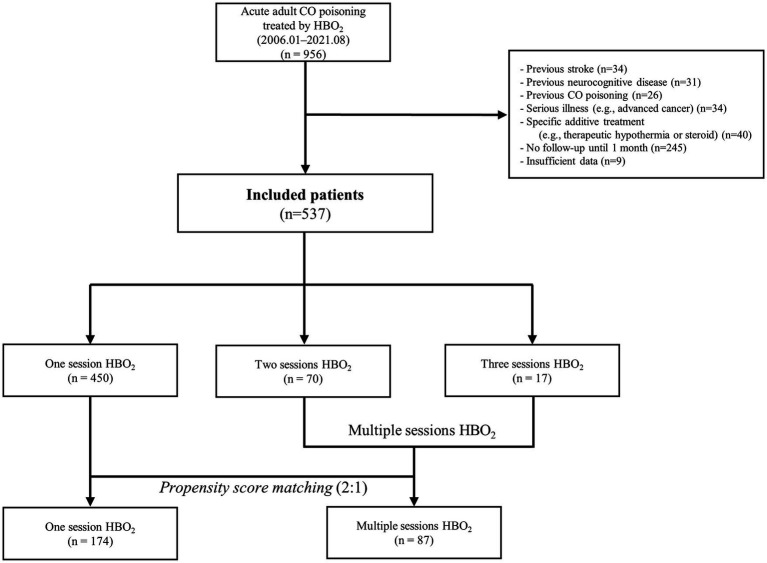
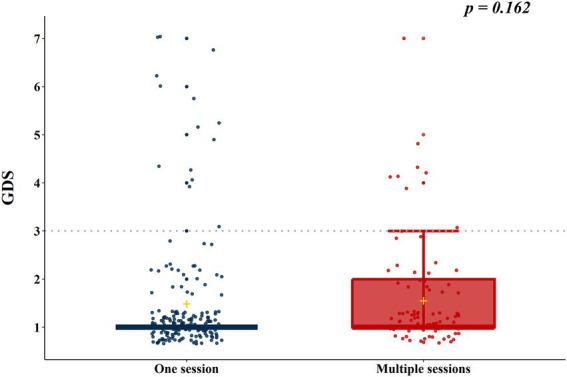
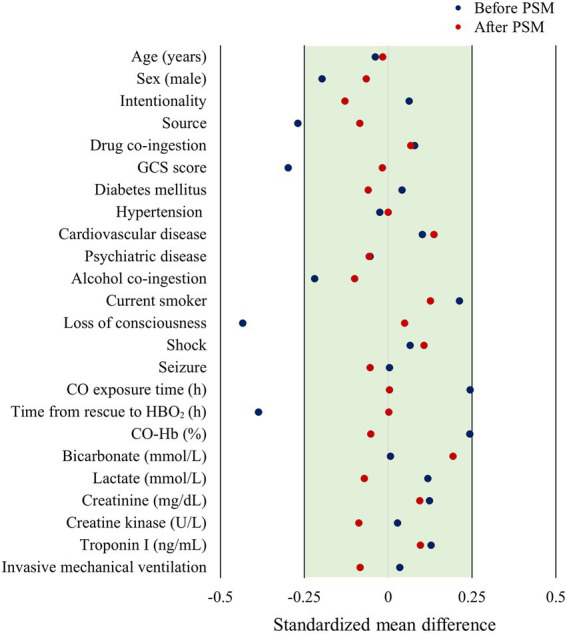
This cohort study included data collected from our CO poisoning registry and prospective cohorts between January 2006 and August 2021 in a single academic medical center in South Korea. Based on the number of HBO sessions performed within 24 h, we classified patients into one- and multiple- (two or three) session groups. We also compared mild (non-invasive mechanical ventilation) and severe (invasive mechanical ventilation) groups. CO-related neurocognitive outcomes were measured using the Global Deterioration Scale (GDS; stages: 1-7) combined with neurological impairment at 1 month after poisoning. We classified GDS stages as favorable (1-3 stages) and poor (4-7 stages) neurocognitive outcomes. Patients belonging to a favorable group based on GDS assessment, but with observable neurological impairment, were assigned to the poor outcome group. Propensity score matching (PSM) was performed to adjust for age, sex, and related variables to identify statistical differences between groups.
We analyzed the data of 537 patients between ages 16 and 70 years treated with HBO. After PSM, there was no significant difference in neurocognitive outcomes at 1 month among the two groups of patients ( = 0.869). Furthermore, there were no significant differences in neurocognitive outcomes between invasive mechanical ventilation and non-invasive mechanical ventilation patients in the three groups ( = 0.389 and = 0.295).
There were no significant differences in the reduction of poor neurocognitive outcomes according to the number of HBO sessions implemented within 24 h of CO exposure.
对于一氧化碳(CO)中毒的有症状患者,推荐在24小时内进行高压氧治疗(HBO)。目前,对于入院后24小时内HBO治疗的次数尚无共识。因此,我们评估了急性CO中毒时根据HBO治疗次数不同所产生的治疗效果差异。
这项队列研究纳入了2006年1月至2021年8月期间在韩国一家学术医疗中心从CO中毒登记处和前瞻性队列中收集的数据。根据24小时内进行的HBO治疗次数,我们将患者分为单次治疗组和多次(两次或三次)治疗组。我们还比较了轻度(无创机械通气)和重度(有创机械通气)组。在中毒后1个月,使用总体衰退量表(GDS;阶段:1 - 7)结合神经功能缺损来测量与CO相关的神经认知结局。我们将GDS阶段分为良好(1 - 3阶段)和不良(4 - 7阶段)神经认知结局。基于GDS评估属于良好组但有明显神经功能缺损的患者被归入不良结局组。进行倾向评分匹配(PSM)以调整年龄、性别和相关变量,以确定组间的统计学差异。
我们分析了537例年龄在16至70岁接受HBO治疗的患者的数据。经过PSM后,两组患者在1个月时的神经认知结局无显著差异(= 0.869)。此外,三组中有创机械通气患者和无创机械通气患者之间的神经认知结局也无显著差异(= 0.389和 = 0.295)。
在CO暴露后24小时内实施的HBO治疗次数在减少不良神经认知结局方面无显著差异。