Department of Psychiatry, Washington University in St Louis, St Louis, MO, USA.
Department of Neurology, Washington University in St Louis, St Louis, MO, USA.
Acta Neuropathol. 2023 Jun;145(6):749-772. doi: 10.1007/s00401-023-02568-y. Epub 2023 Apr 28.
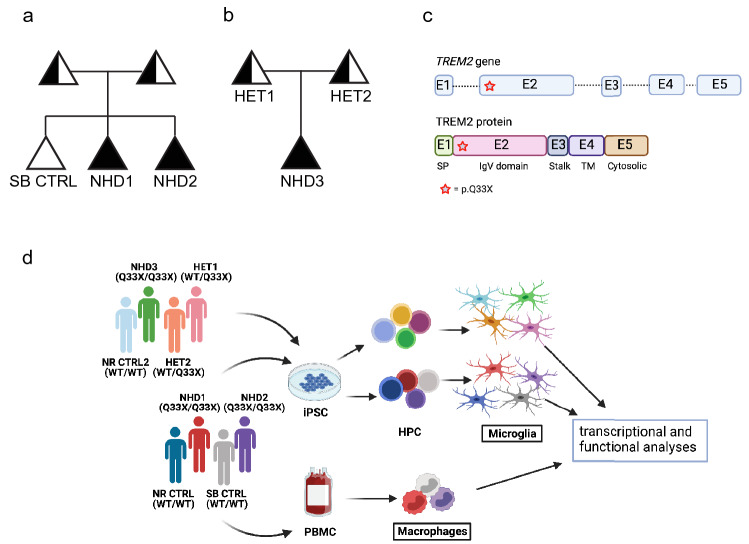
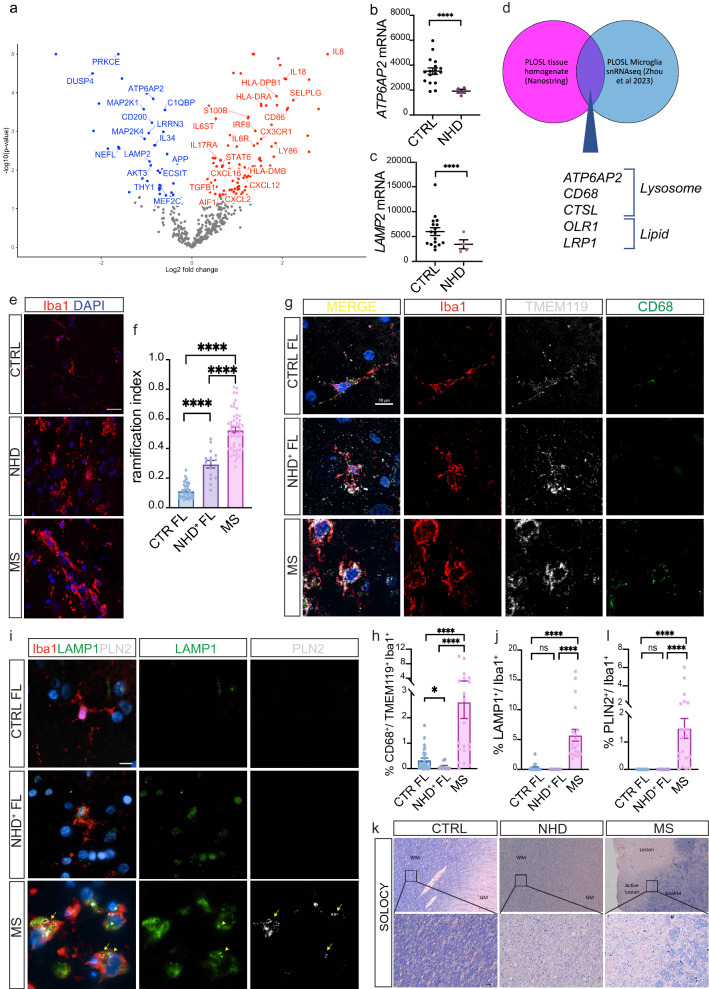
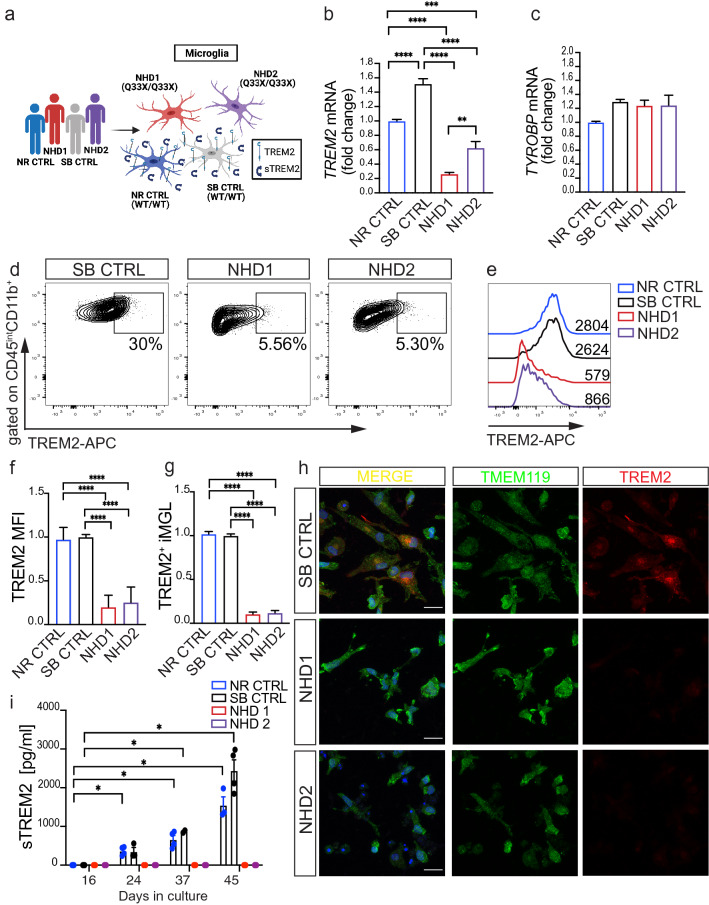
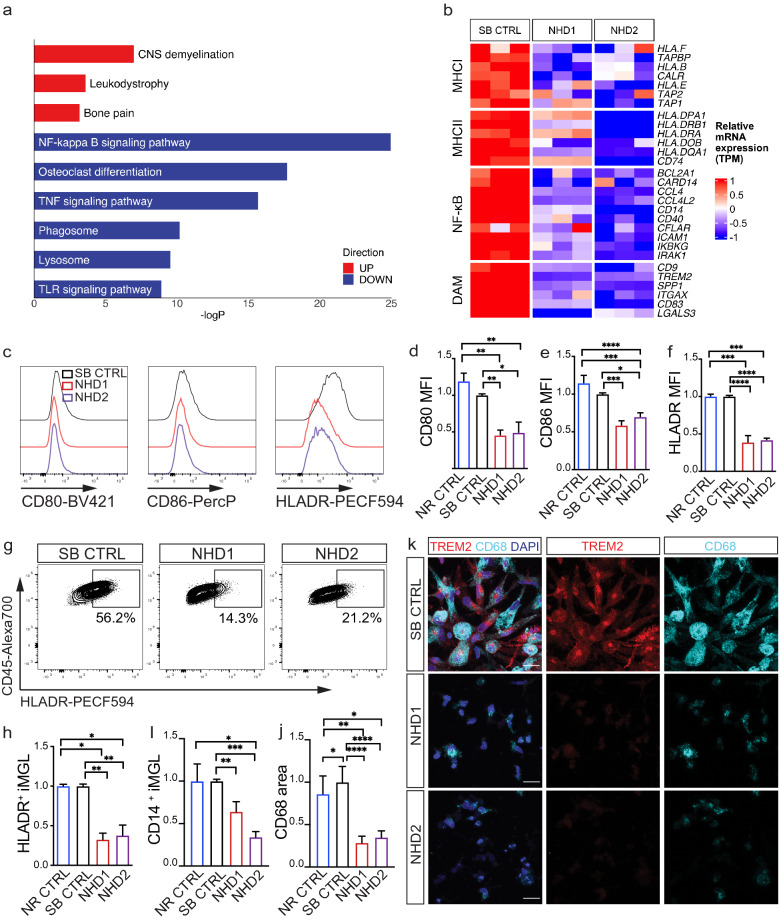
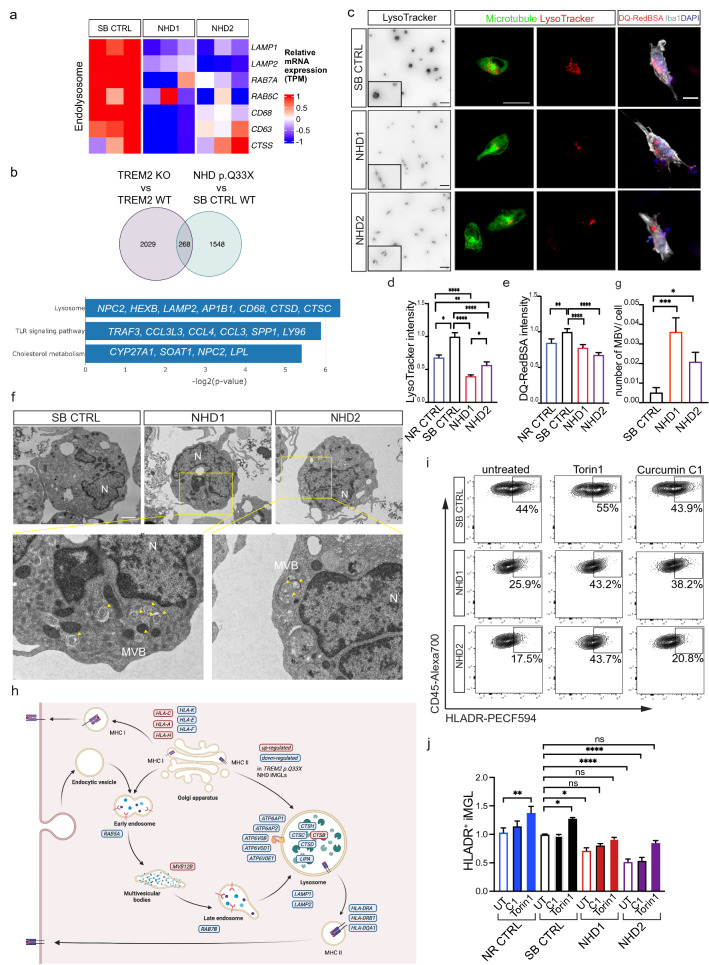
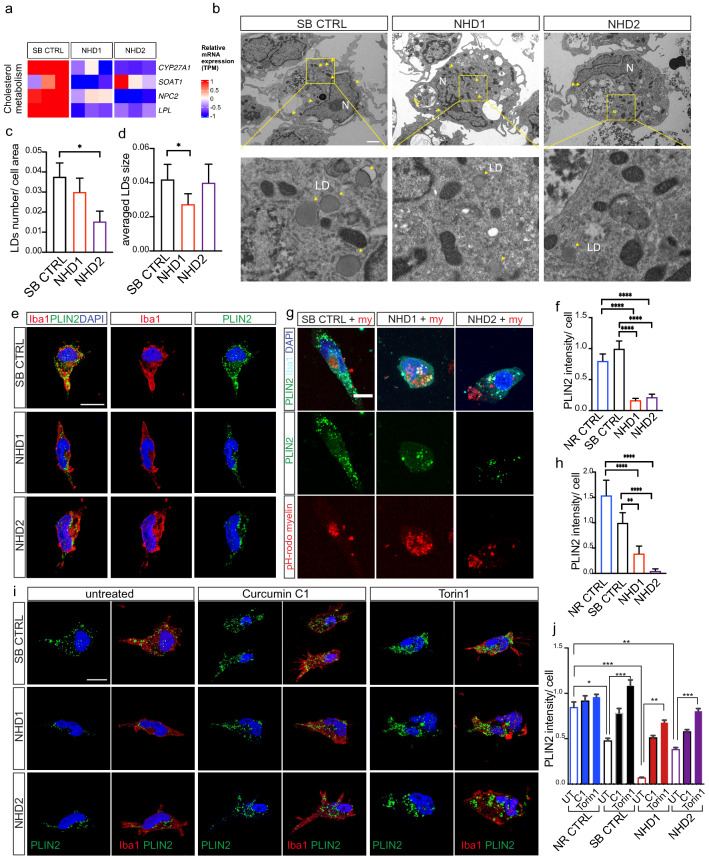
TREM2 is an innate immune receptor expressed by microglia in the adult brain. Genetic variation in the TREM2 gene has been implicated in risk for Alzheimer's disease and frontotemporal dementia, while homozygous TREM2 mutations cause a rare leukodystrophy, Nasu-Hakola disease (NHD). Despite extensive investigation, the role of TREM2 in NHD pathogenesis remains poorly understood. Here, we investigate the mechanisms by which a homozygous stop-gain TREM2 mutation (p.Q33X) contributes to NHD. Induced pluripotent stem cell (iPSC)-derived microglia (iMGLs) were generated from two NHD families: three homozygous TREM2 p.Q33X mutation carriers (termed NHD), two heterozygous mutation carriers, one related non-carrier, and two unrelated non-carriers. Transcriptomic and biochemical analyses revealed that iMGLs from NHD patients exhibited lysosomal dysfunction, downregulation of cholesterol genes, and reduced lipid droplets compared to controls. Also, NHD iMGLs displayed defective activation and HLA antigen presentation. This defective activation and lipid droplet content were restored by enhancing lysosomal biogenesis through mTOR-dependent and independent pathways. Alteration in lysosomal gene expression, such as decreased expression of genes implicated in lysosomal acidification (ATP6AP2) and chaperone mediated autophagy (LAMP2), together with reduction in lipid droplets were also observed in post-mortem brain tissues from NHD patients, thus closely recapitulating in vivo the phenotype observed in iMGLs in vitro. Our study provides the first cellular and molecular evidence that the TREM2 p.Q33X mutation in microglia leads to defects in lysosomal function and that compounds targeting lysosomal biogenesis restore a number of NHD microglial defects. A better understanding of how microglial lipid metabolism and lysosomal machinery are altered in NHD and how these defects impact microglia activation may provide new insights into mechanisms underlying NHD and other neurodegenerative diseases.
TREM2 是一种先天免疫受体,在成年大脑中的小胶质细胞中表达。TREM2 基因的遗传变异与阿尔茨海默病和额颞叶痴呆的风险有关,而纯合 TREM2 突变导致一种罕见的脑白质营养不良,即 Nasu-Hakola 病(NHD)。尽管进行了广泛的研究,但 TREM2 在 NHD 发病机制中的作用仍知之甚少。在这里,我们研究了一种纯合的终止增益 TREM2 突变(p.Q33X)导致 NHD 的机制。我们从小胶质细胞诱导多能干细胞(iPSC)衍生的小胶质细胞(iMGL)中产生了两个 NHD 家族:三个纯合 TREM2 p.Q33X 突变携带者(称为 NHD),两个杂合突变携带者,一个相关非携带者和两个无关非携带者。转录组学和生化分析显示,与对照相比,NHD 患者的 iMGL 表现出溶酶体功能障碍、胆固醇基因下调和脂质滴减少。此外,NHD iMGL 显示出缺陷的激活和 HLA 抗原呈递。通过增强 mTOR 依赖和独立途径的溶酶体生物发生,这种缺陷的激活和脂质滴含量得到恢复。还观察到溶酶体基因表达的改变,例如参与溶酶体酸化的基因(ATP6AP2)和伴侣介导的自噬(LAMP2)的表达减少,以及脂质滴减少,这与 NHD 患者死后脑组织中的表型非常相似,因此在体外的 iMGL 中非常相似地重现了体内表型。我们的研究提供了第一个细胞和分子证据,证明 TREM2 p.Q33X 突变在小胶质细胞中导致溶酶体功能缺陷,并且化合物靶向溶酶体生物发生可恢复多种 NHD 小胶质细胞缺陷。更好地了解 NHD 中小胶质细胞脂质代谢和溶酶体机制如何改变,以及这些缺陷如何影响小胶质细胞激活,可能为 NHD 和其他神经退行性疾病的发病机制提供新的见解。