Al-Mamoori Zahraa Z, Embaby Amira M, Hussein Ahmed, Mahmoud Hoda E
Biotechnology Department, Institute of Graduate Studies and Research, Alexandria University, Alexandria, Egypt.
AMB Express. 2023 Apr 29;13(1):40. doi: 10.1186/s13568-023-01545-8.
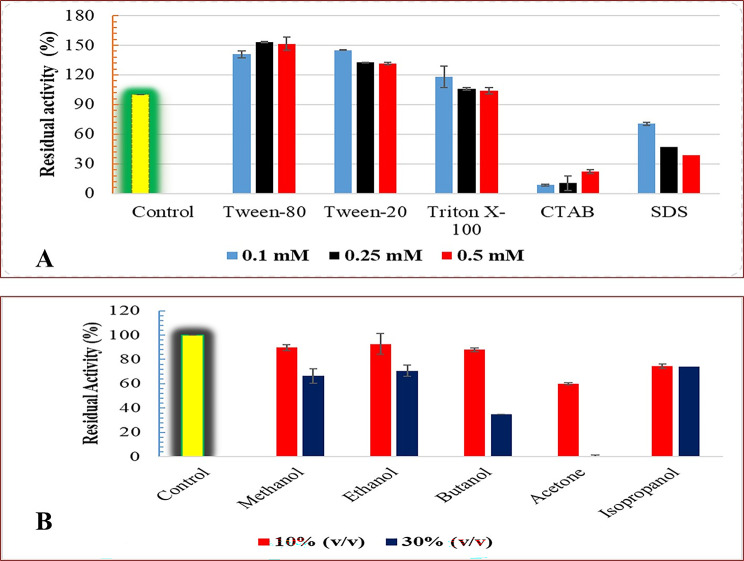
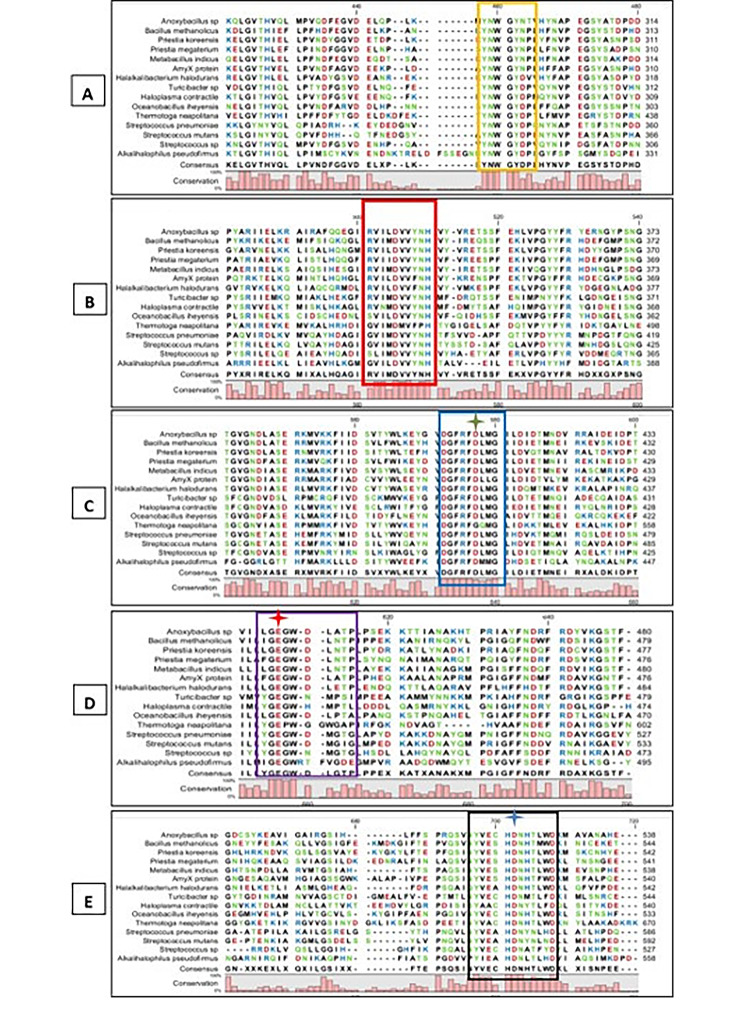
Despite the great potential of cold-adapted pullulanase type I in tremendous industrial applications, the majority of commercialized pullulnases type I are of mesophilic and thermophilic origin so far. Hence, the present study underlines cloning, heterologous expression in Escherichia coli, characterization, and in silico structural modeling of Metabacillus indicus open reading frame of cold-adapted pullulanase type I (Pull_Met: 2133 bp & 710 a.a) for the first time ever. The predicted Pull_Met tertiary structure by I-TASSER, was structurally similar to PDB 2E9B pullulanase of Bacillus subtilis. Purified to homogeneity Pull_Met showed specific activity (667.6 U/mg), fold purification (31.7), molecular mass (79.1 kDa), monomeric subunit and Km (2.63 mg/mL) on pullulan. Pull_Met had optimal pH (6.0) and temperature (40 C). After 10 h pre-incubation at pH 2.6-6.0, Pull_Met maintained 47.12 ± 0.0-35.28 ± 1.64% of its activity. After 120 min pre-incubation at 30 C, the retained activity was 51.11 ± 0.29%. At 10 mM Mn, Na, Ca, Mg, and Cu after 30 min preincubation, retained activity was 155.89 ± 8.97, 134.71 ± 1.82, 97.64 ± 7.06, 92.25 ± 4.18, and 71.28 ± 1.10%, respectively. After 30 min pre-incubation with Tween-80, Tween-20, Triton X-100, and commercially laundry detergents at 0.1% (v/v), the retained activity was 141.15 ± 3.50, 145.45 ± 0.20, 118.12 ± 11.00, and 90%, respectively. Maltotriose was the only end product of pullulan hydrolysis. Synergistic action of CA-AM21 (α-amylase) and Pull_Met on starch liberated 16.51 g reducing sugars /g starch after 1 h at 40 C. Present data (cold-adeptness, detergent stability, and ability to exhibit starch saccharification of Pull_Met) underpins it as a promising pullulanase type I for industrial exploitation.
尽管I型冷适应支链淀粉酶在众多工业应用中具有巨大潜力,但迄今为止,大多数商业化的I型支链淀粉酶都来源于嗜温和嗜热菌。因此,本研究首次对印度芽孢杆菌I型冷适应支链淀粉酶(Pull_Met:2133 bp和710个氨基酸)的开放阅读框进行了克隆、在大肠杆菌中的异源表达、表征及计算机模拟结构建模。I-TASSER预测的Pull_Met三级结构在结构上与枯草芽孢杆菌的PDB 2E9B支链淀粉酶相似。纯化至同质的Pull_Met对支链淀粉显示出比活性(667.6 U/mg)、纯化倍数(31.7)、分子量(79.1 kDa)、单体亚基和Km(2.63 mg/mL)。Pull_Met的最适pH为6.0,最适温度为40℃。在pH 2.6 - 6.0下预孵育10小时后,Pull_Met保持其活性的47.12±0.0 - 35.28±1.64%。在30℃下预孵育120分钟后,保留活性为51.11±0.29%。在10 mM的锰、钠、钙、镁和铜存在下预孵育30分钟后,保留活性分别为155.89±8.97%、134.71±1.82%、97.64±7.06%、92.25±4.18%和71.28±1.10%。在0.1%(v/v)的吐温-80、吐温-20、曲拉通X-100和市售洗衣粉中预孵育30分钟后,保留活性分别为141.15±3.50%、145.45±0.20%、118.12±11.00%和90%。麦芽三糖是支链淀粉水解的唯一终产物。CA - AM21(α-淀粉酶)和Pull_Met对淀粉的协同作用在40℃下1小时后释放出16.51 g还原糖/g淀粉。目前的数据(Pull_Met的冷适应性、洗涤剂稳定性和淀粉糖化能力)表明它是一种有前途的可用于工业开发的I型支链淀粉酶。