Emergency Department, Taizhou People's Hospital Affiliated to Nanjing Medical University, Taizhou, P.R. China.
Clinical Laboratory, Taizhou People's Hospital Affiliated to Nanjing Medical University, Taizhou, P.R. China.
Clinics (Sao Paulo). 2023 Apr 27;78:100199. doi: 10.1016/j.clinsp.2023.100199. eCollection 2023.
To analyze the value of serum miRNA-122 expression in the diagnosis, severity, and prognosis of Acute Cerebral Infarction (ACI) and the correlation mechanism of serum miRNA-122 on the proliferation and apoptosis of vascular endothelial cells in ACI.
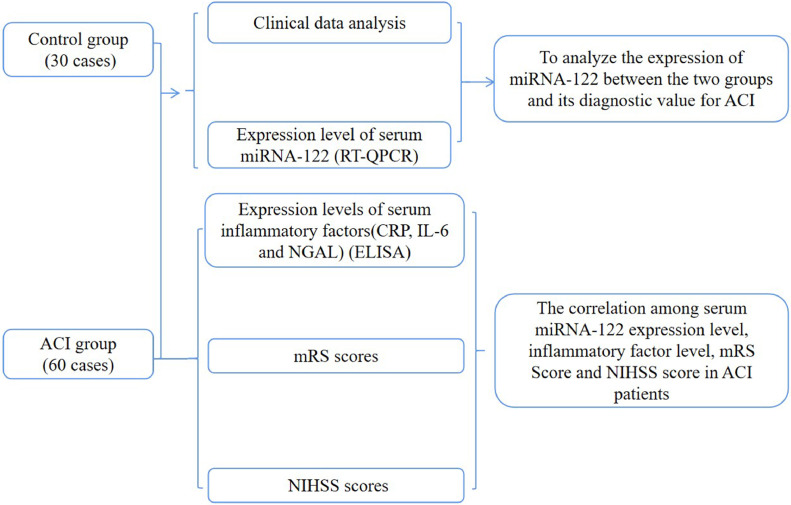
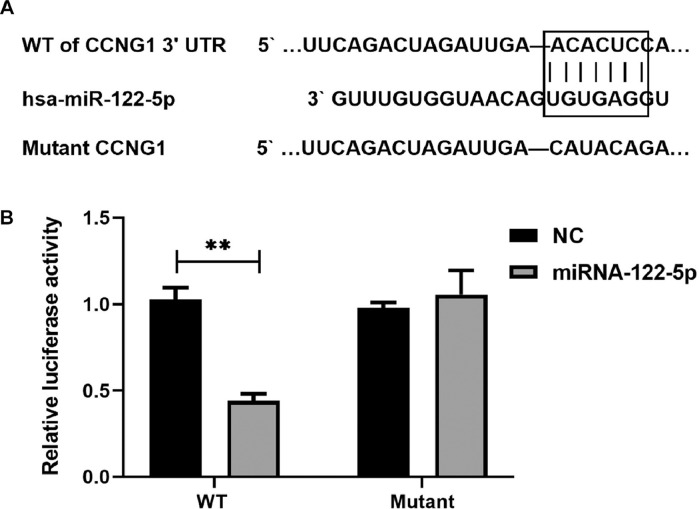
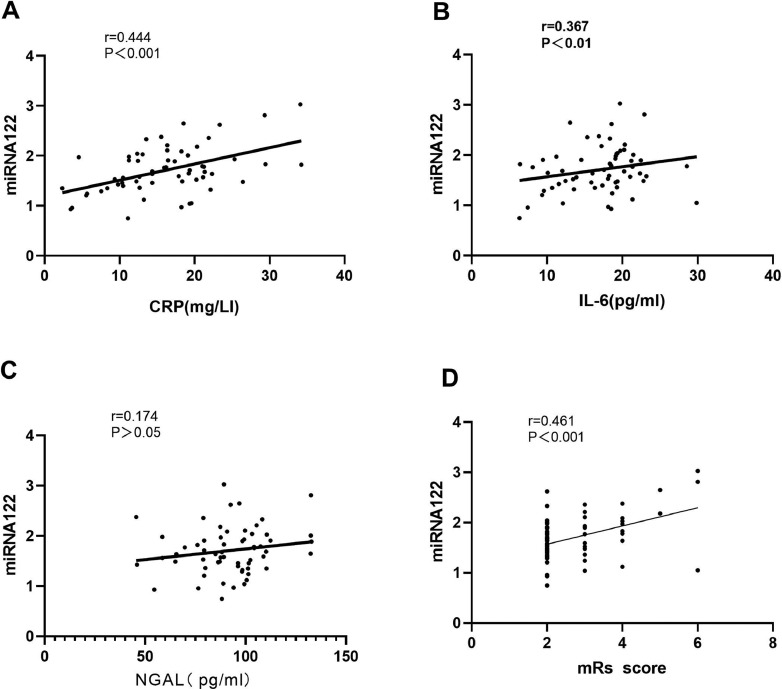
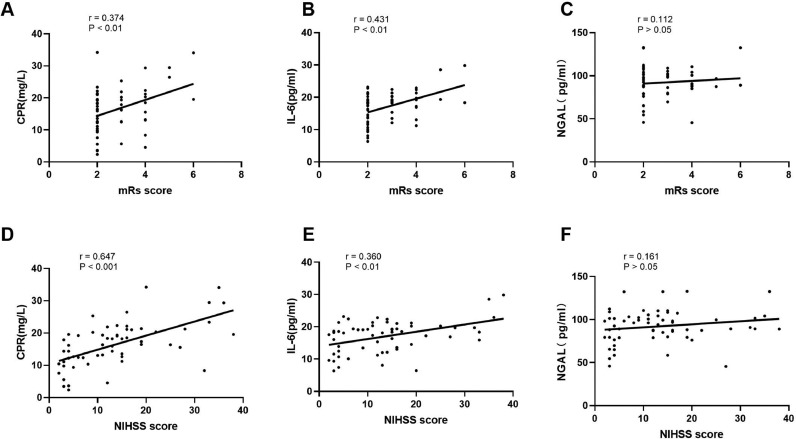
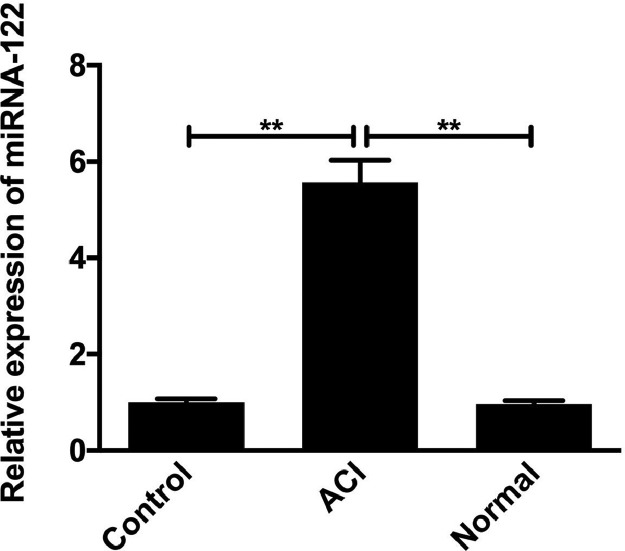
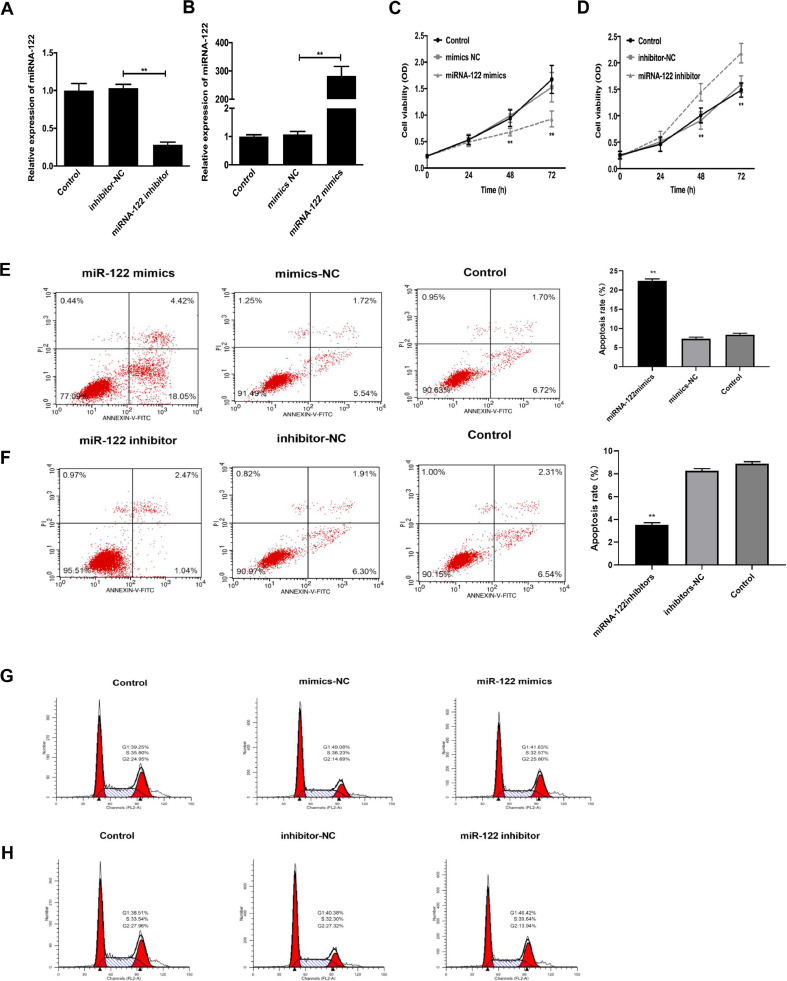
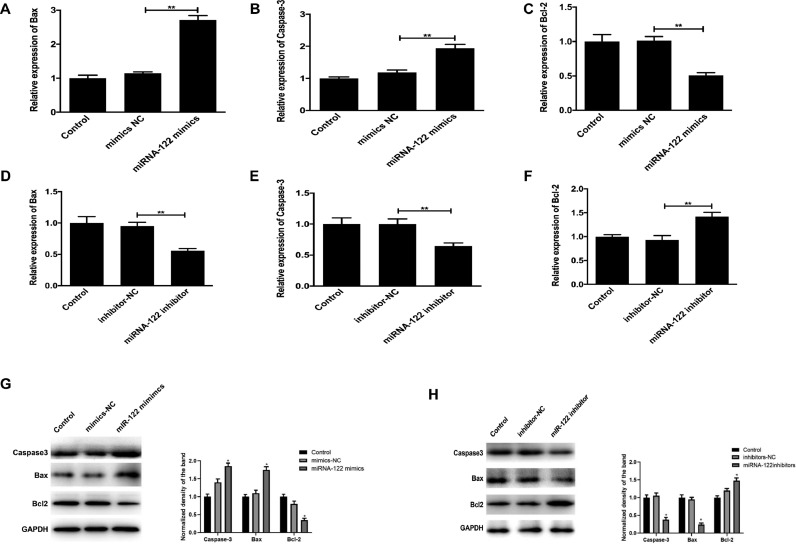
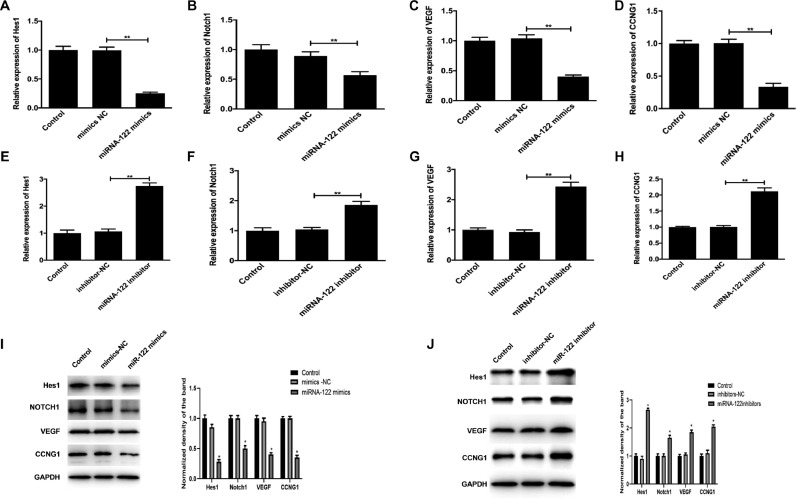
A total of 60 patients with ACI who were admitted to the emergency department of the Taizhou People's Hospital from January 1, 2019, to December 30, 2019, and 30 healthy controls during the same period were selected. General clinical data of all patients at admission were collected. Including age, sex, medical history, and inflammatory factors (C-Reactive Protein [CRP], Interleukin-6 [IL-6], Procalcitonin [PCT], Neutrophil Gelatinase-Associated Lipid carrier protein [NGAL]). The National Institutes of Health Stroke Scale (NIHSS) score at admission and short-term prognosis (the Modified Rankin Score [mRS]) score at 3 months after onset were recorded. The expression level of miRNA-122 in the serum of patients with ACI and normal controls was detected by reverse-transcription quantitative Real-Time Polymerase Chain Reaction (RT-QPCR), and the correlation between the expression level of miRNA-122 in the serum of patients with ACI and the level of inflammatory factors, NIHSS and mRS scores were analyzed. The expression levels of miRNA-122 in the serum of patients with ACI, normal people, and Human Umbilical cord Endothelial Cells (HUVECs) cultured in a blank control group were detected by RT-QPCR and statistically analyzed. MTT and flow cytometry was used to compare the proliferation and apoptosis of vascular endothelial cells in the miRNA-122 mimics and inhibitors transfection groups and the corresponding negative control group. The mRNA and protein levels of apoptosis-related factors Bax, Bcl-2, Caspase-3, and angiogenesis-related proteins Hes1, Notch1, Vascular Endothelial Growth Factors (VEGF), and CCNG1 were detected by RT-QPCR and Western blot. Bioinformatics methods predicted CCNG1 to be the target of miRNA-122, and the direct targeting relationship between CCNG1 and miRNA-122 was verified by a dual-luciferase reporting assay.
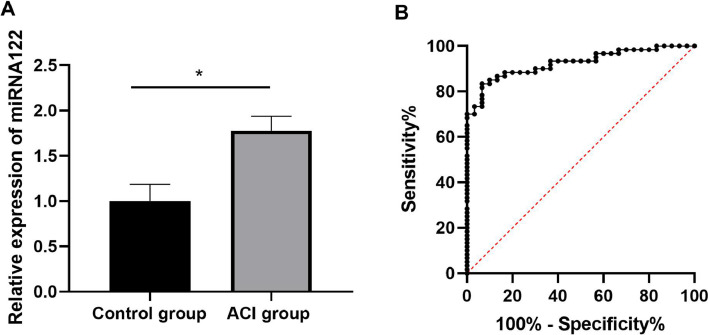
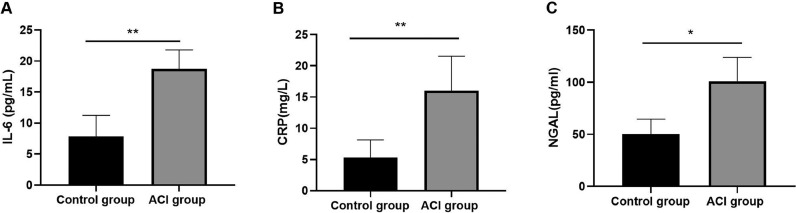
Serum miRNA-122 expression in patients with ACI was significantly higher than that in healthy controls, with an area under the receiver operating characteristic curve of 0.929, 95% Confidence Interval of 0.875‒0.983, and an optimal cut-off value of 1.397. The expression levels of CRP, IL-6, and NGAL in patients with ACI were higher than those in healthy control groups, p < 0.05; miRNA-122 was positively correlated with CPR, IL-6, NIHSS score, and mRS score. At 48h and 72h, the proliferation rate of HUVECs cells in the miRNA-122 mimics group decreased and the apoptosis rate increased. Cell proliferation rate increased, and apoptosis rate decreased significantly in the groups transfected with miRNA-122 inhibitors. The mRNA and protein levels of pro-apoptotic factors Bax and caspase-3 were significantly increased in the miRNA-122 mimics transfection group, while those of anti-apoptotic factor Bcl-2 were significantly decreased compared to those of the control group. The expression of Bax and Caspase-3 decreased, and the expression of anti-apoptotic factor Bcl-2 increased in the transfected miRNA-122 inhibitors group. mRNA expression levels of Hes1, Notch1, VEGF, and CCNG1 in the miRNA-122 mimic transfected group were significantly decreased, while mRNA expression levels in the miRNA-122 inhibitors transfected group were significantly increased. Bioinformatics showed that there was a miRNA-122 binding site in the 3'UTR region of CCNG1, and dual luciferase assay confirmed that CCNG1 was the target of miRNA-122.
Serum miRNA-122 increased significantly after ACI, which may be a diagnostic marker of ACI. miRNA-122 may be involved in the pathological process of ACI and is related to the degree of neurological impairment and short-term prognosis in patients with ACI. miRNA-122 may play a regulatory role in ACI by inhibiting cell proliferation, increasing apoptosis, and inhibiting vascular endothelial cell regeneration through the CCNG1 channel.
分析血清 miRNA-122 表达在急性脑梗死(ACI)的诊断、严重程度和预后中的价值,以及血清 miRNA-122 对 ACI 血管内皮细胞增殖和凋亡的相关机制。
选择 2019 年 1 月 1 日至 12 月 30 日期间我院急诊科收治的 60 例 ACI 患者和同期 30 例健康对照者。收集所有患者入院时的一般临床资料,包括年龄、性别、病史和炎症因子(C 反应蛋白[CRP]、白细胞介素 6 [IL-6]、降钙素原[PCT]、中性粒细胞明胶酶相关脂质运载蛋白[NGAL])。入院时记录国立卫生研究院卒中量表(NIHSS)评分和发病后 3 个月的短期预后(改良 Rankin 评分[mRS])评分。采用逆转录定量实时聚合酶链反应(RT-qPCR)检测 ACI 患者和正常对照者血清中 miRNA-122 的表达水平,并分析其与炎症因子、NIHSS 和 mRS 评分的相关性。采用 RT-qPCR 检测 ACI 患者、正常人和空白对照组培养的人脐静脉内皮细胞(HUVEC)血清中 miRNA-122 的表达水平,并进行统计学分析。MTT 和流式细胞术比较 miRNA-122 模拟物和抑制剂转染组及相应阴性对照组血管内皮细胞的增殖和凋亡。采用 RT-qPCR 和 Western blot 检测凋亡相关因子 Bax、Bcl-2、Caspase-3 和血管生成相关蛋白 Hes1、Notch1、血管内皮生长因子(VEGF)和 CCNG1 的 mRNA 和蛋白水平。生物信息学方法预测 CCNG1 是 miRNA-122 的靶基因,并通过双荧光素酶报告实验验证了 CCNG1 与 miRNA-122 之间的直接靶向关系。
ACI 患者血清 miRNA-122 表达水平明显高于健康对照组,受试者工作特征曲线下面积为 0.929,95%置信区间为 0.875-0.983,最佳截断值为 1.397。ACI 患者 CRP、IL-6 和 NGAL 的表达水平均高于健康对照组,p<0.05;miRNA-122 与 CRP、IL-6、NIHSS 评分和 mRS 评分呈正相关。在 48h 和 72h,miRNA-122 模拟物组 HUVEC 细胞的增殖率降低,凋亡率增加。miRNA-122 抑制剂转染组细胞增殖率增加,凋亡率显著降低。miRNA-122 模拟物转染组促凋亡因子 Bax 和 Caspase-3 的 mRNA 和蛋白水平明显升高,而抗凋亡因子 Bcl-2 的 mRNA 和蛋白水平明显降低。miRNA-122 抑制剂转染组 Bax 和 Caspase-3 的表达降低,抗凋亡因子 Bcl-2 的表达升高。miRNA-122 模拟物转染组 Hes1、Notch1、VEGF 和 CCNG1 的 mRNA 表达水平显著降低,而 miRNA-122 抑制剂转染组的 mRNA 表达水平显著升高。生物信息学显示 CCNG1 的 3'UTR 区域存在 miRNA-122 结合位点,双荧光素酶报告实验证实 CCNG1 是 miRNA-122 的靶基因。
ACI 后血清 miRNA-122 明显升高,可能是 ACI 的诊断标志物。miRNA-122 可能参与 ACI 的病理过程,与 ACI 患者的神经功能损伤程度和短期预后相关。miRNA-122 可能通过 CCNG1 通道抑制细胞增殖、增加凋亡、抑制血管内皮细胞再生,从而发挥对 ACI 的调节作用。