Mohr M, Dong Y, Bracker G P, Hyers R W, Matson D M, Zboray R, Frison R, Dommann A, Neels A, Xiao X, Brillo J, Busch R, Novakovic R, Srirangam P, Fecht H-J
Institute of Functional Nanosystems, Ulm University, Ulm, Germany.
Institute of Quantum Technologies, German Aerospace Center (DLR), Wilhelm-Runge-Straße 10, 89081, Ulm, Germany.
NPJ Microgravity. 2023 May 2;9(1):34. doi: 10.1038/s41526-023-00281-4.
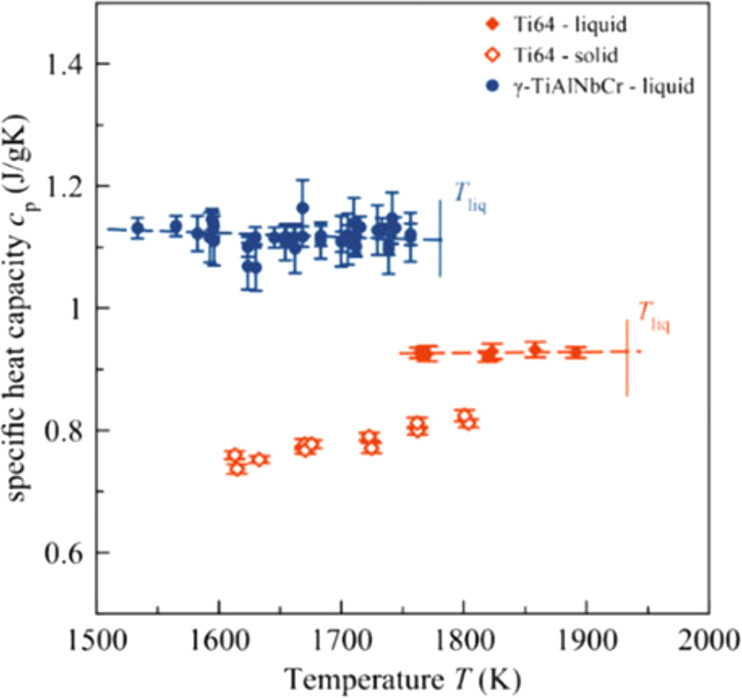
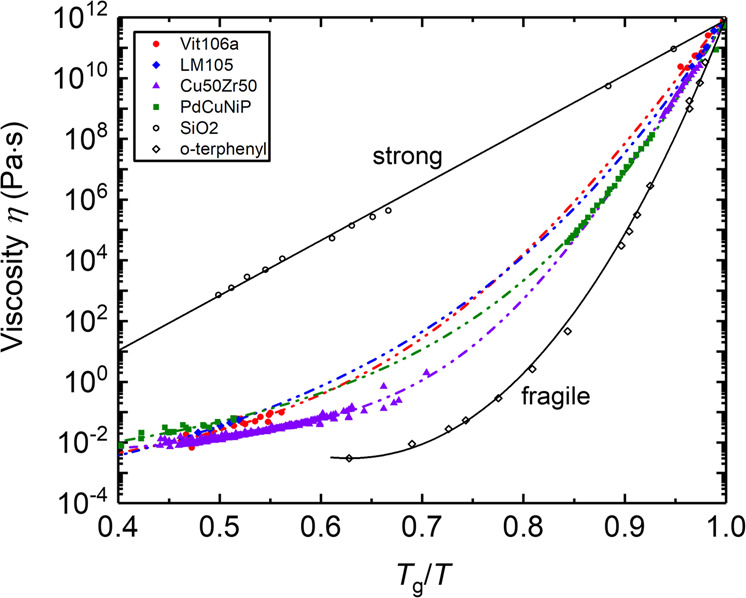
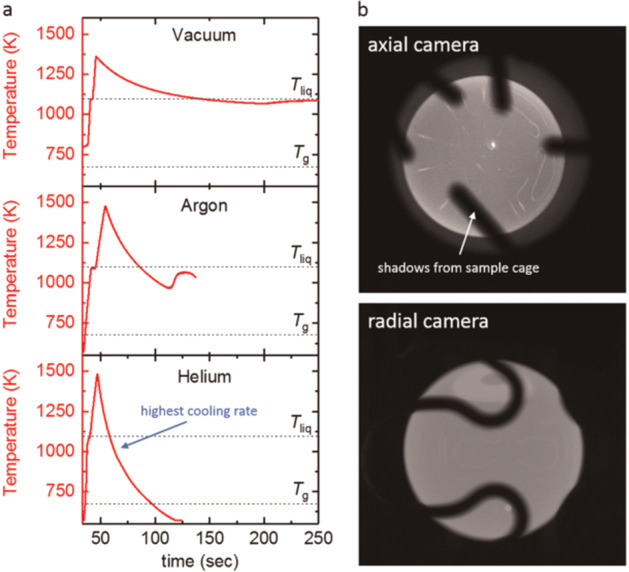
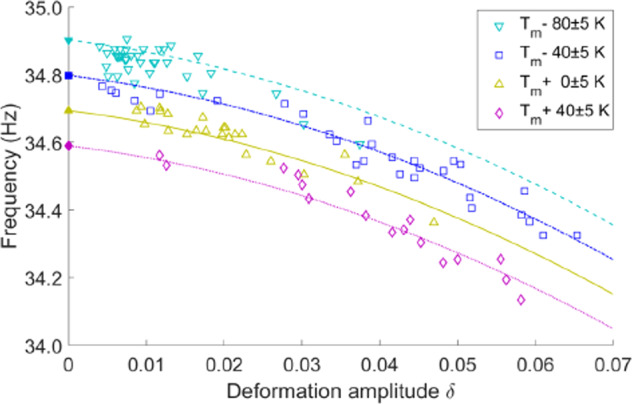
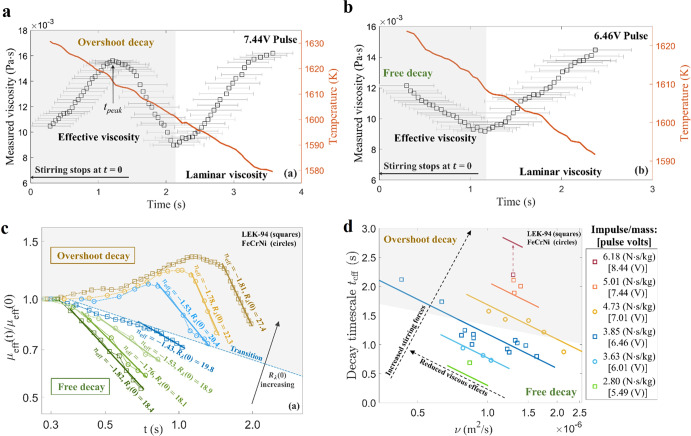
Transitions from the liquid to the solid state of matter are omnipresent. They form a crucial step in the industrial solidification of metallic alloy melts and are greatly influenced by the thermophysical properties of the melt. Knowledge of the thermophysical properties of liquid metallic alloys is necessary in order to gain a tight control over the solidification pathway, and over the obtained material structure of the solid. Measurements of thermophysical properties on ground are often difficult, or even impossible, since liquids are strongly influenced by earth's gravity. Another problem is the reactivity of melts with container materials, especially at high temperature. Finally, deep undercooling, necessary to understand nucleus formation and equilibrium as well as non-equilibrium solidification, can only be achieved in a containerless environment. Containerless experiments in microgravity allow precise benchmark measurements of thermophysical properties. The electromagnetic levitator ISS-EML on the International Space Station (ISS) offers perfect conditions for such experiments. This way, data for process simulations is obtained, and a deeper understanding of nucleation, crystal growth, microstructural evolution, and other details of the transformation from liquid to solid can be gained. Here, we address the scientific questions in detail, show highlights of recent achievements, and give an outlook on future work.
物质从液态到固态的转变无处不在。它们是金属合金熔体工业凝固过程中的关键步骤,并且受到熔体热物理性质的极大影响。为了严格控制凝固途径以及所获得的固体材料结构,了解液态金属合金的热物理性质是必要的。由于液体受到地球引力的强烈影响,在地面上测量热物理性质通常很困难,甚至是不可能的。另一个问题是熔体与容器材料的反应性,尤其是在高温下。最后,理解成核、平衡以及非平衡凝固所必需的深度过冷,只能在无容器环境中实现。微重力环境下的无容器实验能够对热物理性质进行精确的基准测量。国际空间站(ISS)上的电磁悬浮器ISS - EML为此类实验提供了完美条件。通过这种方式,可以获得用于过程模拟的数据,并且能够更深入地理解成核、晶体生长、微观结构演变以及从液态到固态转变的其他细节。在此,我们详细阐述科学问题,展示近期成果亮点,并对未来工作进行展望。